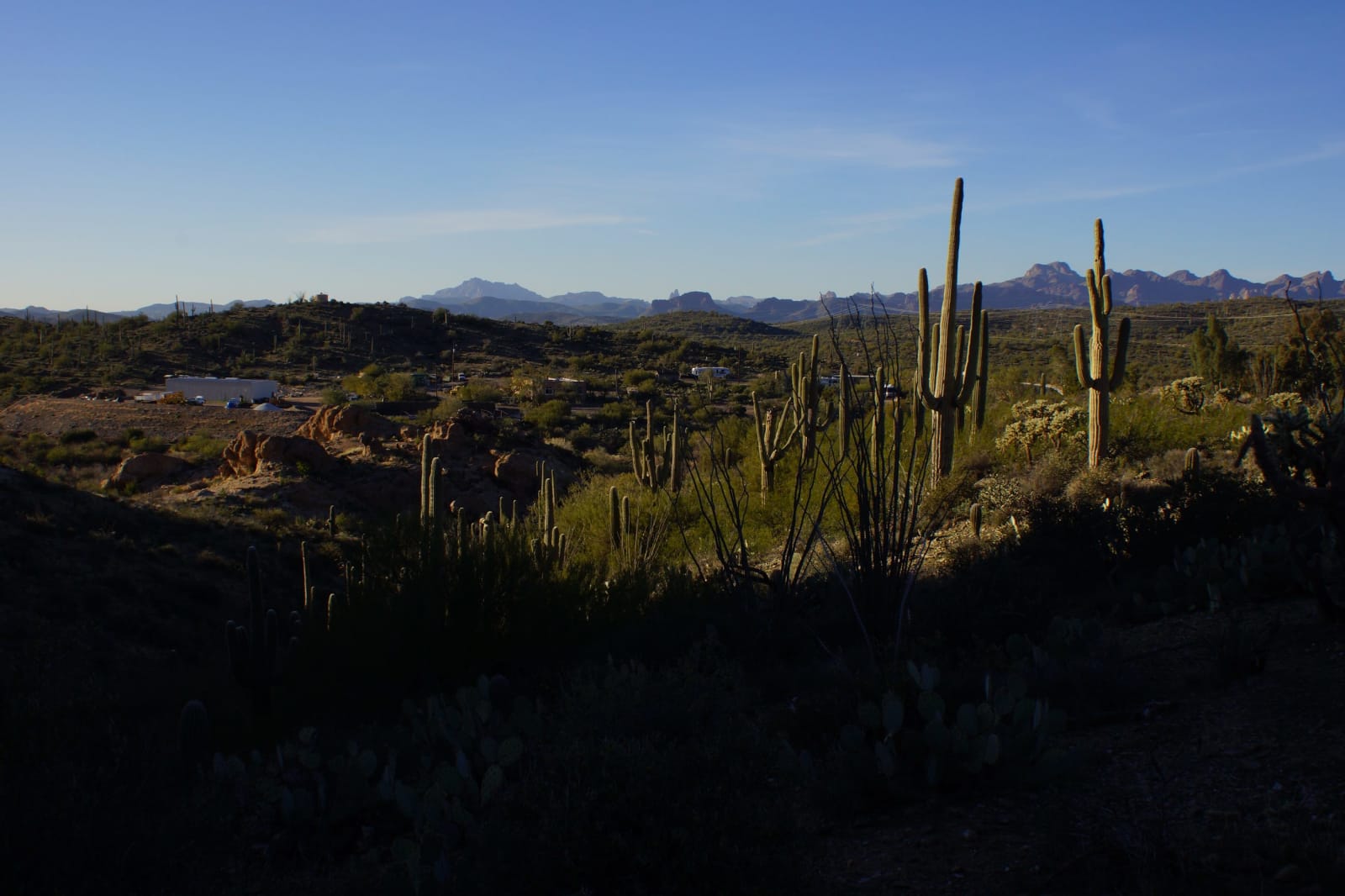
The Valley of the Sun
The desert metropolis on the canal builders' ground — Phoenix and its cities, the Superstition Mountains and the old Apache Trail, all laid over the irrigation canals the ancestral Huhugam dug and the Akimel O'odham still farm beside.
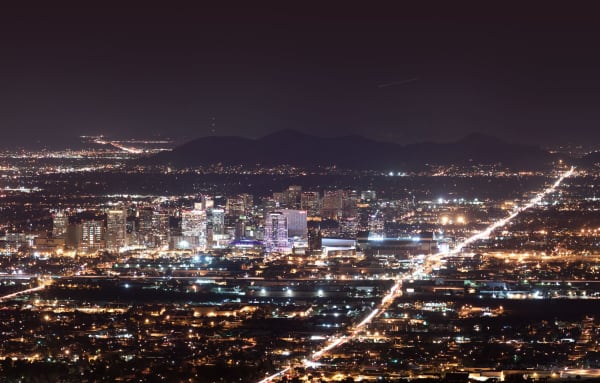
Phoenix is one of the five largest cities in the country, and it is built, precisely and literally, on the ruins of an older one. A thousand years before the first Anglo settlers arrived, the ancestral Sonoran Desert people — the Huhugam, as their O'odham descendants call them, rather than the archaeologists' Hohokam — had turned the Salt River Valley into the largest irrigated farmland in ancient North America: more than five hundred miles of canals dug by hand, without draft animals, feeding tens of thousands. When they left their villages in the fifteenth century, the canals stayed in the ground. In 1867 a settler named Jack Swilling cleared out the old channels and farmed off them again, and the town that grew there was named Phoenix on purpose — a city risen from the ashes of the one before it. Modern Phoenix still runs water down the Huhugam alignments.
Their descendants never left. The Akimel O'odham — the river people — and the Pee-Posh farm the Gila River and Salt River communities on the valley's edge, beside the same water. South at Coolidge, the four-story Great House at Casa Grande still stands, the ancestral great house the government fenced off in 1892 as the country's first archaeological preserve.
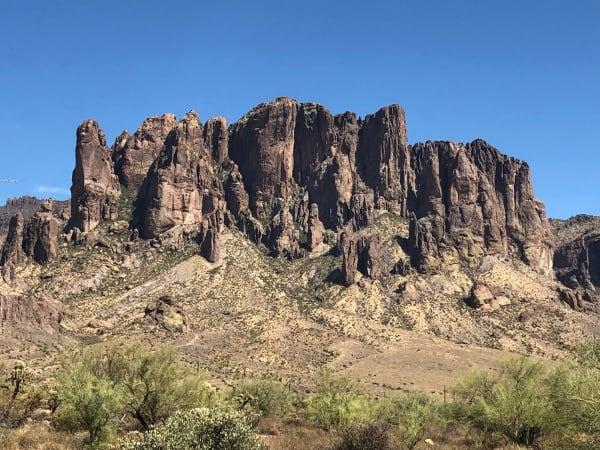
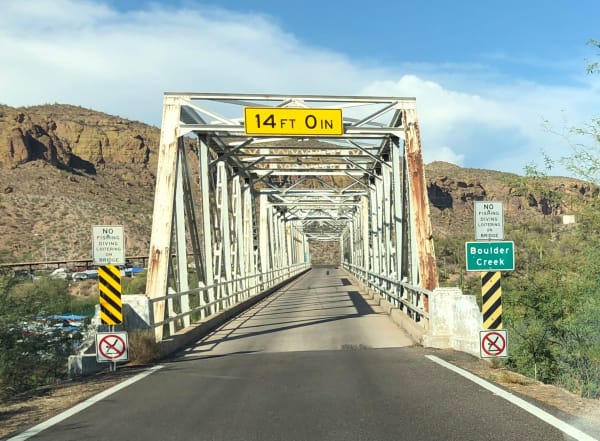
The desert reasserts itself at the valley's rim. East of the sprawl the Superstition Mountains throw up a volcanic wall hung with the Lost Dutchman legend, and the Apache Trail — State Route 88, the winding dirt road hacked out in 1904 to haul in the Roosevelt Dam — climbs past Canyon Lake toward the reservoir, though the wildest stretch over Fish Creek Hill now runs rough enough that only high-clearance rigs should attempt it. Scottsdale keeps the resorts and the galleries; the Heard Museum keeps the finest record of Native art in the Southwest. The city forgets the desert. The desert is patient about it.
What to See in The Valley of the Sun
6 places across the region, grouped by what they are.
Natural Areas
Historic Sites
Towns & Gateways
Architecture
Stories from The Valley of the Sun
The Valley of the Sun rewards the unhurried. Pick a base, fan out, and let the country between the headline stops surprise you.
← Explore more of Open Road Guide