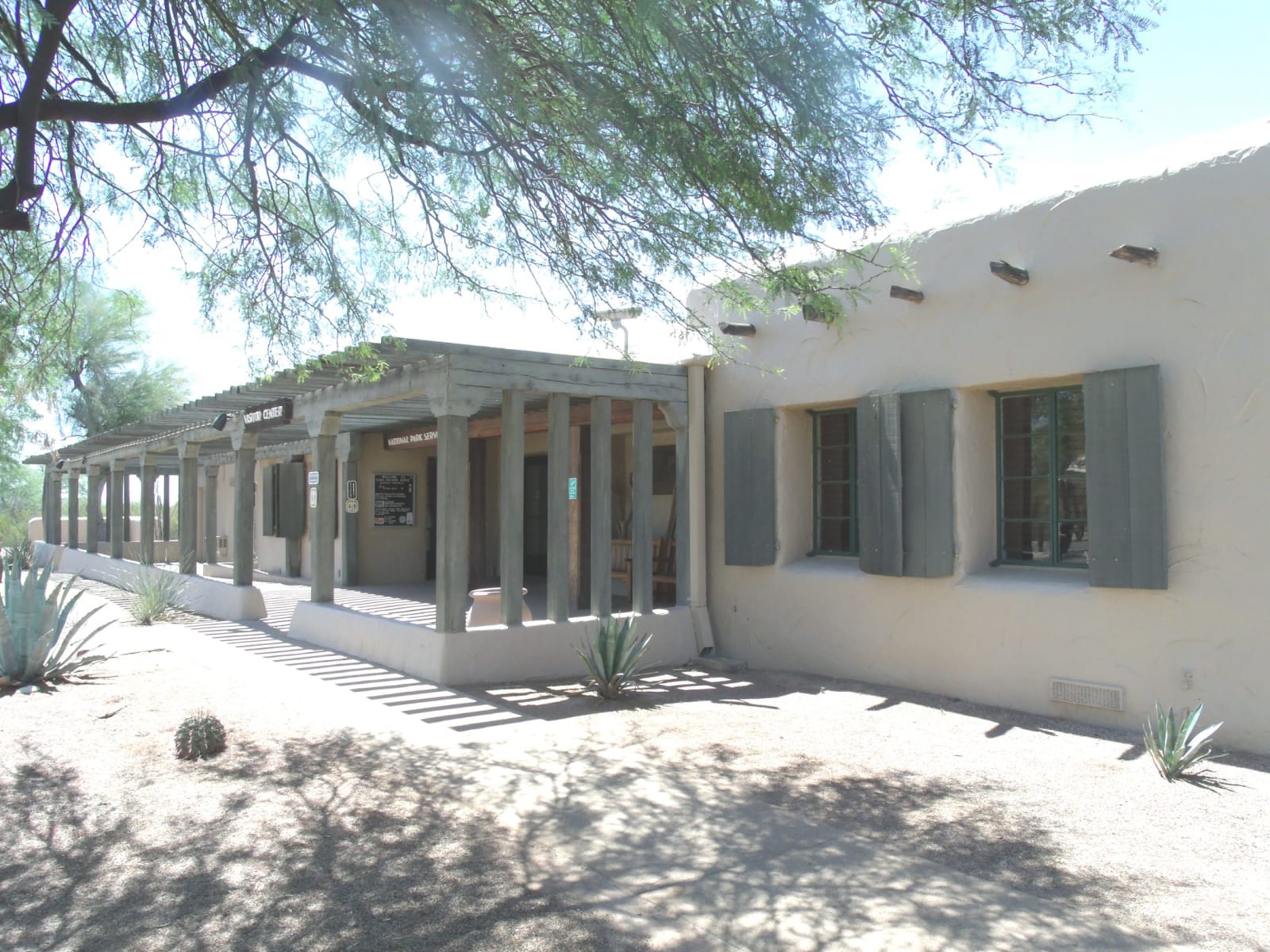
 Tony the Marine / CC BY-SA 3.0 via Wikimedia Commons
The Story
North of Coolidge, alone in a field under a steel canopy that looks like a carport built by giants, stands the largest building the Huhugam ever raised. They left no name for it that we kept; the Spanish padre Eusebio Kino, riding through in 1694, wrote it down as Casa Grande — the great house — and the label stuck. It is four stories of caliche, the desert's own concrete of mud and lime, packed into walls up to four feet thick and still standing after nearly seven centuries of sun and monsoon. The ground floor was filled solid to carry the weight of the rest; the top room sits above everything for miles.
No one is certain what it was for. The best reading takes it partly as a calendar: the walls face the four directions, and openings in the upper rooms line up with the sun at the solstices and the moon at the far points of its long cycle. Whatever else it did, it kept time. It went up around 1350, at the height of the Huhugam Classic period, built by the same canal-digging people whose descendants — the O'odham, and the Hopi and Zuni — still live across this region.
The great house has a second distinction, and it belongs to American conservation. By the 1880s the railroad had made the ruin easy to reach, and visitors were carving their names into the walls and prying off pieces for souvenirs. In 1892 President Benjamin Harrison set it aside as the first federal archaeological reserve in the United States — the government protecting an ancient site for its own sake a full generation before the National Park Service existed to do it. The modern canal city that rose on the same water, Phoenix, lies an hour north; the great house was ancient long before it became a neighbor to anyone's suburb.
Visitor Info
On the Map
A story featuring this place
Go deeper into the history and character of this stop
Nearby
The closest stops worth working into your route
Historical markers nearby
Roadside plaques and monuments within a short detour