
Mount Rushmore & the Central Hills
Tȟuŋkášila Šákpe carved with four presidents, Black Elk Peak, the Crazy Horse mountain carving, and Rapid City where the creek leaves the hills.
The Lakota knew the granite peak above Keystone as Tȟuŋkášila Šákpe, the Six Grandfathers, for the six directions. In 1927 the sculptor Gutzon Borglum, who had been carving Confederate generals at Stone Mountain, began blasting four presidents into it, and the work stopped in 1941 with the faces done and the figures meant to reach the waist never begun. It stands on land the 1868 treaty guaranteed to the Lakota, and in 1980 the Supreme Court ruled that the government had taken the Black Hills unlawfully. The nations refused the money, and the award sits unclaimed, still drawing interest.
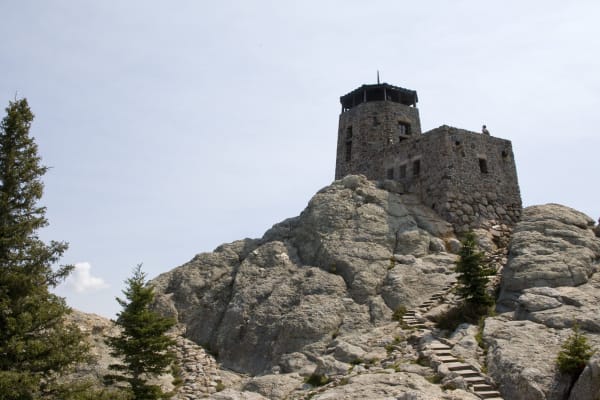
A few miles west, the summit the maps called Harney Peak was renamed Black Elk Peak in 2016, for the Oglala holy man Heȟáka Sápa, who said his great vision carried him to it as a boy. The Lakota name is Hiŋháŋ Káǧa. It is the highest point in the hills. On Thunderhead Mountain south of Hill City the Ziolkowski family has been carving Crazy Horse since 1948, at the invitation of the Lakota elder Henry Standing Bear; the face was finished in 1998, and not every Lakota wants it there.
Rapid City spreads where Rapid Creek leaves the hills. In June 1972 a cloudburst sent the creek through town and killed 238 people, and the floodplain was turned into the greenway that runs through the city today.
What to See in Mount Rushmore & the Central Hills
5 places across the region, grouped by what they are.
Natural Areas
Historic Sites

Towns & Gateways
Attractions
Scenic Drives through Mount Rushmore & the Central Hills
I-90: Sioux Falls to the Badlands
About 378 miles across South Dakota on I-90 from the falls of the Big Sioux to the edge of the Black Hills: the Corn Palace, Dignity above the Missouri, a car museum in Murdo, a Minuteman silo, the Badlands Loop and the free ice water at Wall.
Rushmore, the Needles and Wind Cave
About 97 miles through the central and southern Black Hills from Rapid City to Hot Springs: the presidents on Tȟuŋkášila Šákpe, the granite spires of the Needles Highway, Coolidge's summer lodge, the bison range of Custer State Park and the breathing cave the Lakota came up from.
Stories from Mount Rushmore & the Central Hills
The Hills Are Not for Sale
In 1980 the Supreme Court ruled that the United States had taken the Black Hills unlawfully and owed the Lakota for them. The nations have never touched the money.
The Hills in Rings
The Black Hills are a dome pushed up through the plains and worn open at the top, so that driving in from any side means crossing its rock layers in order, youngest to oldest, like the rings of a cut tree read from the bark inward.
Mount Rushmore & the Central Hills rewards the unhurried. Pick a base, fan out, and let the country between the headline stops surprise you.
← Explore more of Open Road Guide