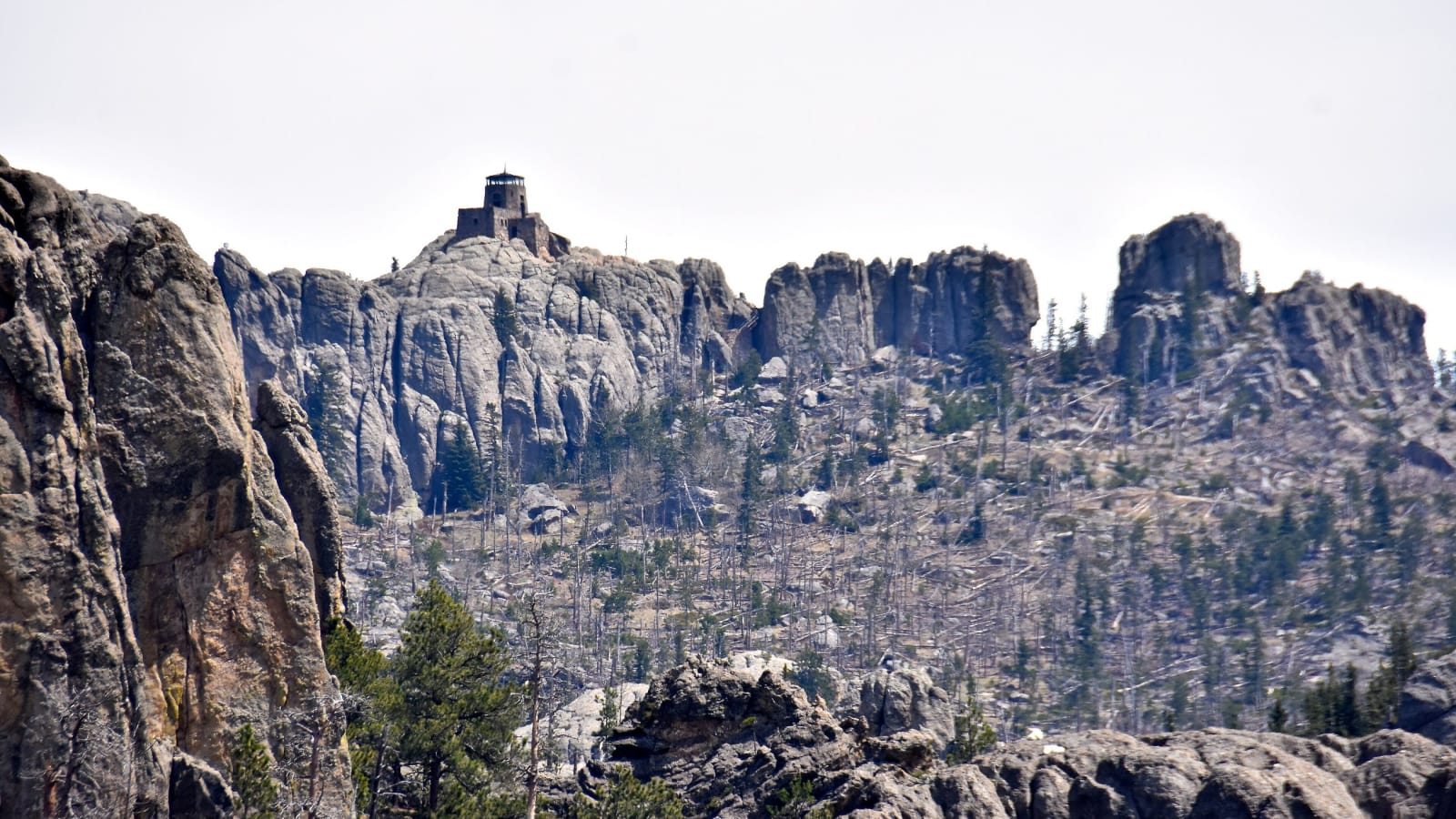
The Treaty of Fort Laramie, signed in 1868, set aside a Great Sioux Reservation covering all of what is now South Dakota west of the Missouri, the Black Hills included, for the absolute and undisturbed use of the Lakota and their allies. It said that no further cession of that land would be valid unless signed by three-fourths of the adult men of the nations. Six years later an army expedition reported gold in the Hills, and miners poured in, the treaty notwithstanding.
The taking
The government first tried to buy the Hills and was refused. In 1876, with war on the northern plains, a commission went to the agencies with an offer that came down to this: give up the Black Hills or lose the rations the people now depended on to eat. Only a small fraction of the men signed, far short of three-fourths. Congress made it law anyway in the Act of February 28, 1877, and the Hills became federal land. Within a few years the Homestake and the towns around it were taking gold out of the ground by the ton.
Sixty years in court
The Lakota never accepted it. Leaders gathered testimony for decades, and when Congress finally allowed them to sue in 1920, they filed. The Court of Claims dismissed the case in 1942. After Congress created the Indian Claims Commission in 1946, they filed again, and in 1974 the commission held that the 1877 Act had been a taking and that the nations were owed $17.5 million, the value of the land then, without interest. The courts went back and forth over whether interest was due. The Court of Claims, even while ruling against the nations on a technicality, wrote that a more ripe and rank case of dishonorable dealings would never, in all probability, be found in the nation's history.
The ruling, and the refusal
In 1978 Congress let the Court of Claims hear the case fresh, and on July 23, 1980, in United States v. Sioux Nation of Indians, the Supreme Court affirmed: the Black Hills had been taken in violation of the Fifth Amendment, and the Lakota were owed $17.1 million plus interest from 1877, about $106 million. It was the largest award of its kind the court had upheld.
The nations turned it down. The money was compensation for a sale, and the Lakota have held for a century and a half that the Hills, Pahá Sápa, the heart of everything that is, were never for sale. The award went into an interest-bearing account in the Treasury, untouched, and has grown to well over a billion dollars. Tribal governments under pressure from poverty at home have still refused to take it.
The faces on Mount Rushmore look out over land the court agreed was taken unlawfully. Across the range, the carving at Crazy Horse Memorial and the name now on Black Elk Peak are other answers to the same history. The claim is not settled. It is, in the words of the nations, a matter of land, not money.