 David Wipf / CC BY 2.0 via Wikimedia Commons
The Story
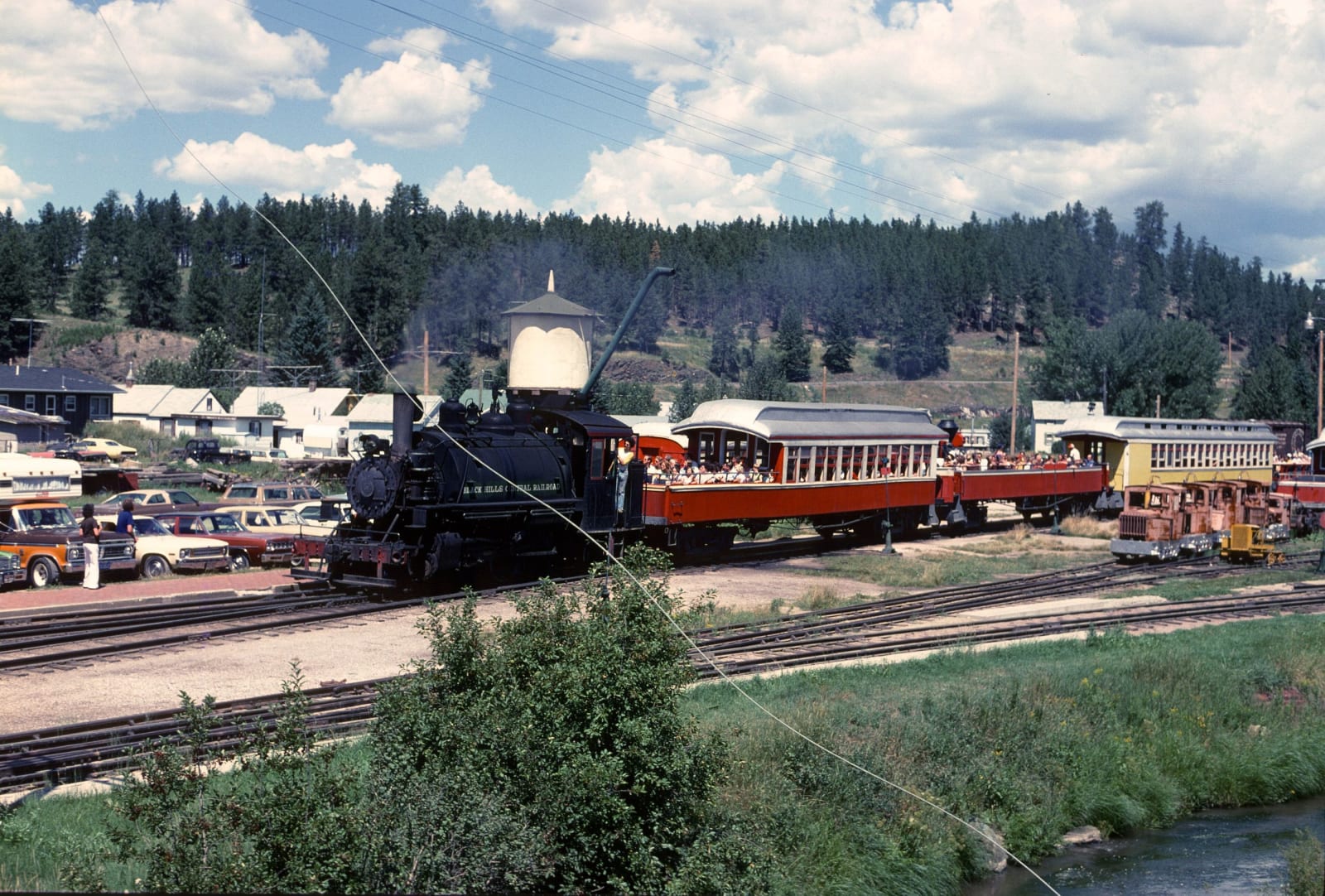
The Chicago, Burlington and Quincy built this branch to haul ore and timber out of the central Black Hills, and the rails reached Keystone on January 20, 1900. A generation later the same line carried equipment in for the carving of Mount Rushmore. By the 1950s diesel had replaced steam almost everywhere, and in 1956 William Heckman, a railroad man, and Robert Freer set out to keep, in their words, at least one working steam railroad in operation. They gathered old narrow-gauge engines and coaches at Hill City, got the Burlington's leave to run on the branch, and on August 18, 1957, an engine called the Klondike Casey pulled two open cars up the four-percent grade of Tin Mill Hill to a turnaround they named Oblivion.
Heckman called it the 1880 Train, because riding it felt like the 1880s. The line itself had been built later than that, and its engines date from the 1910s and 1920s. In June 1972 the flood that killed 238 people in Rapid City also washed out the last mile of track into Keystone, and for nearly thirty years the train stopped at a siding outside town. The Warder family, who bought the railroad in 1990, rebuilt the bridges and ran trains back into Keystone in 2001.
The trip runs ten miles each way along Battle Creek and takes about an hour, under steam, past the ghost-town site of Oblivion. Trains leave from either end, and the 1890 Burlington depot at Hill City is the main station.
Visitor Info
On the Map
Nearby
The closest stops worth working into your route
Historical markers nearby
Roadside plaques and monuments within a short detour