 Charles G. Haacker / CC BY 2.0 via Wikimedia Commons
The Story
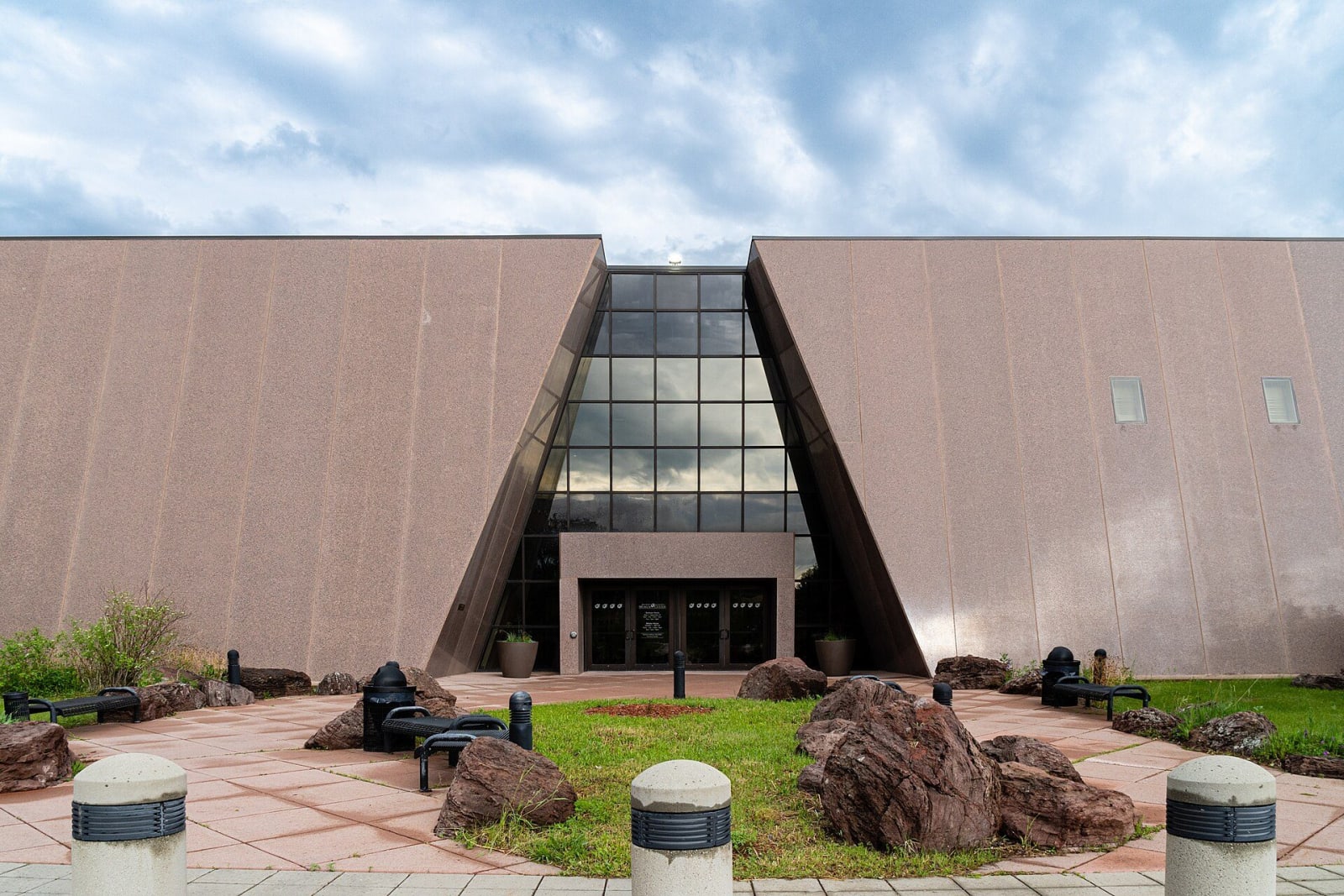
The Journey Museum opened in Rapid City in May 1997 to put four separate collections in one building and walk them in order through time. It begins with the Museum of Geology at the South Dakota School of Mines and Technology, whose wall of rock runs back some two and a half billion years to the oldest stone in the hills, and moves through the state archaeology center's finds from ten thousand years of people living in and around the Black Hills.
At its center is the Sioux Indian Museum, founded in Rapid City in 1939 by the federal and city governments and still operated by the Interior Department's Indian Arts and Crafts Board. Its collection of some 5,500 pieces holds quillwork and beadwork, clothing, horse gear, cradleboards, toys and painted hides, and its galleries also show and sell the work of living Lakota and Dakota artists, so the oldest pieces hang a few rooms from work made this year.
The last gallery belongs to the Minnilusa Pioneer Museum, with the settler story told through a trapper's cabin and a reconstructed hardware store, and an exhibit on Custer's 1874 expedition stands between the Lakota galleries and the pioneer ones. The museum is a few blocks from the creek whose 1972 flood remade the city, and from the greenway that replaced the homes it took.
Visitor Info
On the Map
Nearby
The closest stops worth working into your route