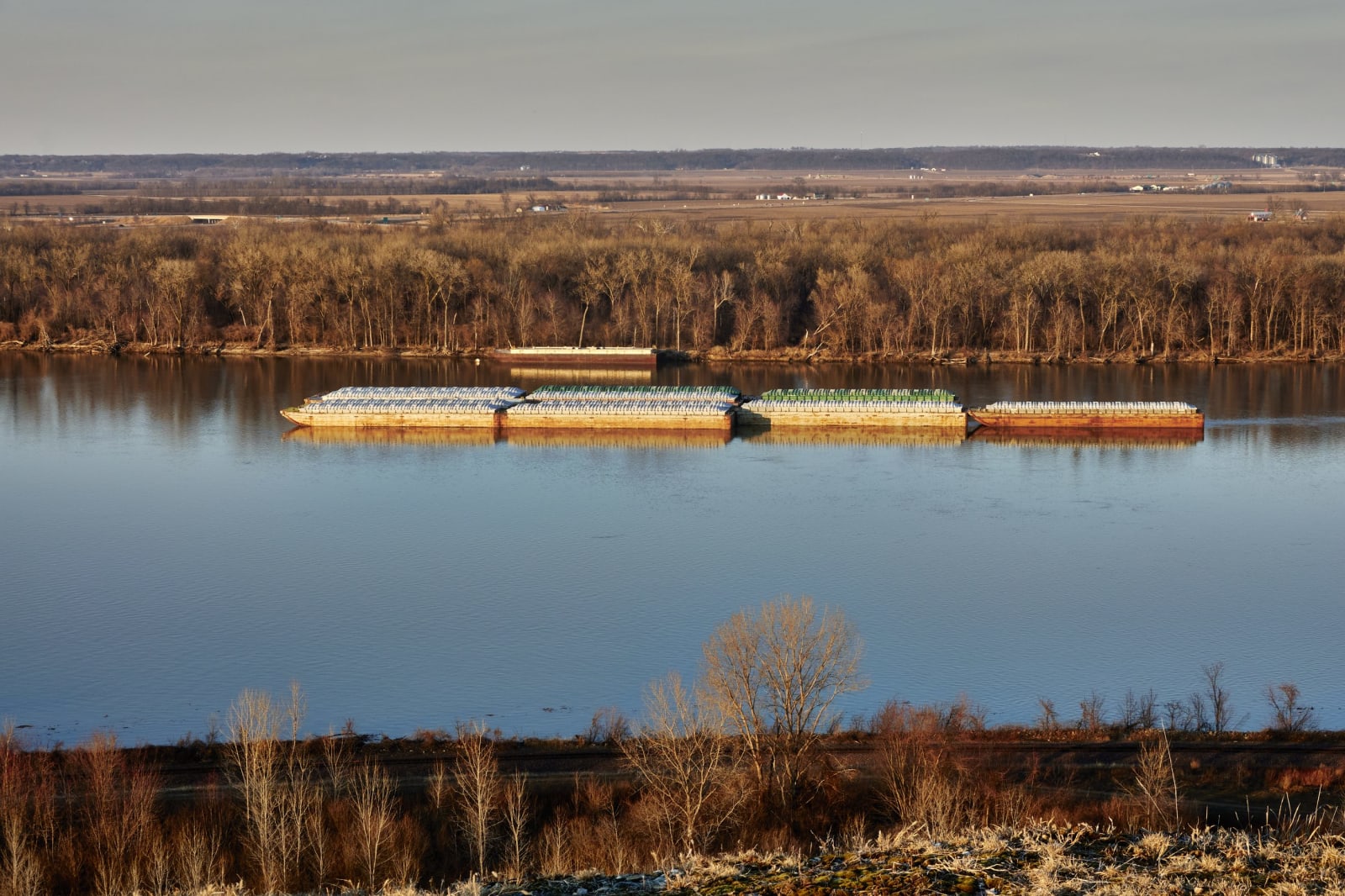
Barges on the Mississippi River below Lovers Leap at Hannibal, with bottomland woods on the far shore.
Carol M. Highsmith / public domain via the Library of Congress
Missouri · Region

Mark Twain Country & Little Dixie

Clemens's Hannibal and Jim's Journey, the Little Dixie farm counties, the 1861 fight at Athens, the Illinois town of 1673 and Kirksville's osteopathy museum.

7 places to explore

Northeast Missouri divides into the river and the interior. On the Mississippi, Hannibal keeps the Hill Street house where Samuel Clemens grew up and, a few blocks away, Jim's Journey, the museum of the Black town he grew up beside. Inland, the Salt River is dammed into Mark Twain Lake beside his birthplace at Florida. Many of the settlers of these farm counties, the ones called Little Dixie, came from the upper South and brought slavery with them. Clemens's uncle John Quarles kept about thirty enslaved people on his farm near Florida raising flax, grain and hemp, among them Daniel Quarles, the man Clemens named as his model for Jim.

The Civil War here set neighbour against neighbour. At Athens on the Des Moines River in August 1861 Union volunteers held off a pro-Southern force about four times their size, and in 1862 Union commanders executed prisoners at Kirksville and Palmyra. Kirksville is better known for Andrew Taylor Still, who opened the first school of osteopathy there in 1892.

Before any of this, the Des Moines River corner was Illinois country. In 1673 Marquette and Jolliet found a town of perhaps 8,000 Peoria and Moingwena people on a terrace above the river, now Iliniwek Village State Historic Site; their descendants are the Peoria Tribe of Indians of Oklahoma. The Sauk and Meskwaki later had a village at Athens.

What to See in Mark Twain Country & Little Dixie

7 places across the region, grouped by what they are.

Natural Areas
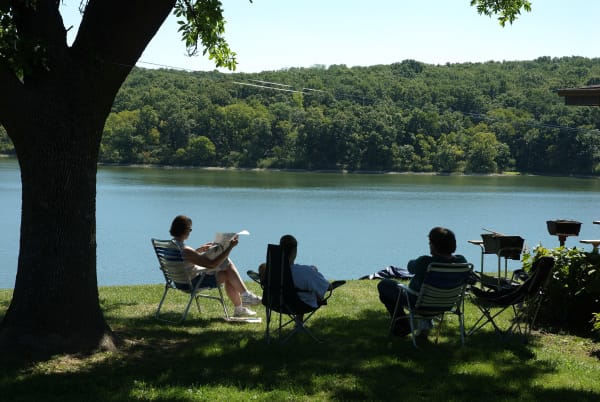
Visitors in lawn chairs under a shade tree on the shore of Forest Lake, with wooded hills across the water.

Thousand Hills State Park

Kirksville

Kirksville's reservoir park: Forest Lake, dammed in 1951 and 1952 on land given by the Laughlin heirs, in glacier-cut hills with petroglyphs under an interpretive shelter.

View details →

Historic Sites

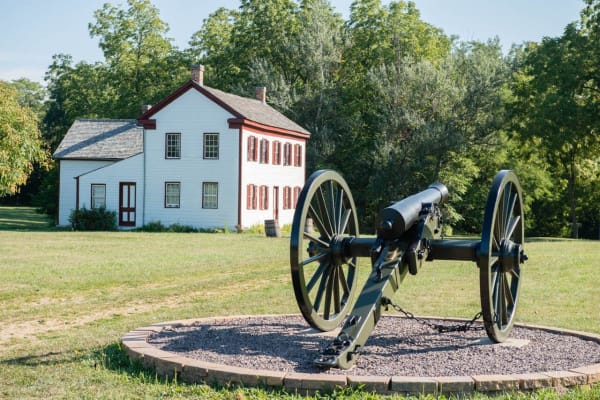
A cannon on a gravel circle before the white Thome-Benning House at Battle of Athens State Historic Site.

Battle of Athens State Historic Site

Revere

A Des Moines River port where neighbours fought the northernmost Civil War battle in Missouri in August 1861, and a cannonball house left standing in the town it emptied.

View details →
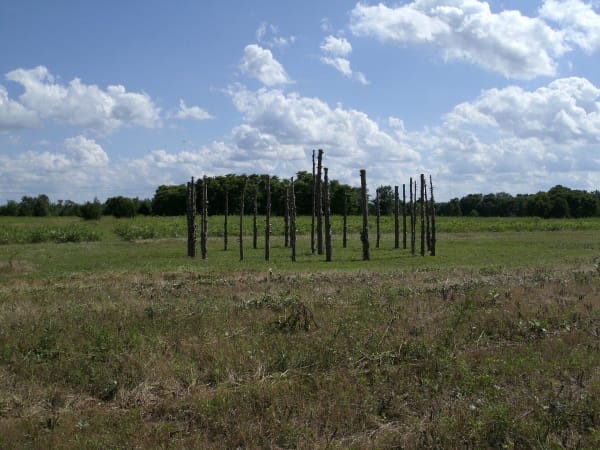
Wooden posts marking the outline of a lodge in the open grassland at Iliniwek Village State Historic Site.

Iliniwek Village State Historic Site

St. Francisville

The only Illinois village found in Missouri, a town of perhaps 8,000 Peoria and Moingwena people that Marquette and Jolliet visited on the Des Moines River in 1673.

View details →
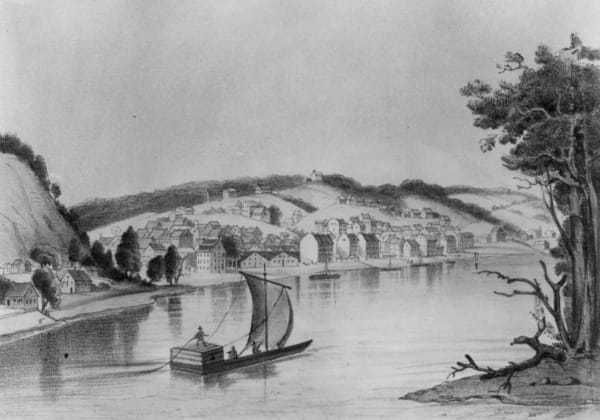
An 1857 lithograph of Hannibal on the Mississippi, the town spread below its bluffs with a sailing raft in the foreground.

Jim's Journey: The Huck Finn Freedom Center

Hannibal

Hannibal's first African American history museum, built around Daniel Quarles, the enslaved man Clemens named as his model for Jim, and the Black town around him.

View details →

Towns & Gateways

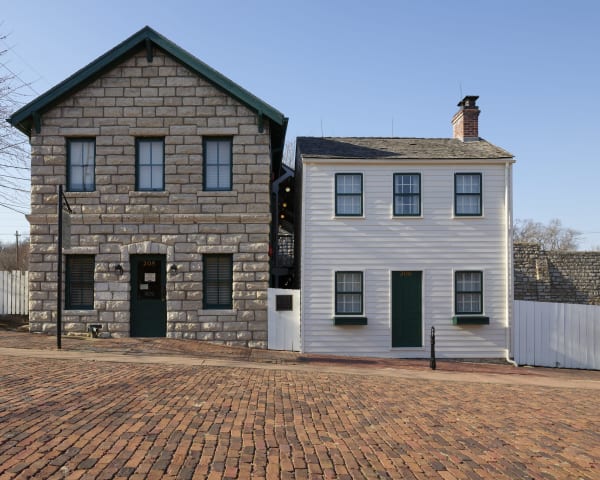
The white clapboard Mark Twain Boyhood Home beside the stone museum building on a brick street in Hannibal.

Mark Twain Boyhood Home & Museum

Hannibal

The Hill Street house where Samuel Clemens lived from 1844 to 1853, and the blocks of Hannibal the town has spent more than a century arranging around his books.

View details →
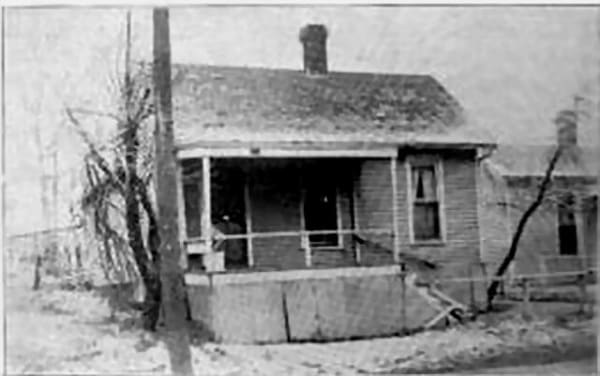
The first American School of Osteopathy building in Kirksville, a small frame house with a porch, in a photograph published in 1911.

Museum of Osteopathic Medicine

Kirksville

Kirksville's museum of Andrew Taylor Still, the frontier doctor who gave up drugs after losing his children and founded the first school of osteopathy here in 1892.

View details →

Architecture

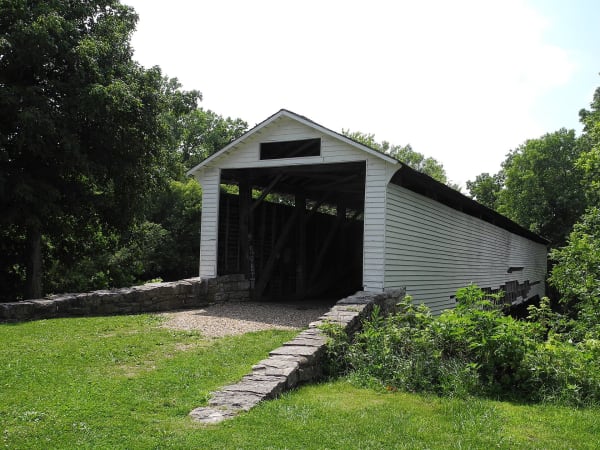
The white Union Covered Bridge on its stone abutment among summer trees.

Union Covered Bridge State Historic Site

Paris

An 1871 oak bridge over the Elk Fork of the Salt River on the old Paris to Fayette road, the last Burr-arch covered bridge in Missouri, mended after a century of floods.

View details →

Scenic Drives through Mark Twain Country & Little Dixie

Scenic Byway

The Great River Road: Hannibal to Ste. Genevieve

About 190 miles down the Mississippi on Route 79 from Hannibal through Louisiana and Clarksville, along the St. Louis riverfront, and south to Ste. Genevieve.

190 mi · 4.25 hrs

Stories from Mark Twain Country & Little Dixie

History

A Name on No Map

Little Dixie was never a county or a district, but the hemp and tobacco counties along the Missouri carried slavery deeper than the rest of the state, and its aftermath longer.

3 min read

Mark Twain Country & Little Dixie rewards the unhurried. Pick a base, fan out, and let the country between the headline stops surprise you.

← Explore more of Open Road Guide