 Missouri State Parks / public domain via Wikimedia Commons
The Story
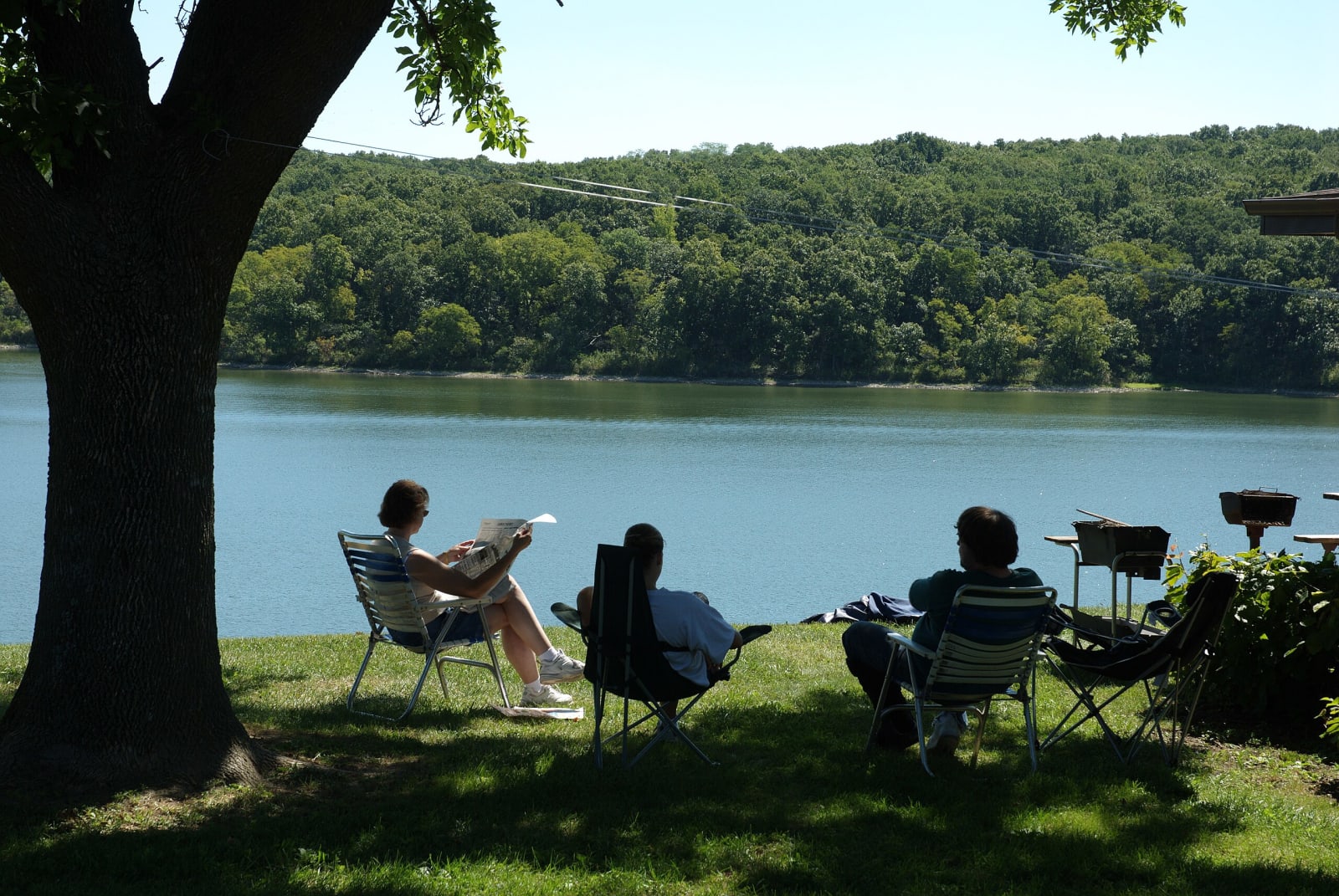
Thousand Hills State Park was built around a city's water supply. By the 1950s Kirksville needed a dependable reservoir, and the heirs of Dr. George M. Laughlin, a longtime backer of the idea, gave a 1,100-acre tract for a lake; more land was bought. Big Creek, a tributary of the Chariton River, was dammed in 1951 and 1952, the land became a state park in 1952, and the 573-acre Forest Lake had filled by 1956. Its 17 miles of shoreline now hold a marina with boat rentals, a free swimming beach, duplex cabins and a dining lodge.
The name describes ground the glaciers made. They flattened northern Missouri and left a thick layer of soil, and streams then cut it into ridges and valleys. The Grand Divide, the higher ground that separates the area's drainage, runs through the park. Most of the woods are second-growth white oak, red oak and shagbark hickory, and controlled burns and selective cutting are bringing back remnants of the prairie and savanna that once covered more than half of northern Missouri.
Near the beach an interpretive shelter covers sandstone carved, by chipping and rubbing, with deer, arrows, snakes, birds and other animals. The state attributes the petroglyphs to people who lived here as long as 1,500 years ago, says archaeologists believe the place was part of a ceremonial ground, and has listed the site in the National Register. The Thousand Hills Trail, built with Kirksville's Community Betterment Association and the Department of Conservation, runs on into Big Creek Conservation Area.
Visitor Info
On the Map
Nearby
The closest stops worth working into your route
Historical markers nearby
Roadside plaques and monuments within a short detour