 Missouri State Parks / public domain via Wikimedia Commons
The Story
Iliniwek, which the French heard and wrote down as Illinois, was the word a loose alliance of twelve related peoples used for themselves, and the state site gives its meaning as we are men. Around 1640 the Peoria and Moingwena moved into what is now northeast Missouri and southeast Iowa, and on this sand terrace above the Des Moines River they built a town that held perhaps 8,000 people. When Jacques Marquette and Louis Jolliet came through in 1673, Marquette counted about 300 cabins and recorded the town's name as Peourea. Archaeology here has borne out his account of the town.
The town had longhouses for several families, large round houses and small oval family houses. In spring the people planted corn, beans and squash, in summer they left to hunt bison, deer and bear, in August they came back to store the harvest in deep pits, and in November they scattered to winter camps. They began leaving about 1677, and after La Salle built Fort St. Louis at Starved Rock in 1682 and 1683 they moved to be near it. War and disease cut their numbers. They ceded most of their Illinois land in 1818 and their last tract in 1832, when they were forced west to what is now Kansas. Their descendants are the Peoria Tribe of Indians of Oklahoma.
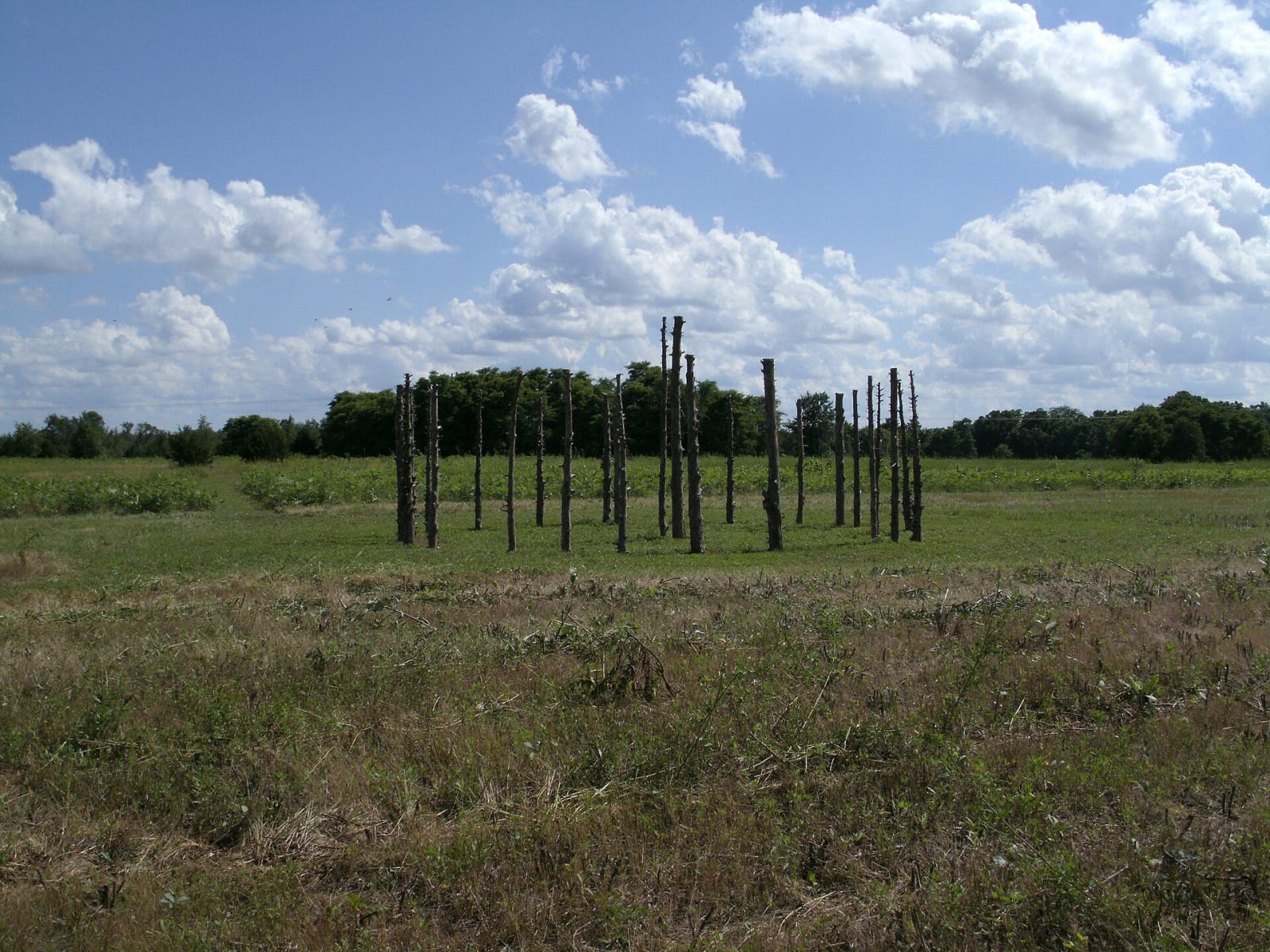
This is the only Illinois village yet found in Missouri. A short walking trail leads to the marked outline of one excavated longhouse and on to an oxbow lake.
Visitor Info
On the Map
Nearby
The closest stops worth working into your route
Historical markers nearby
Roadside plaques and monuments within a short detour