Home / Missouri / Mark Twain Country & Little Dixie / Museum of Osteopathic Medicine
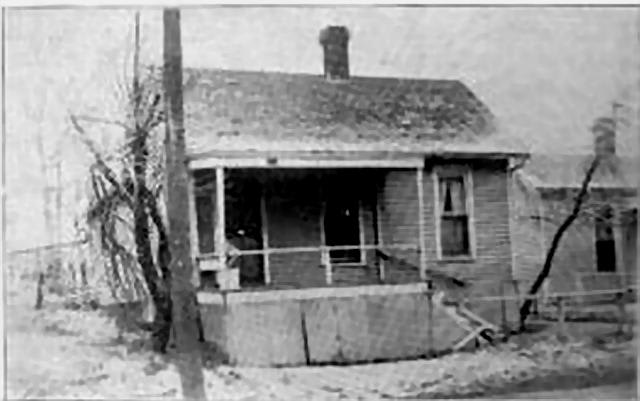
The first American School of Osteopathy building in Kirksville, a small frame house with a porch, in a photograph published in 1911.E. M. Violette, History of Adair County (1911) / public domain via Wikimedia Commons
🎭Cultural

Museum of Osteopathic Medicine

Part ofMark Twain Country & Little Dixie

Kirksville's museum of Andrew Taylor Still, the frontier doctor who gave up drugs after losing his children and founded the first school of osteopathy here in 1892.

⏱
Duration
One to two hours.
🎟
Admission
See the museum's site; guided tours by arrangement.
📅
Best Season
Year-round; Monday to Friday 8 a.m. to 5 p.m., Saturday 10 a.m. to 3 p.m.

The Story

Andrew Taylor Still was a frontier doctor who lost faith in his own medicine. Born in a Virginia log cabin on August 6, 1828, he was the son of a Methodist circuit rider and physician whose antislavery sermons helped get him reassigned out of Missouri. Andrew fought on the free-state side in Kansas and served in Kansas units in the Civil War. In 1864 spinal meningitis killed two of his children and an adopted child, and a month later a baby daughter died of pneumonia. Unable to save his family with the bleeding, blistering and purging of the day, he turned to anatomy and came to believe that most illness could be treated without drugs by correcting the body's structure.

Shunned in Kansas and then in Macon, he opened an office on the Kirksville square in March 1875, advertising himself as a magnetic healer and lightning bonesetter. He named his system osteopathy in 1885, and in 1892 founded the American School of Osteopathy in a two-room frame building. Its first class, sixteen men and five women, graduated in 1894. Within a few years more than 400 patients a day were in town for treatment, and the Wabash ran four passenger trains daily to carry them.

That first school building and a Still family cabin built in Lee County, Virginia, in the 1820s stand inside the museum's Heritage Hall, moved there in 1994. The museum, founded in 1934, holds more than 100,000 objects, and one gallery traces the history of anatomy, dissection and body snatching.

Visitor Info

⏱
Time Needed
One to two hours.
🎟
Admission
See the museum's site; guided tours by arrangement.
📅
Best Season
Year-round; Monday to Friday 8 a.m. to 5 p.m., Saturday 10 a.m. to 3 p.m.
🛣️
Highway
US-63

On the Map

Nearby

The closest stops worth working into your route

natural3 mi away
Thousand Hills State Park
Kirksville's reservoir park: Forest Lake, dammed in 1951 and 1952 on land given by the Laughlin heirs, in glacier-cut hills with petroglyphs under an interpretive shelter.
cultural38 mi away
Walt Disney Hometown Museum
A museum in Marceline's old Santa Fe depot, built on the collection of Walt Disney's sister Ruth, about the five years the Disney family farmed outside this railroad town.
historical42 mi away
General John J. Pershing Boyhood Home State Historic Site
The nine-room Gothic house in Laclede where John J. Pershing grew up, with the Prairie Mound School he taught in before West Point and a museum of his career.
historical44 mi away
Locust Creek Covered Bridge State Historic Site
Missouri's longest surviving covered bridge, 151 feet of 1868 white pine that carried a transcontinental road and now stands over a creek bed the creek abandoned.
historical54 mi away
Battle of Athens State Historic Site
A Des Moines River port where neighbours fought the northernmost Civil War battle in Missouri in August 1861, and a cannonball house left standing in the town it emptied.
historical57 mi away
Iliniwek Village State Historic Site
The only Illinois village found in Missouri, a town of perhaps 8,000 Peoria and Moingwena people that Marquette and Jolliet visited on the Des Moines River in 1673.

Historical markers nearby

Roadside plaques and monuments within a short detour

Marker1.1 mi away
Kirksville
Marker22 mi away
Edina
Marker23 mi away
Lancaster
Marker29 mi away
Sullivan County
Marker29 mi away
Unionville