North Carolina · Region

Fayetteville, Pinehurst & the Sandhills

Lumbee country around Pembroke and Hayes Pond, the Town Creek mound, Fayetteville's Market House and longleaf Sandhills from Weymouth Woods to Pinehurst and Jugtown.

12 places to explore

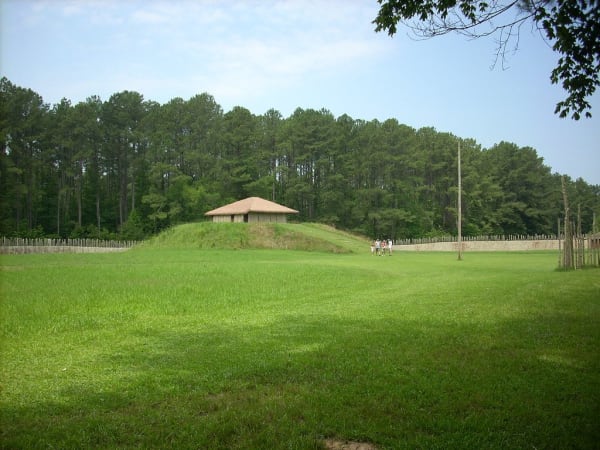
The Lumbee take their name from the Lumber River, which many of them call the Lumbee River, and Pembroke is the center of their nation. At Princess Ann the blackwater river runs dark under cypress. In Pembroke, Old Main still stands on the campus of the school Lumbee families built in 1887; it was saved from demolition in 1972 and rebuilt after a fire, and it now holds a museum. Outside Maxton, a marker remembers the January night in 1958 when several hundred Lumbee people ran the Klan off a field by Hayes Pond. Far older is Town Creek, where Pee Dee people raised a mound above the Little River about a thousand years ago.

Fayetteville's Market House stands on the site of the state house where North Carolina ratified the Constitution in 1789, and enslaved people were sold under its arches. Across town, Fayetteville State grew from a school on land seven Black men bought in 1867. At the House in the Horseshoe, the bullet holes from a 1781 Loyalist attack are still in the walls. In Laurinburg, the McDuffies founded a school in 1904, and Dizzy Gillespie later studied there.

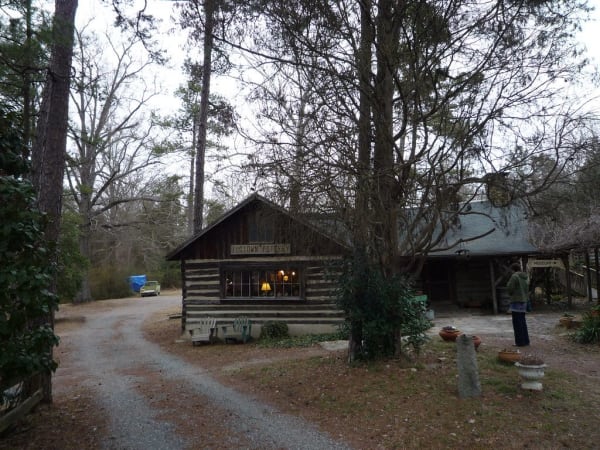
The Sandhills are old dunes once covered in longleaf pine. Weymouth Woods keeps some of the old trees, and Pinehurst grew up in 1895 on land the loggers had already cleared. North of there are the log shops of Jugtown Pottery, and to the east is Raven Rock on the Cape Fear.

What to See in Fayetteville, Pinehurst & the Sandhills

12 places across the region, grouped by what they are.

Geology & Rock Formations
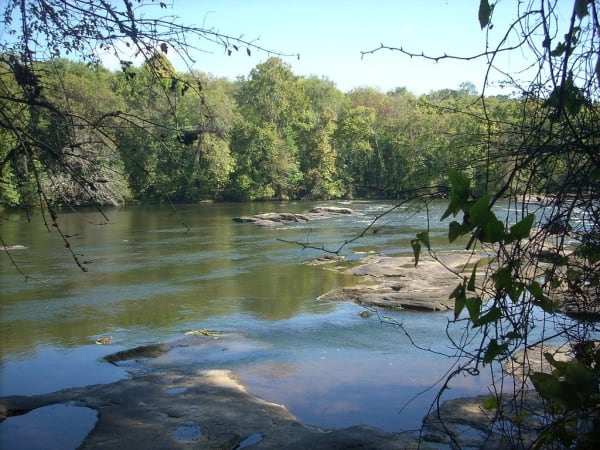
Low rock ledges called the fish traps breaking the surface of the wide Cape Fear River, with green woods on the far bank.

Raven Rock State Park

Lillington

A crystalline bluff rising 150 feet over the Cape Fear River on the fall line, with the ruins of a lock and dam and trails through beech woods.

View details →

Natural Areas

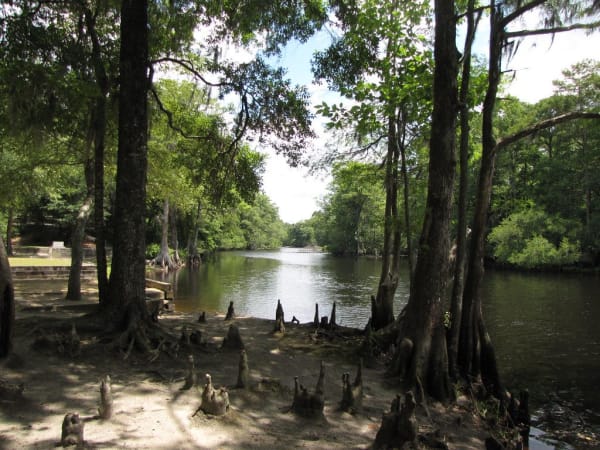
The dark, still Lumber River framed by cypress trees and knees along a shaded bank.

Lumber River State Park (Princess Ann Access)

Orrum

The blackwater river the Lumbee are named for, which many Lumbee people call the Lumbee River, with landings, campsites and trails at Princess Ann.

View details →
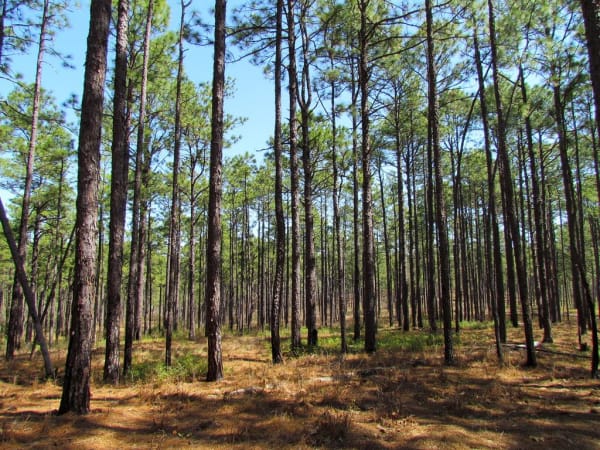
Tall, straight longleaf pines rising from a floor of pine needles and low grass under a blue sky.

Weymouth Woods-Sandhills Nature Preserve

Southern Pines

A remnant of the old longleaf pine forest at Southern Pines, saved by the novelist James Boyd's family, with trees centuries old and the scars of the turpentine trade.

View details →

Historic Sites

Battle of Hayes Pond

Maxton

The field near Maxton where several hundred Lumbee people broke up a Ku Klux Klan rally on January 18, 1958, marked by a state roadside marker.

View details →
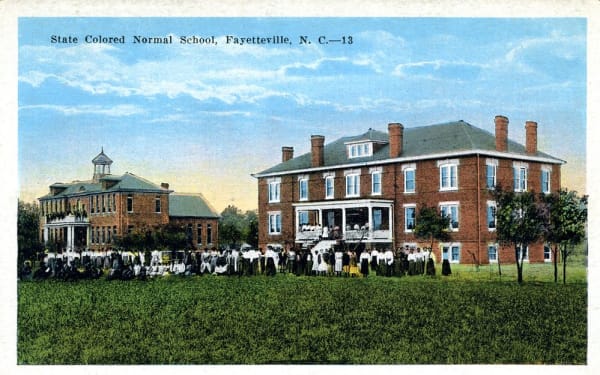
An early 20th-century postcard of two brick school buildings on a lawn, with students gathered in front, captioned State Colored Normal School, Fayetteville.

Fayetteville State University

Fayetteville

The historically Black university that grew from the 1867 Howard School, founded on land seven Black men bought, where Charles W. Chesnutt was principal.

View details →

House in the Horseshoe State Historic Site

Sanford

Philip Alston's house above a bend of the Deep River, shot full of holes in a 1781 Loyalist attack, later a cotton plantation where about fifty people were enslaved.

View details →

Laurinburg Institute

Laurinburg

The Black boarding school Emmanuel and Tinny McDuffie founded in 1904 at Booker T. Washington's urging, where Dizzy Gillespie was a student from 1933.

View details →
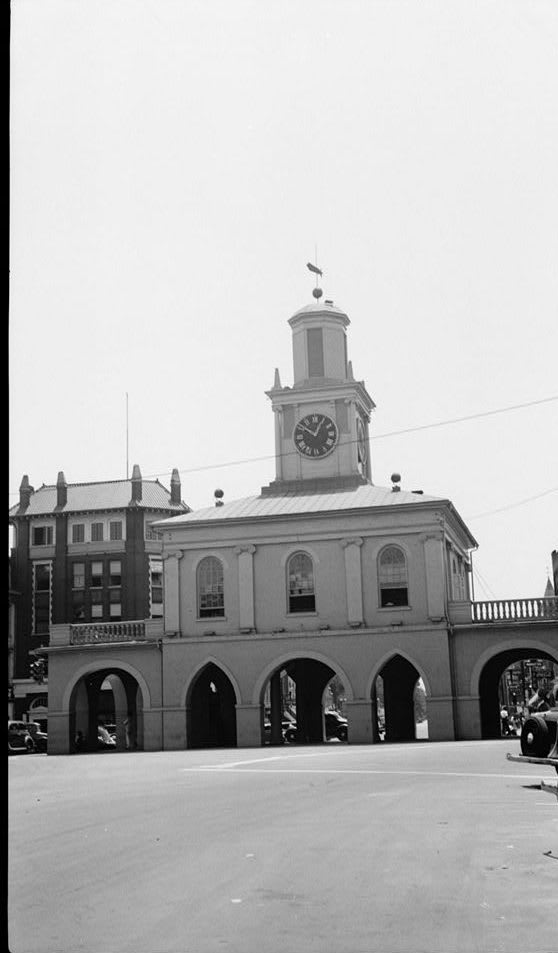
A black-and-white view of a two-story arcaded brick market house with a clock tower, standing in an open street.

Market House

Fayetteville

The 1832 arcaded market and town hall in the traffic circle at the heart of Fayetteville, where enslaved people were sold, built on the site of the state house of 1789.

View details →
A grassy earthen mound with a small thatched temple on top, inside a log stockade under tall pines.

Town Creek Indian Mound State Historic Site

Mount Gilead

The ceremonial center Pee Dee people built above the Little River about a thousand years ago, with its earthen mound, plaza and stockade rebuilt by the state.

View details →

Towns & Gateways

A log cabin sales room with a gravel drive under bare oaks and pines.

Jugtown Pottery

Seagrove

The 1921 pottery in the pines of northern Moore County where the Owens family still throws and fires pots, the cornerstone of the Seagrove pottery country.

View details →

Museum of the Southeast American Indian at Old Main

Pembroke

The 1923 brick building at UNC Pembroke that Lumbee people fought to save, burned in 1973 and rebuilt, now home to a free museum of Native Southeast life.

View details →

Architecture

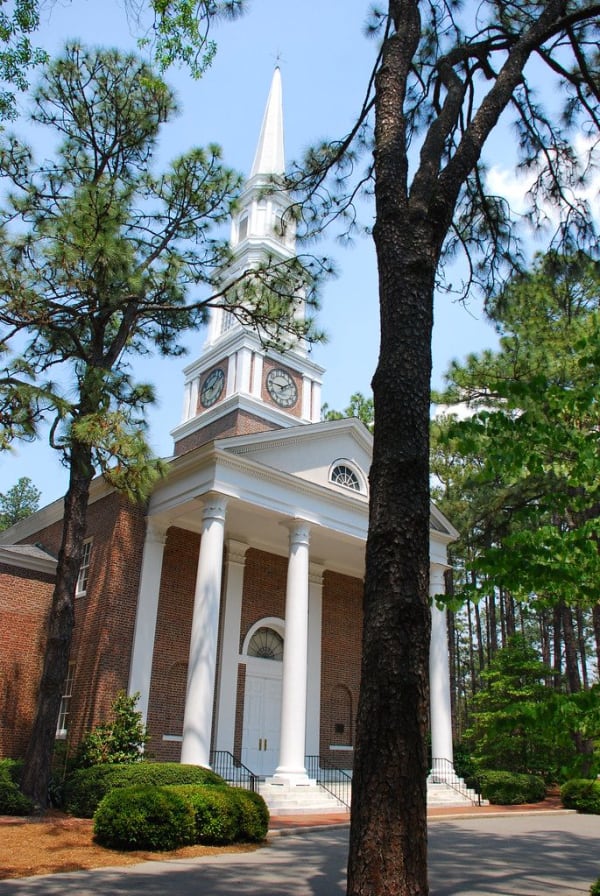
A brick chapel with a white columned portico and tall white steeple among pines in Pinehurst.

Pinehurst Village

Pinehurst

The resort village a Boston soda-fountain maker laid out in cutover longleaf country in 1895, with Olmsted's curving lanes, a village green and Donald Ross's No. 2.

View details →

Fayetteville, Pinehurst & the Sandhills rewards the unhurried. Pick a base, fan out, and let the country between the headline stops surprise you.

← Explore more of Open Road Guide