 Carol M. Highsmith / public domain via Library of Congress
The Story
Wormsloe covers the southern end of the Isle of Hope, a peninsula of marsh and oak about ten miles southeast of downtown Savannah. Noble Jones, a carpenter who came with Oglethorpe in 1733 and went on to serve the colony as doctor, surveyor, Indian agent and commander of a company of marines, held the land as a guard post on Savannah's outer defenses against Spanish attack. His fortified house of tabby, a mix of oyster shell and lime, is one of the oldest standing structures around Savannah, and the Crown granted him the land outright in 1756.
Georgia's ban on slavery had ended in 1750, and through the 1750s Jones used a small group of enslaved people to work part of his 500 acres in cotton, grain, vegetables and mulberry trees for the silk the colony hoped to make. A century later, under his descendant George Wymberley Jones De Renne, enslaved men and women grew Sea Island cotton here as the money crop and raised the estate's food. The family opened the grounds to paying visitors as Wormsloe Gardens in 1927. The state acquired most of the property in 1973 and opened the historic site in 1979; the house at the end of the avenue is still private, lived in by Jones's descendants.
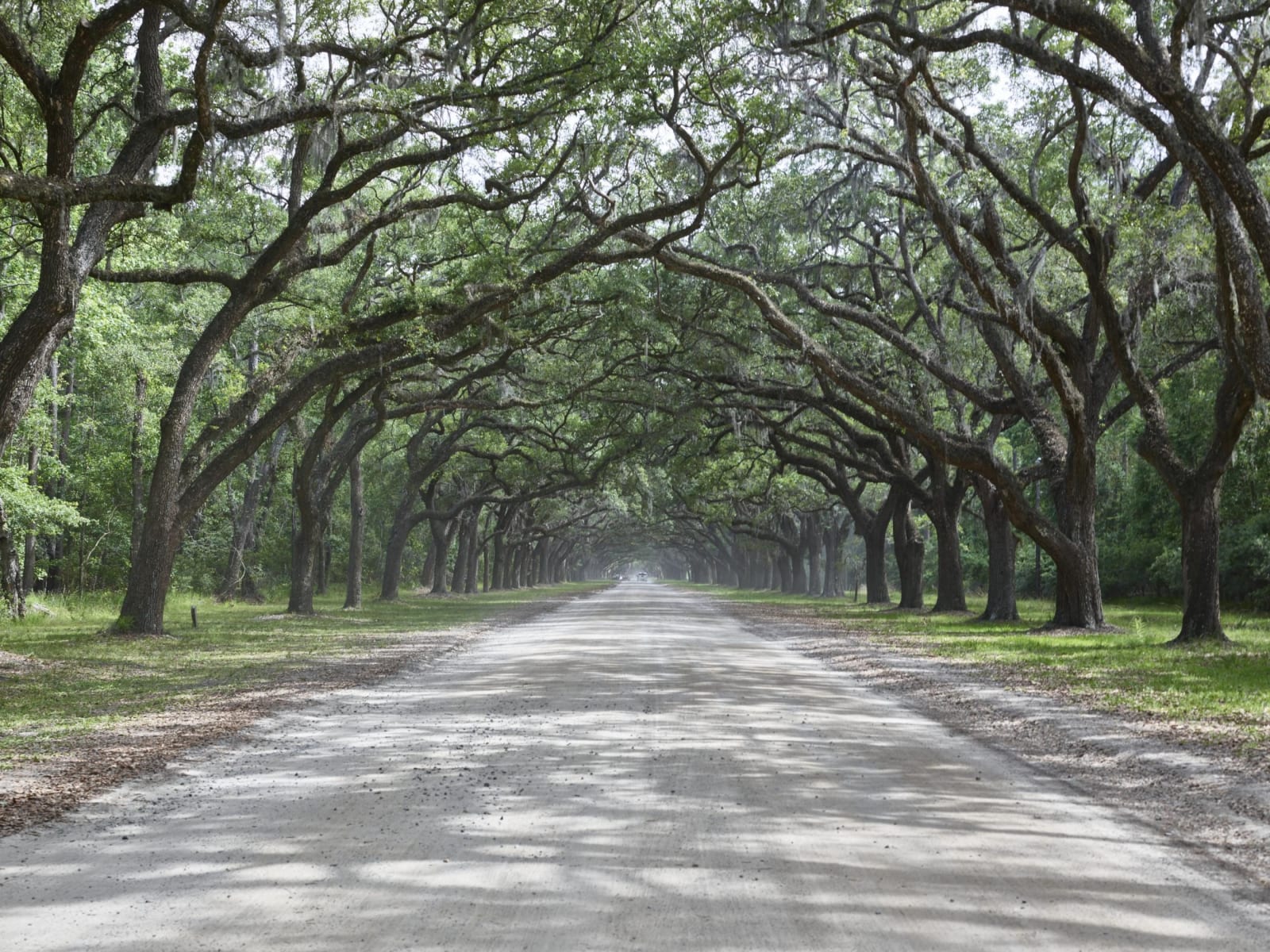
The long avenue of live oaks runs from the gate on Skidaway Road to the museum, which shows objects excavated on the property. A trail leads past the tabby ruins along the marsh to a colonial life area where interpreters show eighteenth-century skills on program days.
Visitor Info
On the Map
Nearby
The closest stops worth working into your route
Historical markers nearby
Roadside plaques and monuments within a short detour