 Carol M. Highsmith / public domain via Library of Congress
The Story
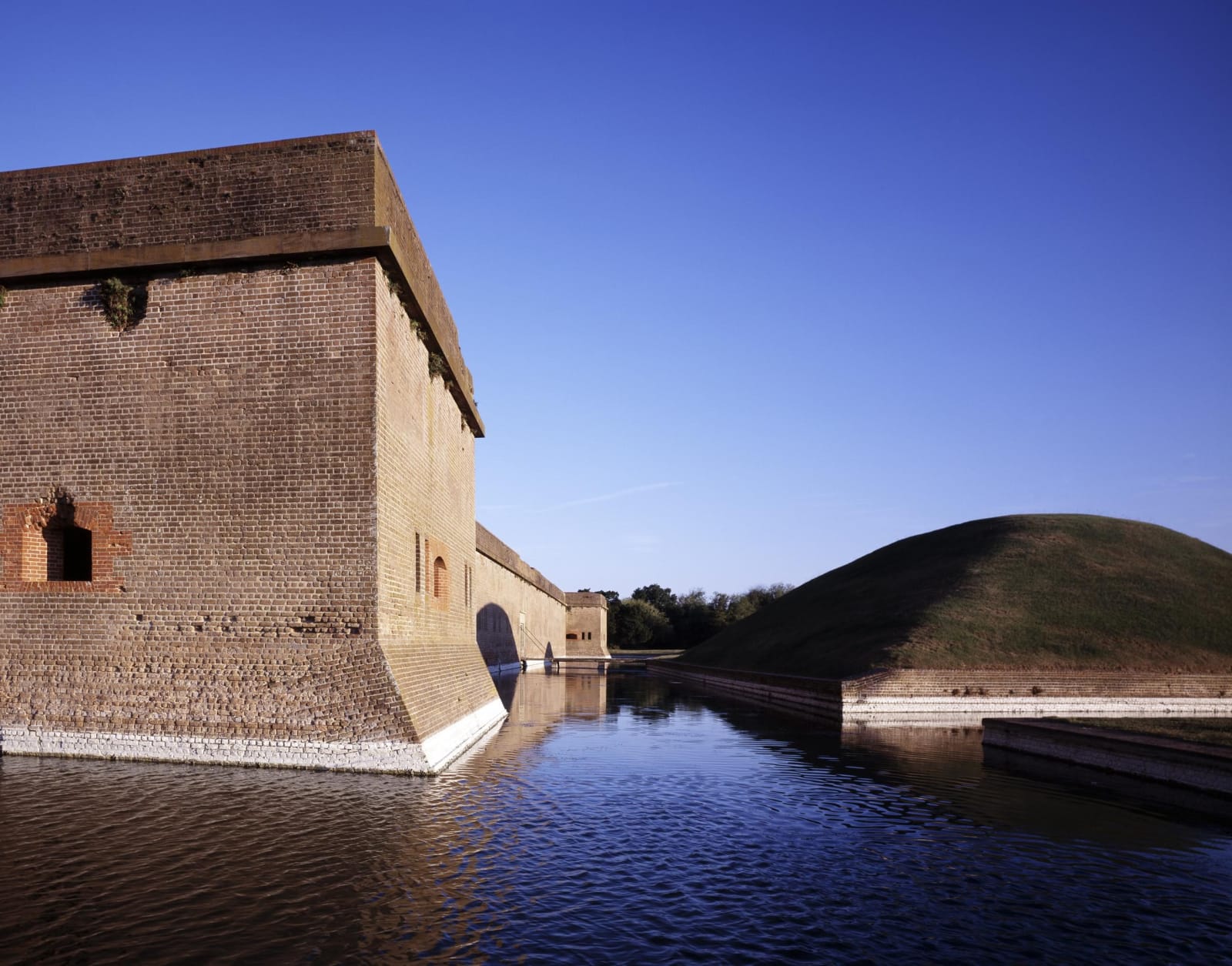
Fort Pulaski stands on Cockspur Island at the mouth of the Savannah River, a five-sided brick fort begun in 1829 to guard the port from the sea. A young Lieutenant Robert E. Lee did the early site work, and Joseph Mansfield oversaw construction until it was finished in 1847. Army engineers and enslaved men built it, living in a workers' village outside the walls where archaeologists have recovered more than 21,000 objects. In January 1861 Georgia troops seized the fort, and enslaved men impressed from nearby rice plantations cleared the moat and mounted the guns.
On April 10, 1862, Union rifled cannon on Tybee Island, nearly a mile away, opened fire, and the next day they had opened two holes in the southeast wall. Colonel Charles Olmstead surrendered when shells came close to the main powder magazine, less than thirty-six hours in. A fort that engineers on both sides thought safe from such guns changed the way forts would be built and attacked. On April 13 Major General David Hunter issued General Orders No. 7, declaring free everyone held in slavery at the fort and on Cockspur Island.
Led by March Haynes, a river pilot who had been forced to carry the garrison's mail, the freed men went back upriver to scout Confederate positions and to ferry anyone seeking freedom to the island, and the old workers' village became a contraband camp. By 1865 a recruiting post here was enlisting Black men in the U.S. Colored Troops. Cross the drawbridge, walk the casemates and parapet, and look at the southeast face.
Visitor Info
On the Map
Nearby
The closest stops worth working into your route
Historical markers nearby
Roadside plaques and monuments within a short detour