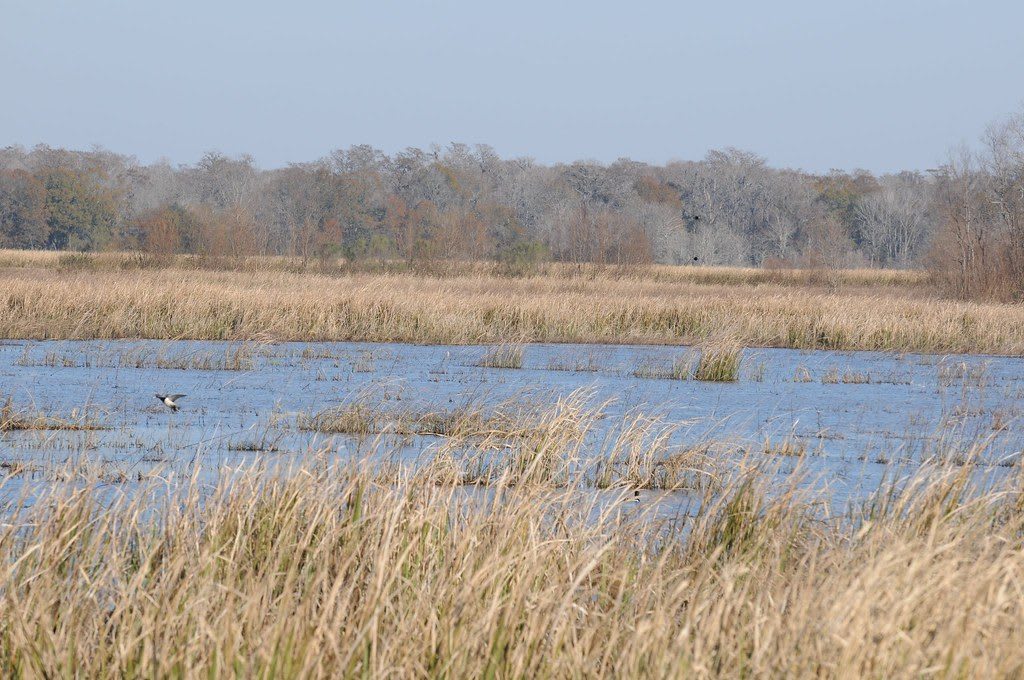
 USFWS/Southeast / CC BY 2.0 via Flickr
The Story
The dikes you drive on were built by hand. By the mid-1700s rice planters held most of this floodplain, and the work of clearing the swamp, raising the banks and setting the wooden trunk gates that let the tide in and out was done by enslaved Africans and their descendants. Rice made St. Peter's Parish, the country on this side of the river, the second most productive rice district in South Carolina before the Civil War, and old church records suggest enslaved people outnumbered whites there by as much as ten to one. Thirty-six historic and prehistoric archaeological sites have been recorded inside the impoundments.
The refuge began in 1927 as a bird refuge of about 2,300 acres and grew by executive orders, purchases and swaps to close to thirty thousand acres split between Georgia and South Carolina, most of it reached from this side. About three thousand acres of the old rice fields are managed as freshwater pools for wading birds and wintering ducks, still using the eighteenth-century dikes and trunk gates.
Laurel Hill Wildlife Drive is the reason to come: a four-and-a-half-mile drive on the dikes, entered from SC 170, with alligators, herons, egrets, purple gallinules and, in winter, migrating ducks. The visitor center on Beech Hill Lane, with exhibits and the Beech Hill boardwalk over a cypress swamp, has its own separate entrance. Bring water and insect repellent; cell service is patchy, and ride services are no help out here.
Visitor Info
On the Map
Nearby
The closest stops worth working into your route
Historical markers nearby
Roadside plaques and monuments within a short detour