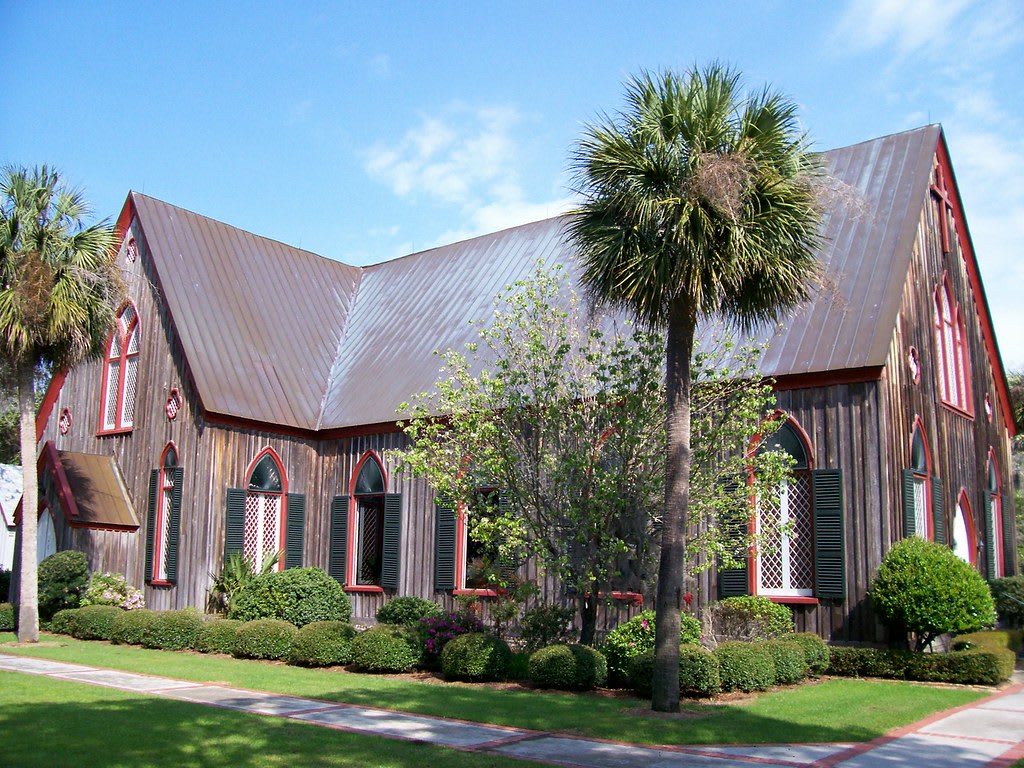
 Bill Ward's Brickpile / CC BY 2.0 via Flickr
The Story
Bluffton began as a summer refuge on the twenty-foot bluffs of the May River, where the planters of St. Luke's Parish brought their households to escape the fevers of the rice and cotton plantations worked by the people they enslaved. The town took its name in 1844, the year those planters started the state's first secession movement, the Bluffton Movement, a call to leave the Union sixteen years before South Carolina did. After Union forces took Hilton Head in November 1861 the residents left, and on June 4, 1863, Union troops raided Bluffton and burned more than two-thirds of its houses, perhaps in reprisal for its part in secession.
What survived and what came after tell more of the story. The Church of the Cross, built in 1857, still stands by the river. Campbell Chapel, raised by enslaved people in 1853, became an African Methodist Episcopal church in 1874 and a center of Black life through Reconstruction. Around 1870 Cyrus Garvin, a freedman, built a small house near the river, thought to be the oldest surviving house in town built by a freedman; his family kept it into the 1960s.
The Garvin-Garvey House stands in Oyster Factory Park beside the Bluffton Oyster Factory, a working seafood house on the river. Start at the Heyward House Museum and Welcome Center on Boundary Street for a walking map, then follow Calhoun Street down to the water. Parking is on the street.
Visitor Info
On the Map
Nearby
The closest stops worth working into your route
Historical markers nearby
Roadside plaques and monuments within a short detour