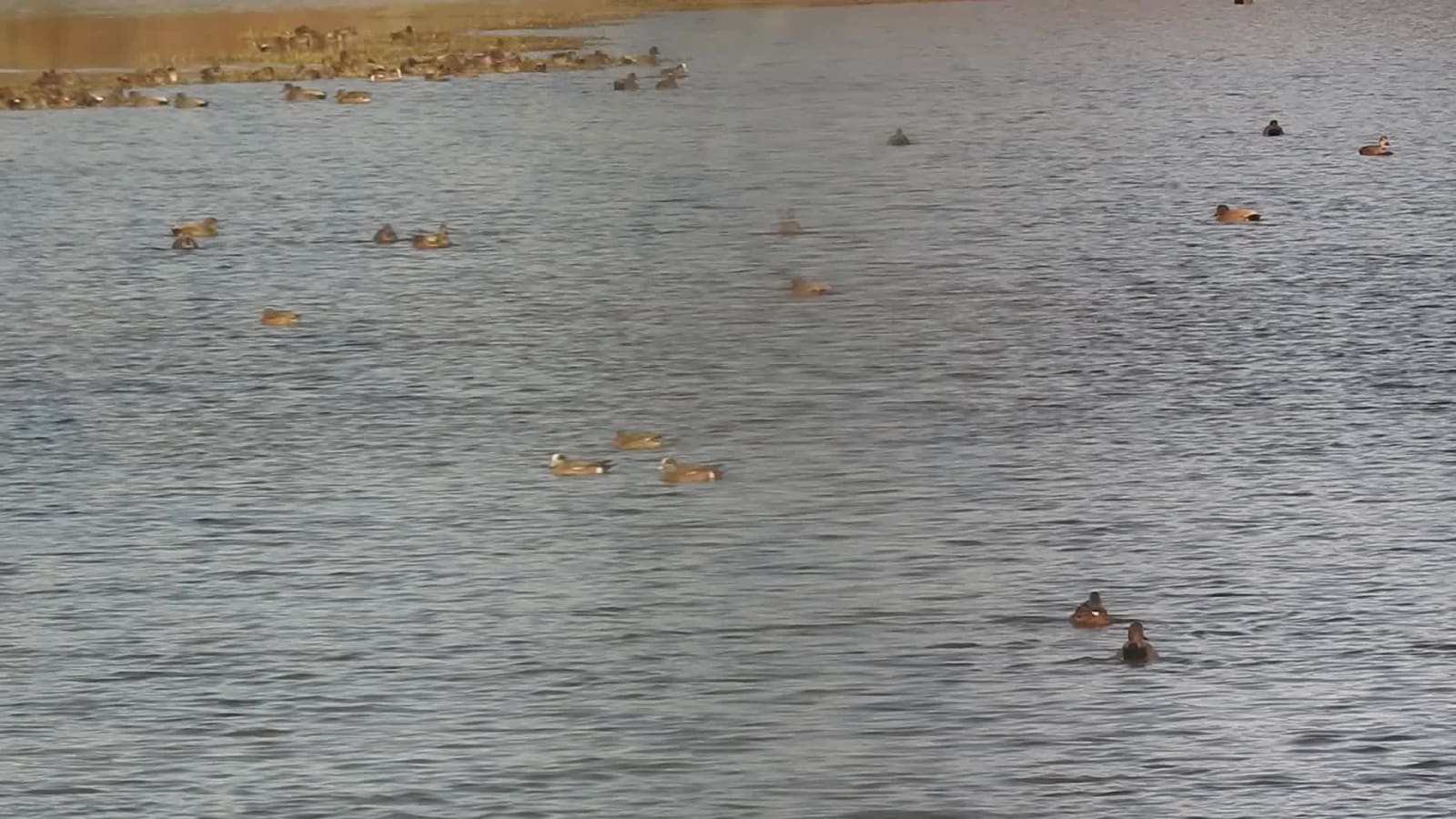
 Shawn Taylor / CC BY 2.0 via Flickr
The Story
The refuge was set aside in 1938 along the Tennessee Valley Authority's new Wheeler Lake as a wintering ground for ducks, geese and other migratory birds. Named, like the lake, for the Confederate general and later congressman Joseph Wheeler, it covers about 35,000 acres of water, marsh, bottomland woods and farm fields on both sides of the river between Decatur and Huntsville, with the old town of Mooresville on its edge.
Winter is the season. Thousands of ducks and geese come down the flyway, and sandhill cranes now winter here in the thousands. In 2004 the first endangered whooping cranes arrived, and a few have returned most winters since. The refuge also protects habitat for a dozen federally threatened or endangered species, and the same office runs the Sauta, Fern and Key cave refuges for endangered gray and Indiana bats and the Alabama cavefish.
Start at the visitor center off Highway 67, a short drive east of Interstate 65. A short walk leads to the Wildlife Observation Building, which looks out over the fields where cranes and waterfowl feed. The Atkeson Cypress Boardwalk loops through a swamp nearby, and about 70 miles of roads and trails reach the rest of the refuge. Parts of it close in winter to give the birds a sanctuary, so check the refuge's maps before wandering far.
Visitor Info
On the Map
Nearby
The closest stops worth working into your route
Historical markers nearby
Roadside plaques and monuments within a short detour