 Carol M. Highsmith / public domain via Library of Congress
The Story
This was Chickasaw land until the Chickasaw Nation ceded its claims north and east of the Tennessee River in 1816; most of the settlers who had come earlier were removed by territorial and federal forces before the sale. Sixty-two residents of the new village petitioned the territorial legislature in October 1818, and Mooresville was incorporated on November 16, three days ahead of the county seat at Athens and a year before Alabama was a state. The town still calls itself the town older than the state.
It lived on cotton, grown on the valley plantations around it by enslaved workers. The boll weevil ended that early in the twentieth century, the stores closed and people moved to Decatur and Huntsville for work, which is why so little was torn down. Historic American Buildings Survey teams drew many of the houses in the 1930s, and the whole town is listed on the National Register.
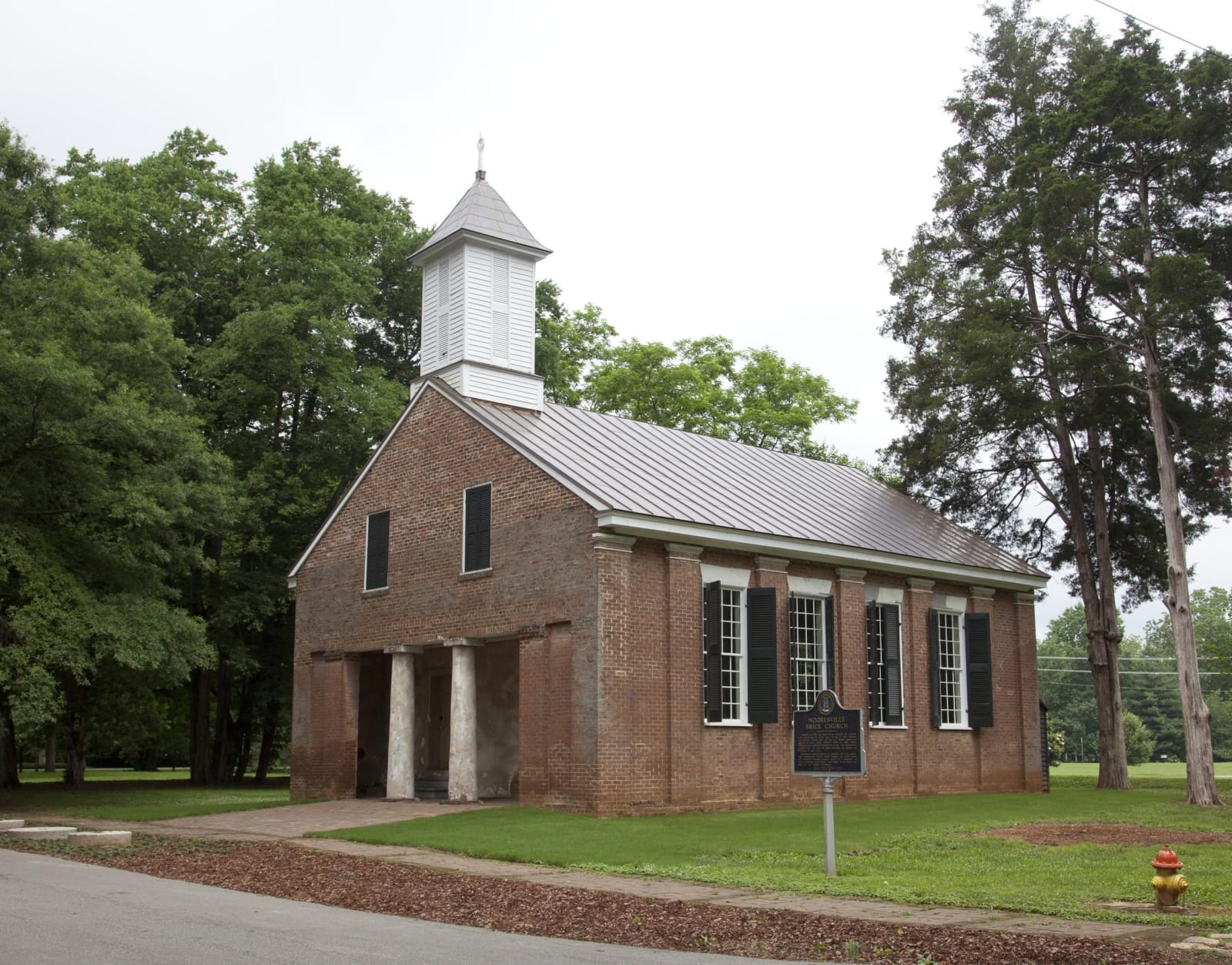
Walk Lauderdale Street and the lanes off it. The Stagecoach Tavern, from about 1821, is called the oldest public frame building in the state, and the 1840 post office still sorts mail into the pigeonholes moved over from the tavern. The 1839 Brick Church and the white frame Church of Christ stand a block apart; town tradition says James A. Garfield preached in the latter as a Union officer. The town counts about 90 people, and the houses are homes, so look from the street.
Visitor Info
On the Map
Nearby
The closest stops worth working into your route
Historical markers nearby
Roadside plaques and monuments within a short detour