 Carol M. Highsmith / public domain via Library of Congress
The Story
The Cherokee and the Chickasaw both claimed this valley until the cessions of 1805 and 1806 opened it to settlers and cotton. In 1941 the Army put a chemical munitions plant on the farmland west of Huntsville, and in 1950 Redstone Arsenal became home to the Army's missile program and to the German rocket engineers brought over after the war. The center opened in 1970 on Arsenal land the Army donated, as the visitor center for NASA's Marshall Space Flight Center, and the Apollo hardware that came out of those buildings formed its first exhibits.
The team's leader, Wernher von Braun, had been a member of the Nazi Party and the SS and the technical head of the V-2 program at Peenemünde, where thousands of forced laborers built the missile. About 3,100 V-2s were fired at London, Antwerp, Paris and other cities late in the war and killed more than 7,000 people, most of them civilians. Here he led the work on the Jupiter C and then the Saturn V, and the center's archive keeps the fullest collection of his papers, wartime documents among them.
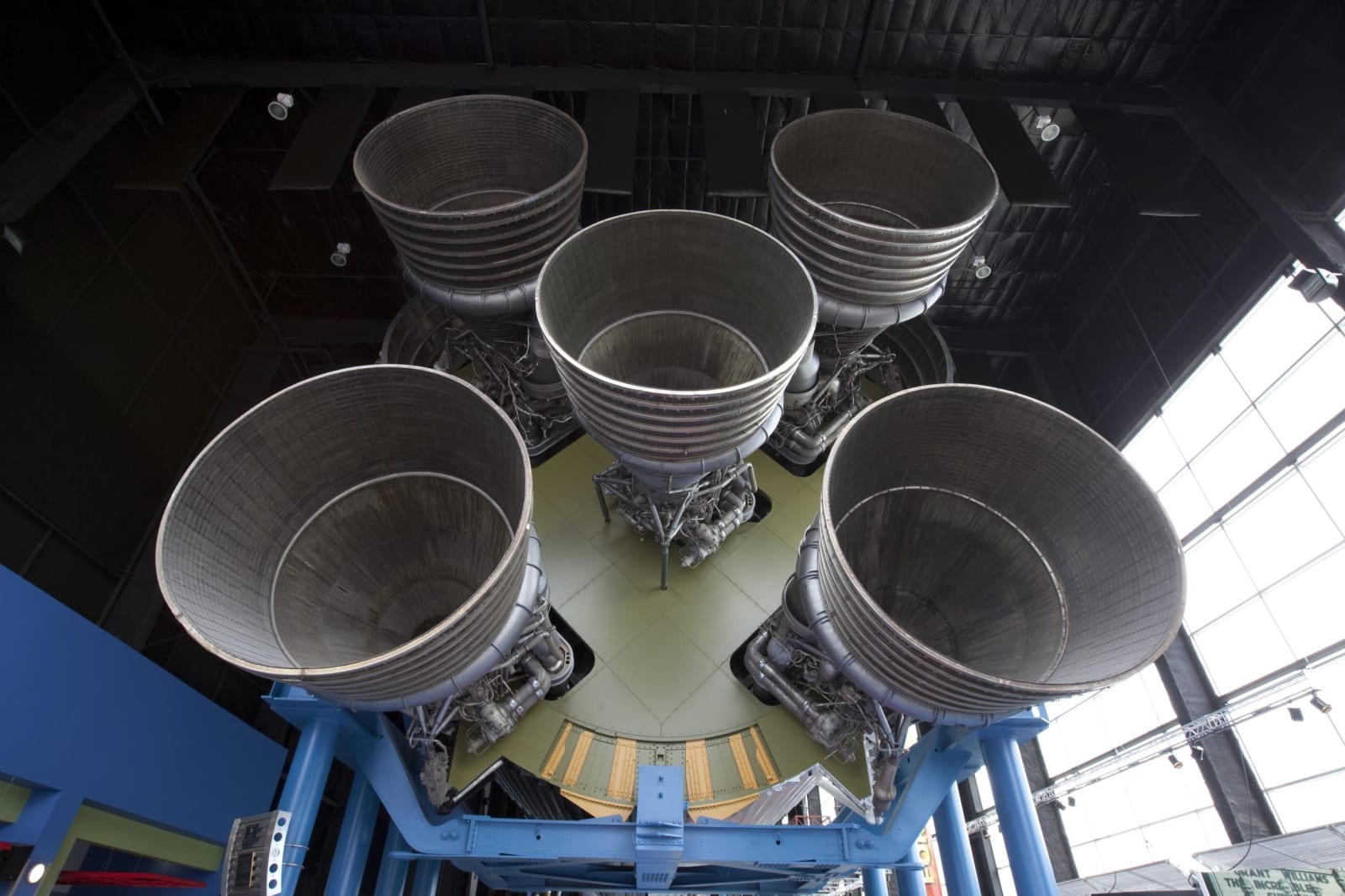
The Saturn V inside the Davidson Center is the dynamic test vehicle that was shaken on the Marshall test stands and later left outside for years before it was restored and housed; it is a National Historic Landmark. Outside stand the shuttle Pathfinder on its tank and boosters and the grave of Miss Baker, a squirrel monkey who was among the first two animals to come back alive from space. Space Camp began here in 1982.
Visitor Info
On the Map
Nearby
The closest stops worth working into your route
Historical markers nearby
Roadside plaques and monuments within a short detour