 Carol M. Highsmith / public domain via Library of Congress
The Story
Huntsville began as squatters' cabins around the Big Spring on land the Chickasaw ceded in July 1805 and the Cherokee in January 1806. Federal land sales opened in 1809, and planters from Georgia's Broad River country bought most of the ground around the spring. By 1819 the town was crowded enough that the only room large enough for Alabama's constitutional convention was Walker Allen's cabinet shop, a two-story frame building whose upper floor had served as the territory's first professional theater.
Forty-four delegates met there from July 5 to August 2, 1819, under John Williams Walker, with Clement Comer Clay chairing the committee that wrote the draft. The constitution was generous by the standard of its day to white men: no property or education test for voting, and direct election of the governor and both houses. It also protected slavery and barred the legislature from freeing enslaved people without their owners' consent, though it gave the enslaved a jury trial in serious cases. Alabama entered the Union as a slave state that December, with Huntsville as its first capital.
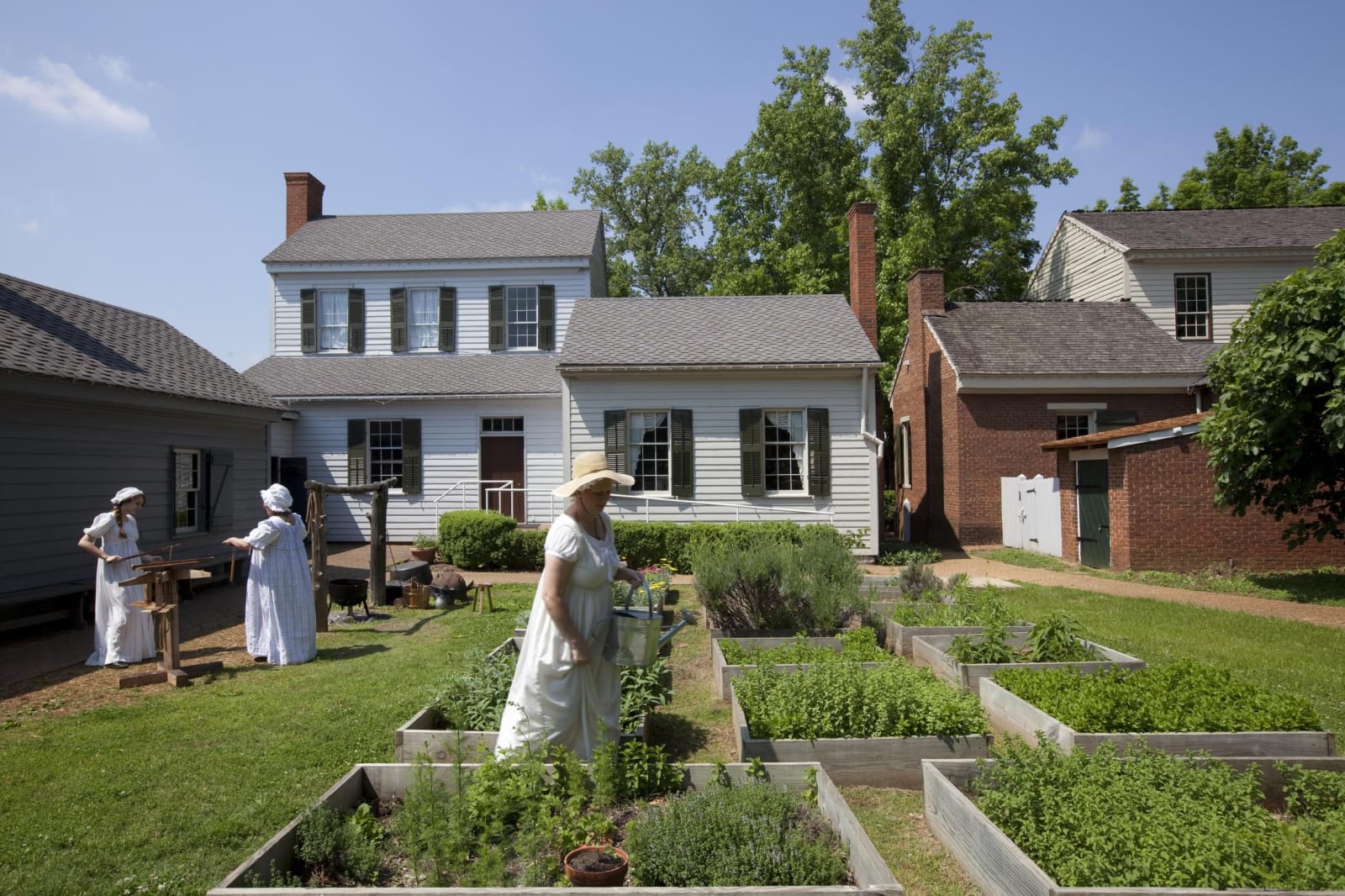
Nothing original stands. In 1968 archaeologists found the old foundations, the architect Harvie P. Jones worked out what the buildings had looked like, and the reconstructed village opened in 1982. Inside are Constitution Hall, Clay's law office, John Boardman's print shop, where the first full printing of the constitution was set, and Sheriff Stephen Neal's house with its kitchen and outbuildings.
Visitor Info
On the Map
Nearby
The closest stops worth working into your route
Historical markers nearby
Roadside plaques and monuments within a short detour