 formulanone / CC BY-SA 2.0 via Flickr
The Story
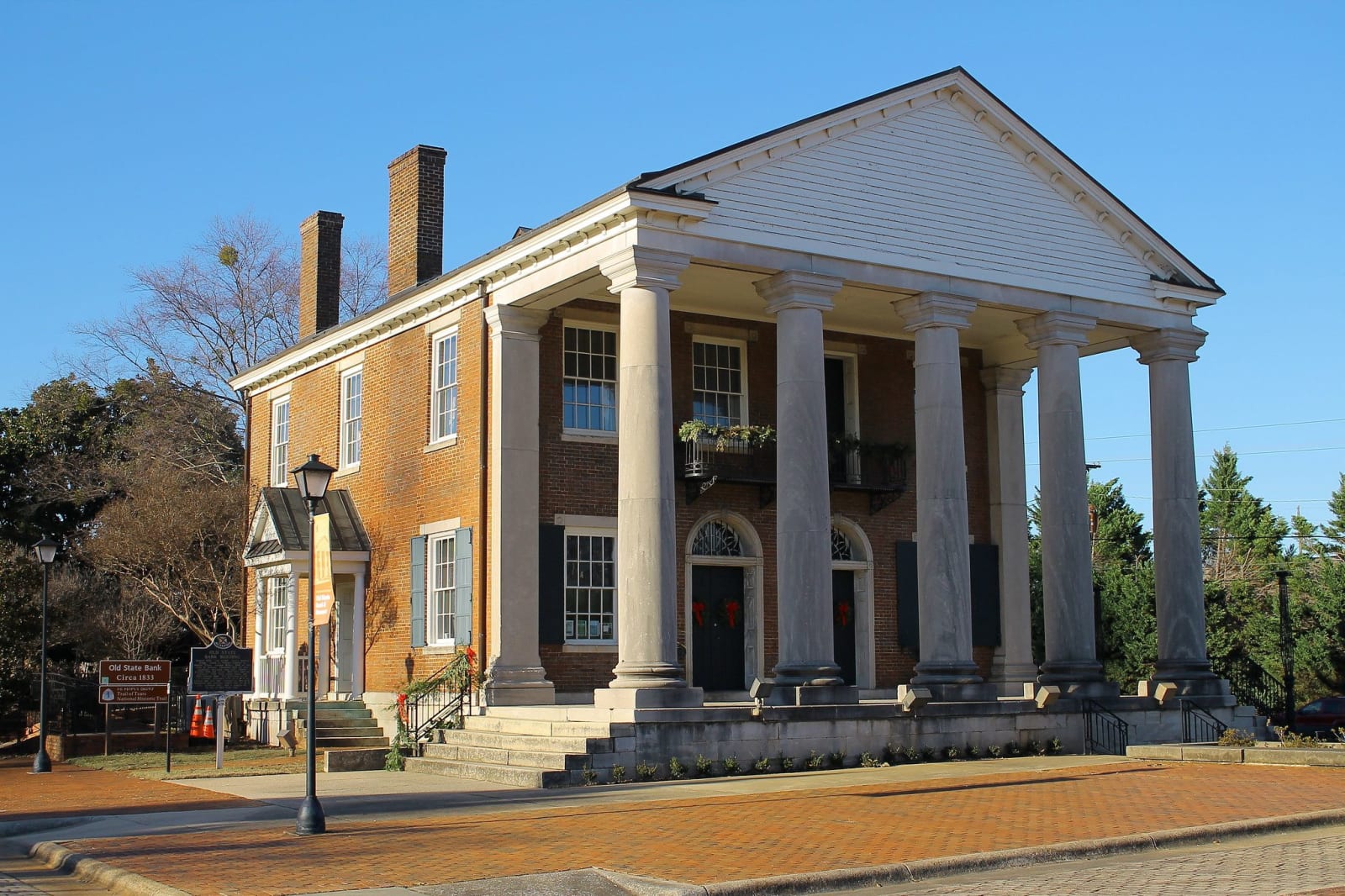
The 1819 constitution let the state found a bank, and in 1830 the legislature created the State Bank of Alabama with branches at Mobile, Montgomery and Decatur. Decatur then had about 200 people, but it sat on the Tennessee River beside the cotton plantations of the valley, on land the Cherokee had ceded less than twenty years before. The branch went up in less than nine months, a Jeffersonian front with five columns of stone quarried at Trinity, each said to weigh a hundred tons. Most of the work was done by enslaved men from the plantation of James Fennell, one of the town's founders.
The bank opened on July 29, 1833, ran up more than $1 million in debt by 1840 and lost its franchise in 1845. Union troops took it over in the war as a headquarters, storehouse and field hospital, and surgeons operated in the vault behind its 22-inch walls. When the armies left, all but three buildings in Decatur had been taken apart by federal troops for barracks and other structures. This was one of the three, and the columns still carry the marks of shot and the initials soldiers cut into them.
The bank later served as the First National Bank, an American Legion post and a doctor's office before the city restored it to its 1833-1845 look and opened it as a museum in 1984. Downstairs are three teller cages from 1833 and notes the bank issued; upstairs is the restored apartment of Washington Keyes, the first manager, whom the legislature required to live over the vault.
Visitor Info
On the Map
Nearby
The closest stops worth working into your route
Historical markers nearby
Roadside plaques and monuments within a short detour