 Carol M. Highsmith / public domain via Library of Congress
The Story
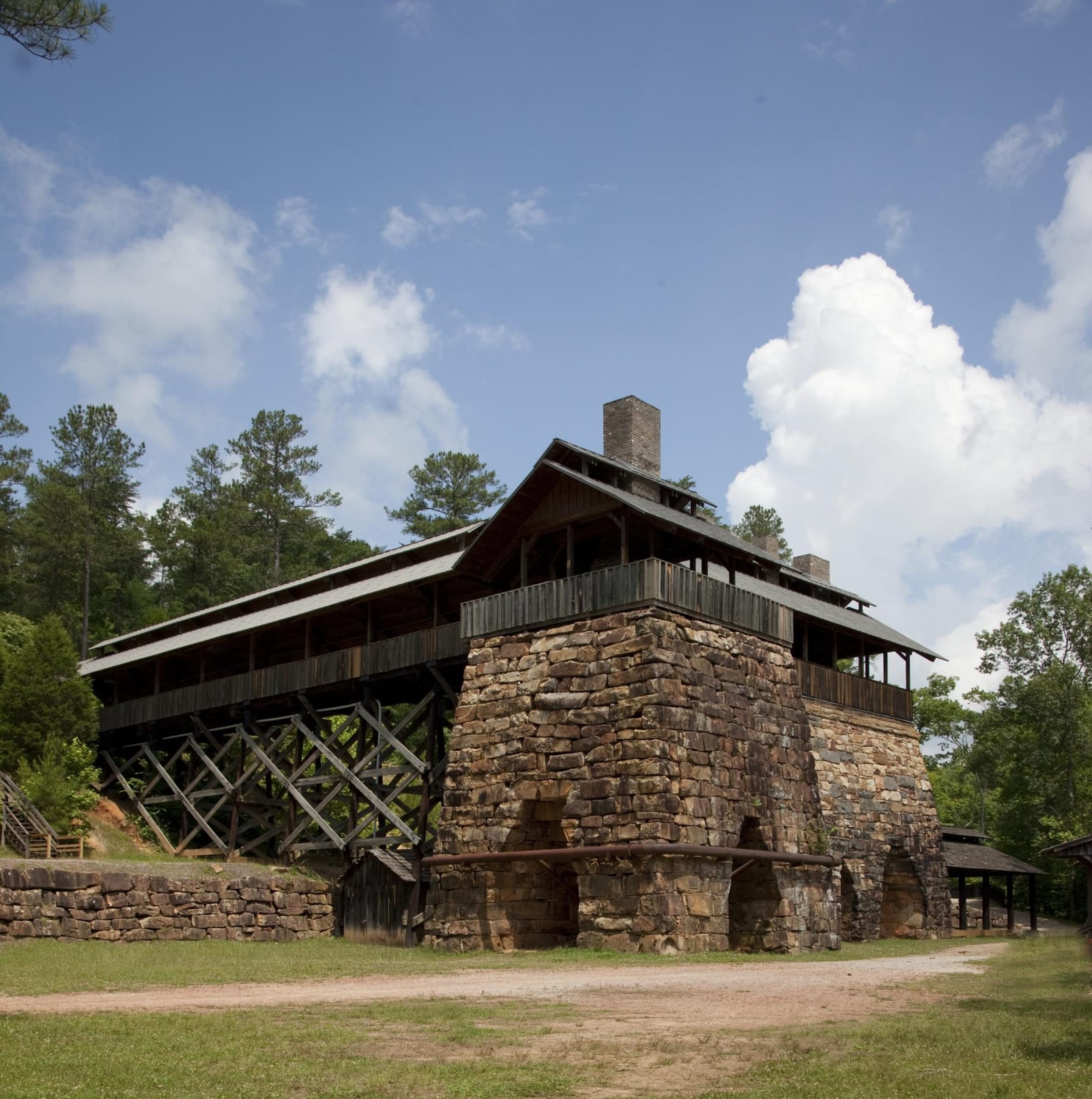
Iron making began on Roupes Creek in 1830, when Daniel Hillman built a bloomery forge here to hammer out tools, plows and pots for the farmers settling the valley. Ninian Tannehill bought the idle forge in 1836. In the late 1850s the Georgia ironmaster Moses Stroup built the first blast furnace, and in 1862 the Confederacy paid for two more. The three are truncated pyramids of 400-pound sandstone blocks, about 30 feet high, that together could make 22 tons of pig iron a day, most of it sent by rail to the arsenal and gun works at Selma.
The labor was mostly enslaved. Hundreds of workers cut timber, burned charcoal, dug ore and ran the furnaces, many of them leased from nearby plantations, and archaeologists have uncovered the sites of 16 cabins where enslaved workers lived. In 1862 a wagonload of red ore from Red Mountain was smelted here as a test, and its success helped decide where the furnaces of later Birmingham would rise. Three companies of the 8th Iowa Cavalry burned the works on March 31, 1865, during Wilson's Raid, and unlike Brierfield, Tannehill was never rebuilt.
The state made the 1,500-acre site a park in 1969. The Iron & Steel Museum of Alabama, opened in 1981, explains how iron was made and holds tools from the Tredegar works in Richmond. Around it stand more than 45 relocated buildings, mostly 19th-century log cabins, plus a working gristmill and a cotton gin house, with trails along the creek.
Visitor Info
On the Map
Nearby
The closest stops worth working into your route
Historical markers nearby
Roadside plaques and monuments within a short detour