The Story
Spring City is the rarest thing on this drive: a nineteenth-century Mormon village preserved more or less whole. It is one of only two places in the United States where the entire town is a National Register Historic District — the other is Colonial Williamsburg, Virginia. There is no separate historic quarter to go find here, because the city limits and the district boundaries are the same line. You simply drive into the past.
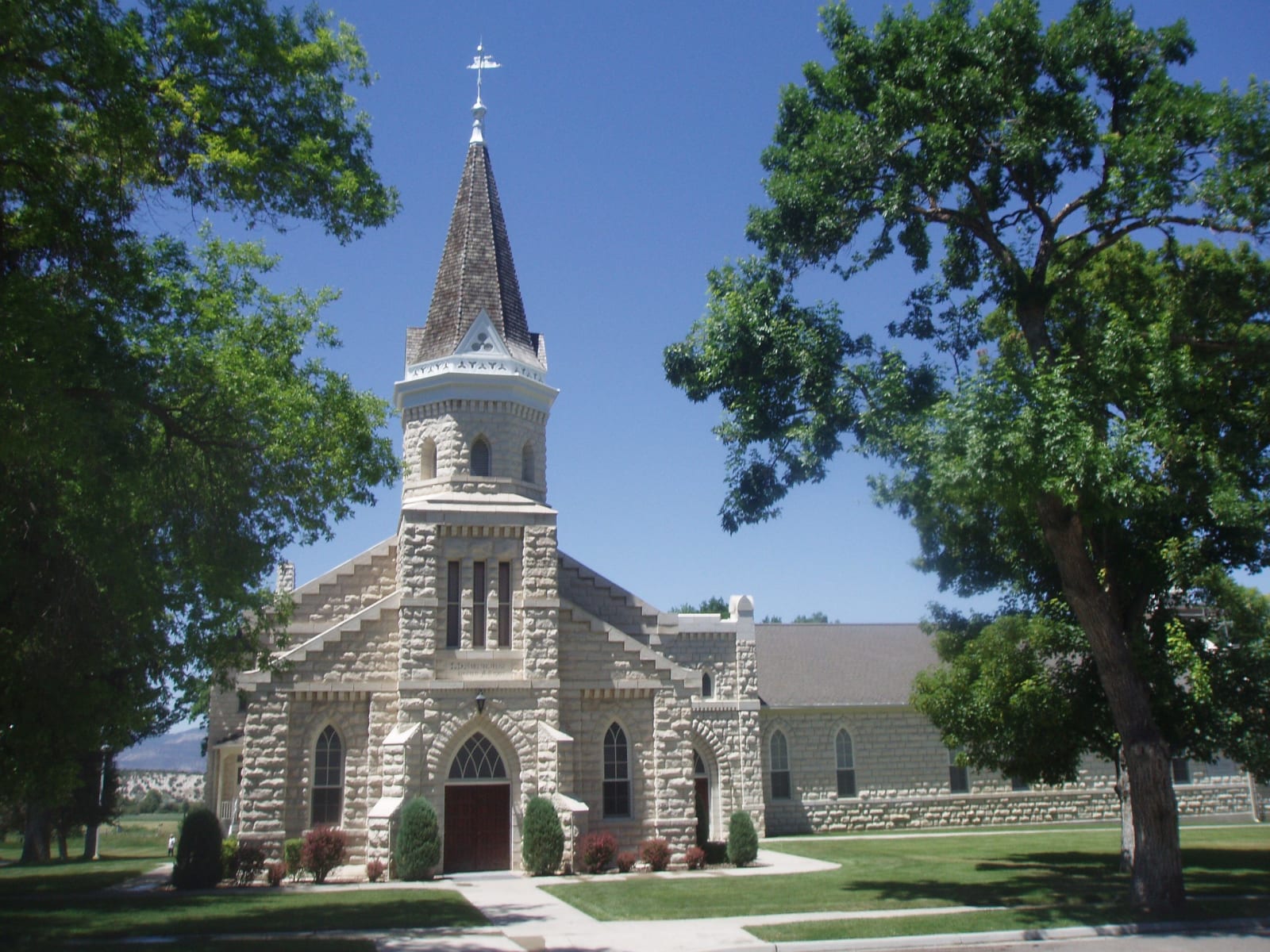
Like its neighbors, the town had a hard birth. Settlers arrived at Canal Creek in 1852, were burned out during the Walker War, and did not return for good until 1859. What rebuilt the town were Danish converts, many of them skilled stonemasons, who quarried the local oolite — a fine, creamy limestone soft enough to carve and hard enough to last. They raised a Gothic-and-Romanesque tabernacle, an endowment house, a Victorian schoolhouse, and more than two hundred homes, and the apostle Orson Hyde, sent in 1860 to direct the colonization of central Utah, kept his house and telegraph office here. Then history did Spring City an odd favor: as the railroad favored other towns and the population drifted away, no one had the money or the reason to tear the old buildings down. Decline became preservation.
Today Spring City is a quiet artist colony, full of restored stone houses, working studios, and the potters and painters who came for the light and the silence. The town throws its doors open on Heritage Day each Memorial Day weekend and hosts a plein-air painting festival in the spring. It sits about two miles east of US-89, between Mount Pleasant and Ephraim — a short detour that is, for anyone who cares about old buildings, the highlight of the Central Utah heritage drive.
Visitor Info
On the Map
Stories featuring this place
Go deeper into the history and character of this stop
Nearby
The closest stops worth working into your route
Historical markers nearby
Roadside plaques and monuments within a short detour