 Shujianyang / CC0 via Wikimedia Commons
The Story
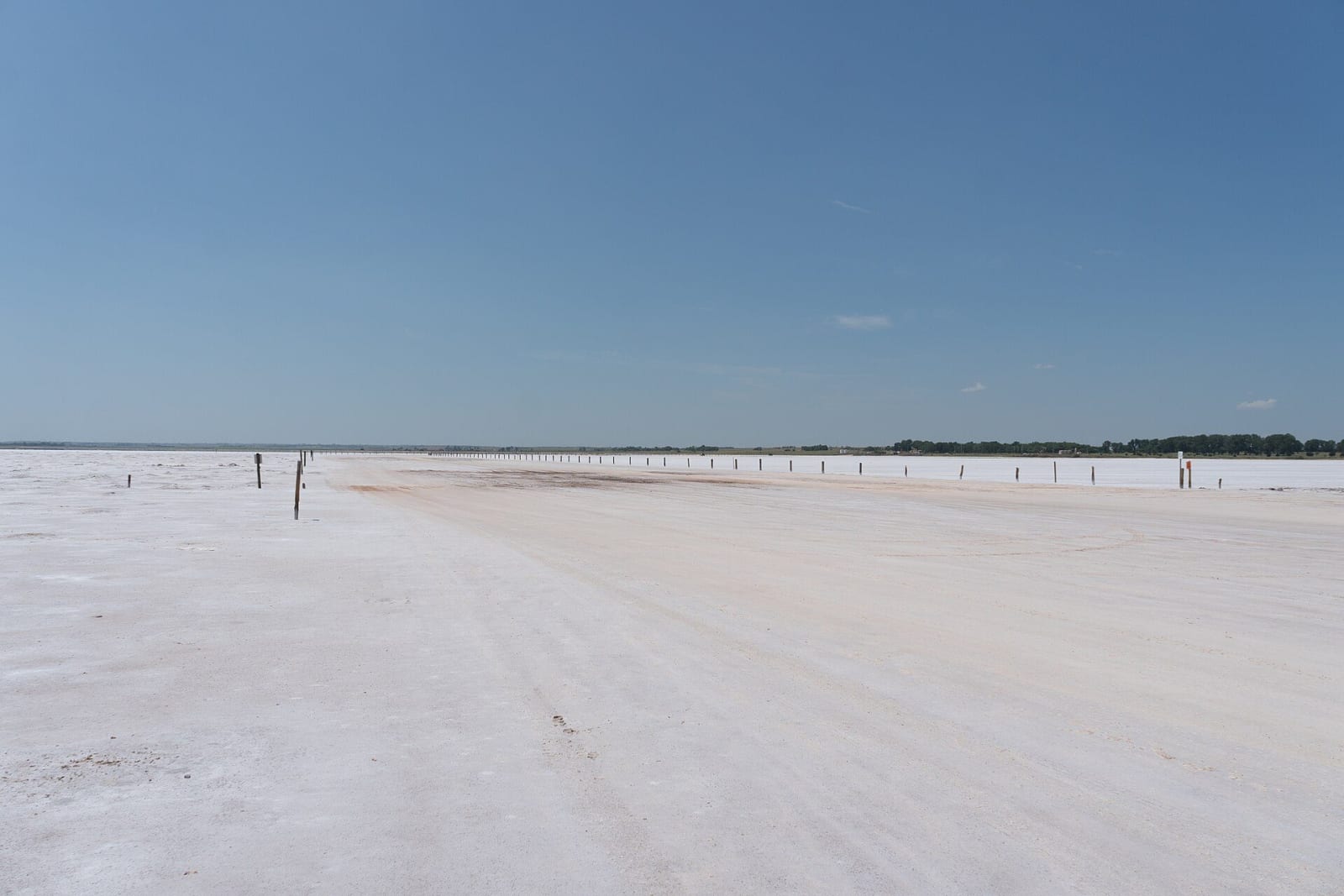
Salty groundwater runs a few feet under the Great Salt Plains. Where it dries at the surface it leaves the thin salt crust on about twelve thousand acres of bare, flat ground. Where the brine meets gypsum below the surface it grows selenite crystals, and because fine sand and clay are caught in them as they form, many take the shape of an hourglass. The Fish and Wildlife Service calls the flats the only place in the world where people can dig for them.
The salt drew game, and the game drew hunters from many nations, who also took salt here to keep meat. The Oklahoma Historical Society writes that hard fights were fought over them. In 1811 an Osage man the record names as Sans Orielle guided George Sibley's party here from Fort Osage, in Missouri. When the treaty of 1835 gave the Cherokee Nation the Cherokee Outlet, the salt flats were kept open to the use of other tribes, and a Cherokee lease of the plains to private investors in 1881 failed.
The refuge was set up on March 26, 1930, and now covers 32,197 acres with the Great Salt Plains Lake. Interior least terns, snowy plovers and American avocets nest on the flats, and whooping cranes stop here in fall and winter. The digging area is open April 1 to October 15 from 7 a.m. to 8 p.m. Visitors may take ten pounds of crystals and one large cluster, digging only in the signed area; the rest of the flats are closed to protect birds.
Visitor Info
On the Map
Nearby
The closest stops worth working into your route
Historical markers nearby
Roadside plaques and monuments within a short detour