 WClarke / CC BY-SA 3.0 via Wikimedia Commons
The Story
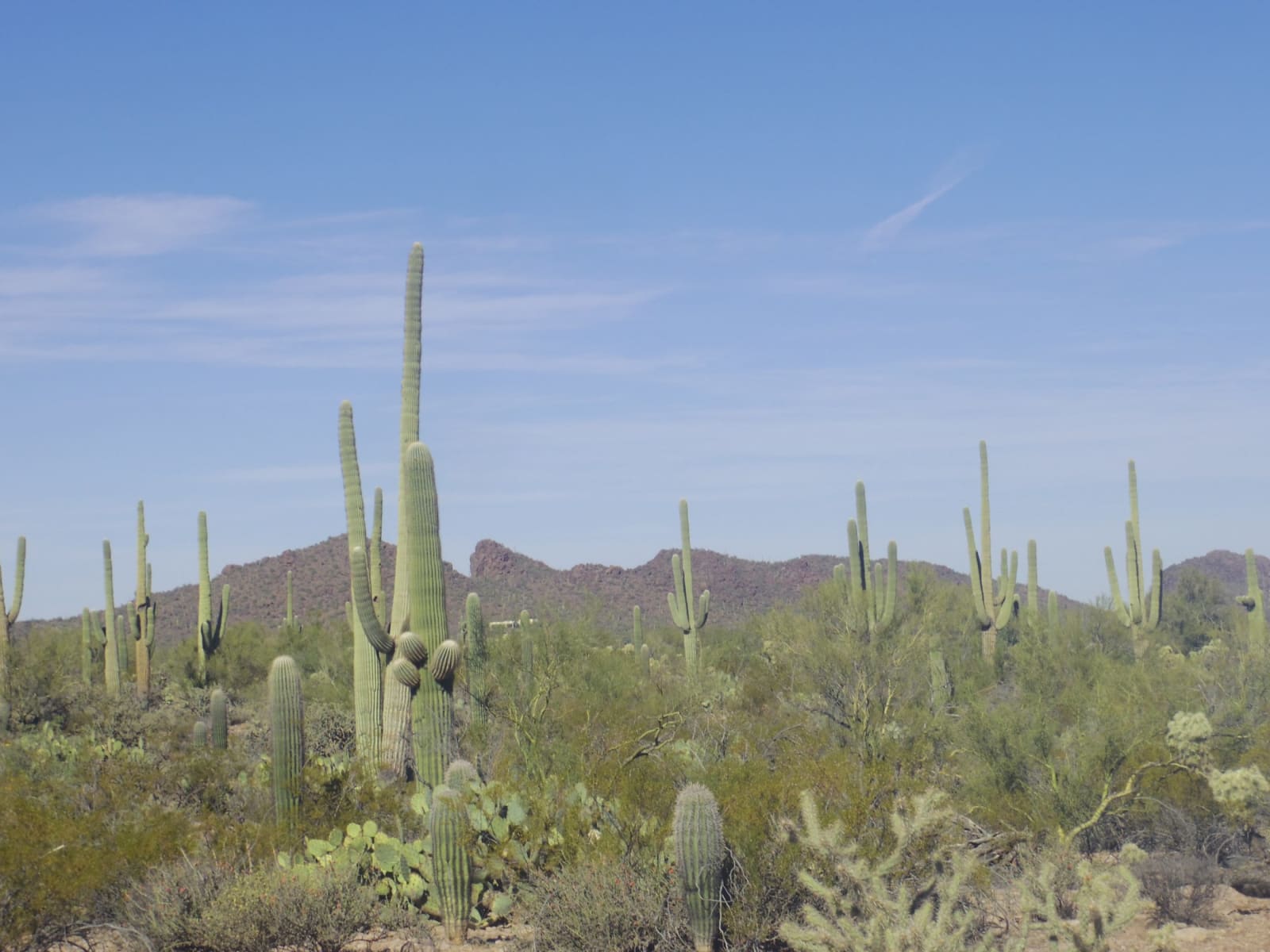
The saguaro is the plant the whole Southwest borrows to mean "desert," and it grows wild almost nowhere but here — the Sonoran Desert of southern Arizona and Sonora, and essentially nowhere else on earth in any number. Tucson sits in the middle of its range, and Saguaro National Park protects the thickest forests of it on two sides of the city: the Rincon Mountain District to the east and the Tucson Mountain District to the west, made a national park in 1994 after six decades as a monument.
A saguaro is a study in patience. It grows about an inch in its first eight years, usually under the shelter of a "nurse" tree; it may not raise its first arm until it is fifty or seventy years old; and it can live past a hundred and fifty, top out near fifty feet, and weigh several tons after a good rain, its pleated trunk swelling like an accordion to store the water. It is a keystone the desert is built around — Gila woodpeckers and elf owls nest in its trunk, long-nosed bats and white-winged doves pollinate its flowers, a whole community timed to its bloom.
To the Tohono O'odham, the desert people whose land the western district sits on, the saguaro is not scenery but kin — spoken of as a person, not a thing. Every summer, as the fruit ripens red at the tips, O'odham families still harvest it with long poles made of the cactus's own dried ribs and boil it down into syrup and a ceremonial wine. The drinking of that wine calls the summer rains and opens the O'odham new year. The park protects the cactus; the people keep the relationship. Go at sunrise or sunset, when the low light turns the whole standing forest to bronze and the giants throw shadows like a crowd.
Visitor Info
On the Map
A story featuring this place
Go deeper into the history and character of this stop
Nearby
The closest stops worth working into your route
Historical markers nearby
Roadside plaques and monuments within a short detour