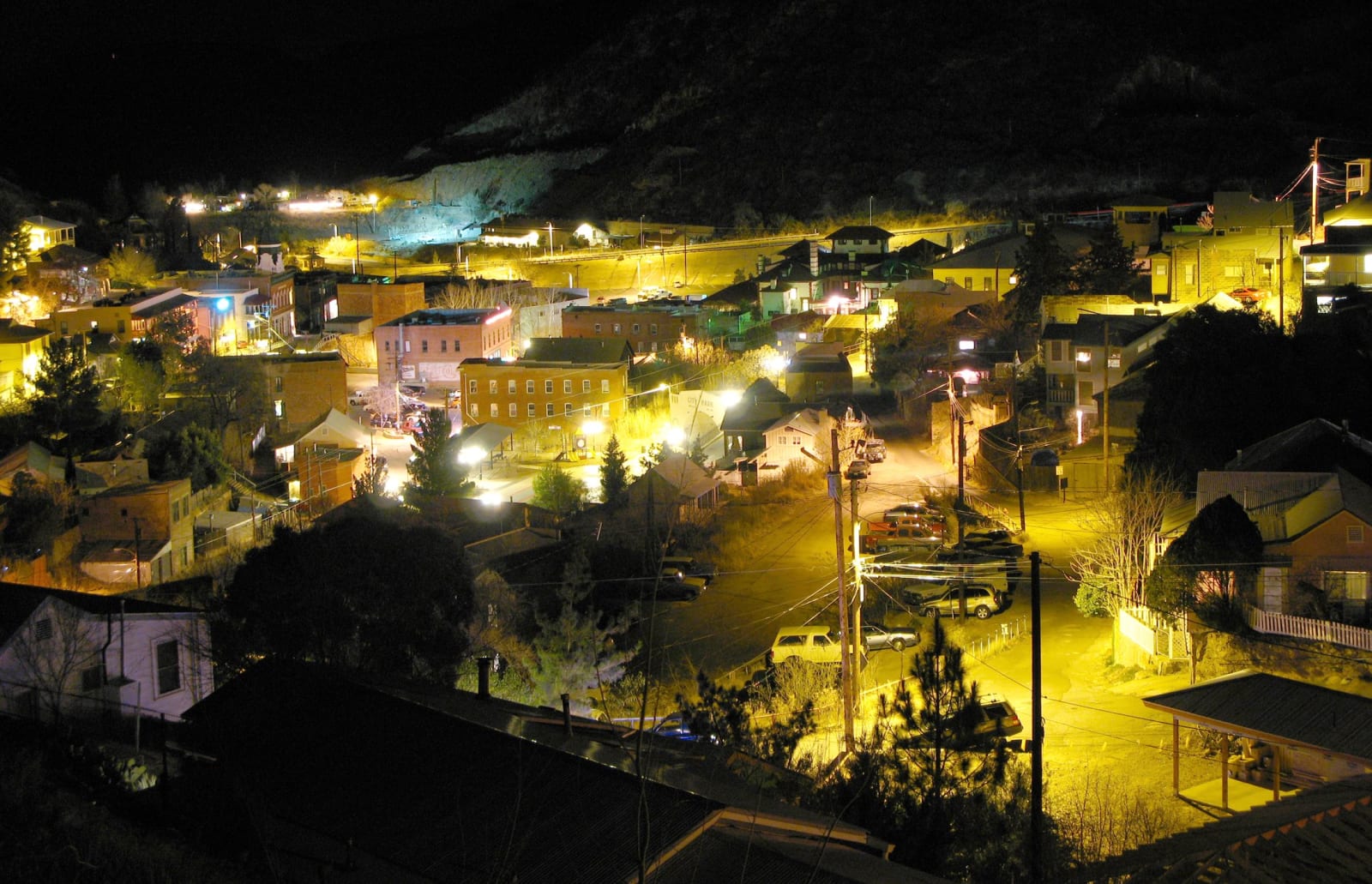
 Kevin Dooley from Chandler, AZ, USA / CC BY 2.0 via Wikimedia Commons
The Story
Bisbee climbs the walls of a narrow canyon in the Mule Mountains, its houses stacked up the slopes on staircases where streets won't fit, because everything level was given over to copper. The strike came in 1877, the Copper Queen Mine anchored it, and Phelps Dodge turned the camp into one of the richest copper districts on earth — some eight billion pounds of it over the life of the field, plus silver, gold, and the deep-blue turquoise still called Bisbee Blue. By 1910 twenty-five thousand people from three dozen mostly-immigrant nations packed the canyon, and Bisbee was among the largest cities between the coasts; in 1929 it took the Cochise County seat from fading Tombstone.
It also holds one of the ugliest chapters in American labor history. In the summer of 1917, with copper prices high on the World War and the work underground lethal, most of Bisbee's miners struck under the banner of the Industrial Workers of the World. On July 12, the county sheriff and Phelps Dodge deputized a posse of two thousand, rounded up some thirteen hundred striking miners and bystanders at gunpoint, loaded them into fouled cattle cars, hauled them a hundred and eighty miles into the New Mexico desert, and left them there. A federal commission later called the Bisbee Deportation wholly illegal; no one was ever convicted, and the men were never allowed home.
The copper outlasted all of it, until it didn't. The Lavender Pit — a thousand feet deep, three hundred acres, chewed out of an entire hillside — ran until 1974, and when Phelps Dodge closed the mines the town nearly emptied. Cheap houses then drew artists, drifters, and retirees, and Bisbee reinvented itself as the improbable, steep, half-bohemian place it is now, its 1902 Copper Queen Hotel still open and the old mine touring visitors through the tunnels. The pit still yawns at the edge of town — monument and wound at once.
Visitor Info
On the Map
Nearby
The closest stops worth working into your route
Historical markers nearby
Roadside plaques and monuments within a short detour