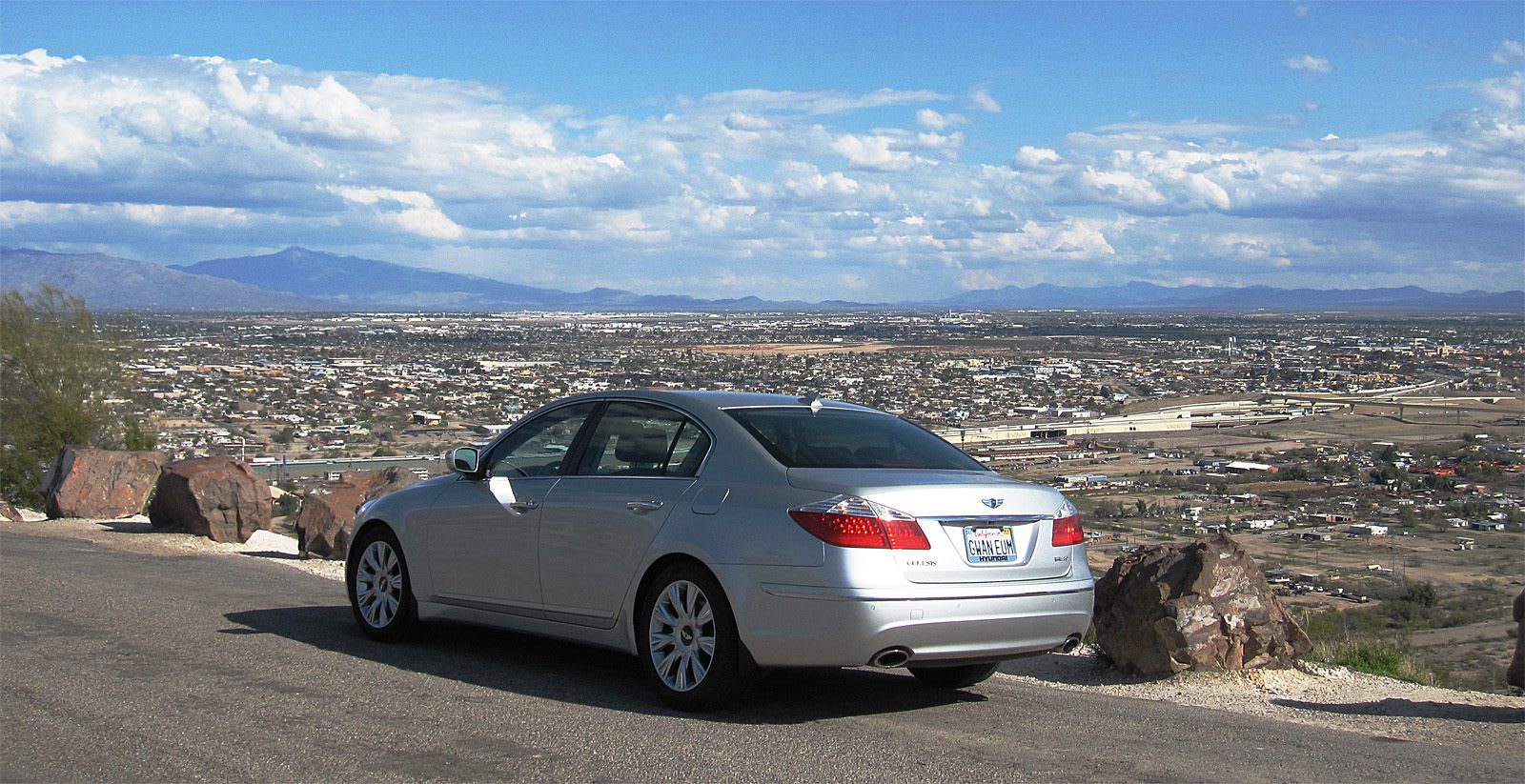
 InSapphoWeTrust from Los Angeles, California, USA / CC BY-SA 2.0 via Wikimedia Commons
The Story
Tucson wears its age lightly, but there may be no older address in the country. The name is O'odham — Cuk Ṣon, "at the base of the black hill," for the volcanic butte the city calls Sentinel Peak — and people have farmed the floodplain of the Santa Cruz River here for something like four thousand years, one of the longest continuous agricultural records in North America. The Spanish arrived late to a place already ancient: Father Kino reached the O'odham villages in 1692, and in 1775 the soldier Hugo O'Conor laid out the Presidio San Agustín del Tucson, the adobe-walled fort that gave the city its enduring nickname, the Old Pueblo.
The setting is the other half of the story. Tucson sits in a bowl ringed by sky islands — forested mountain ranges standing straight out of the cactus, cool and wet at the top, desert at the foot, so that a morning in the saguaro and an afternoon in the pines are half an hour apart. Saguaro National Park guards the giant cactus on two sides of town; the Santa Catalinas, Rincons, and Santa Ritas ring the rest.
What ties the deep past to the present here is food. In 2015 UNESCO named Tucson the first City of Gastronomy in the United States, recognizing exactly that four-thousand-year thread — the tepary beans, the cholla buds, the White Sonora wheat the missions brought, the chiltepin — all still grown and cooked in a desert most of the country writes off as barren. Tucson was Arizona's territorial capital before Prescott and Phoenix took their turns, and it stayed the largest city in the state until Phoenix passed it a century ago; it has been comfortable in its own skin ever since. Ten miles south, the mission church of San Xavier del Bac still serves the O'odham who built it. Come hungry, and look up at the mountains.
Visitor Info
On the Map
A story featuring this place
Go deeper into the history and character of this stop
Nearby
The closest stops worth working into your route
Historical markers nearby
Roadside plaques and monuments within a short detour