 David Wilson / CC BY 2.0 via Flickr
The Story
In 1896 the Southern Railway began building its largest steam locomotive repair shops here, at the midpoint of its main line between Washington and Atlanta, and named them, and the town that grew around them, for the railroad's president, Samuel Spencer. A Salisbury congressman quietly bought the land for it; the largest tract, 101.8 acres, came from Robert Partee, an African American farmer, at $24.50 an acre. Up to 3,000 people worked at Spencer Shops, servicing the engines that pulled Southern's passenger trains and its freights of furniture, textiles, tobacco and produce.
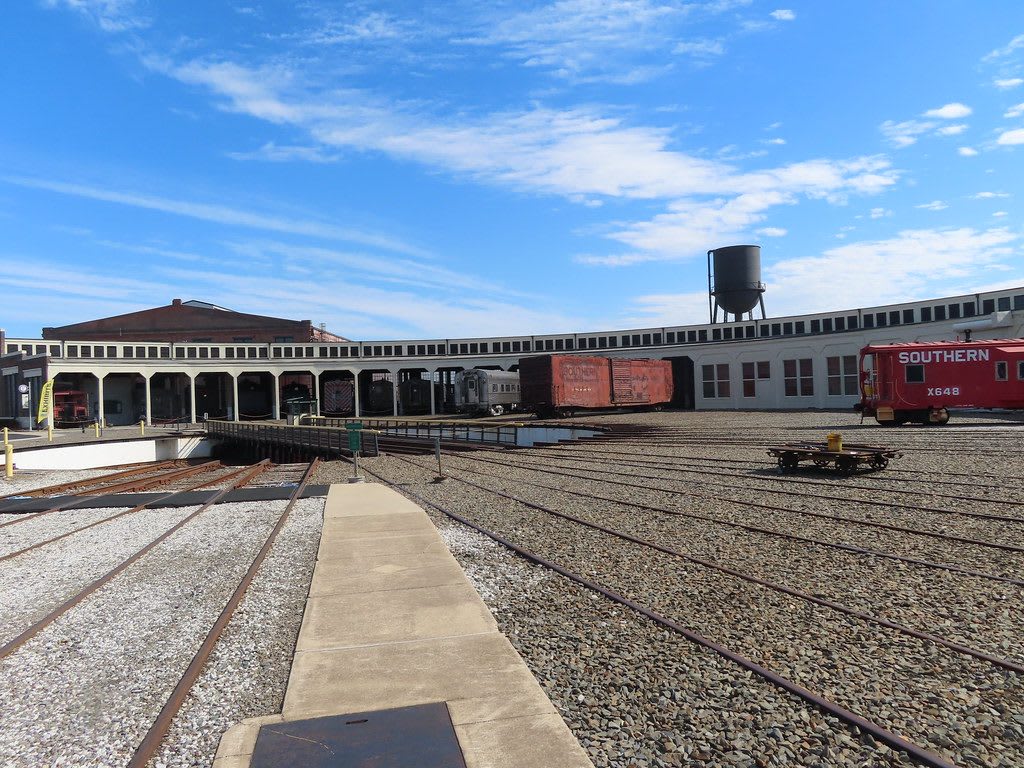
Diesels needed far less work, and the shops wound down until they closed in the late 1970s. Southern deeded four acres to the state for a museum in 1977 and the rest of the shop grounds two years later. The 1924 Bob Julian Roundhouse, 37 bays around a 100-foot turntable that still turns, holds locomotives and rolling stock, and volunteers restore equipment in its far stalls. The 1905 Back Shop, where engines got their full overhauls, is two football fields long and nearly three stories tall, with BE CAREFUL lettered three feet high on its wall.
Barber Junction, a 1913 depot moved from about 30 miles away, is the visitor center and the boarding point for a 25-minute train ride around the grounds. The Flue Shop of 1924 holds antique automobiles, a 1907 Ford Model R and a 1935 Highway Patrol car among them, and the roundhouse adds a Wright Flyer replica. Private rail cars that once carried James B. Duke and Charles M. Schwab are in the collection.
Visitor Info
On the Map
Nearby
The closest stops worth working into your route
Historical markers nearby
Roadside plaques and monuments within a short detour