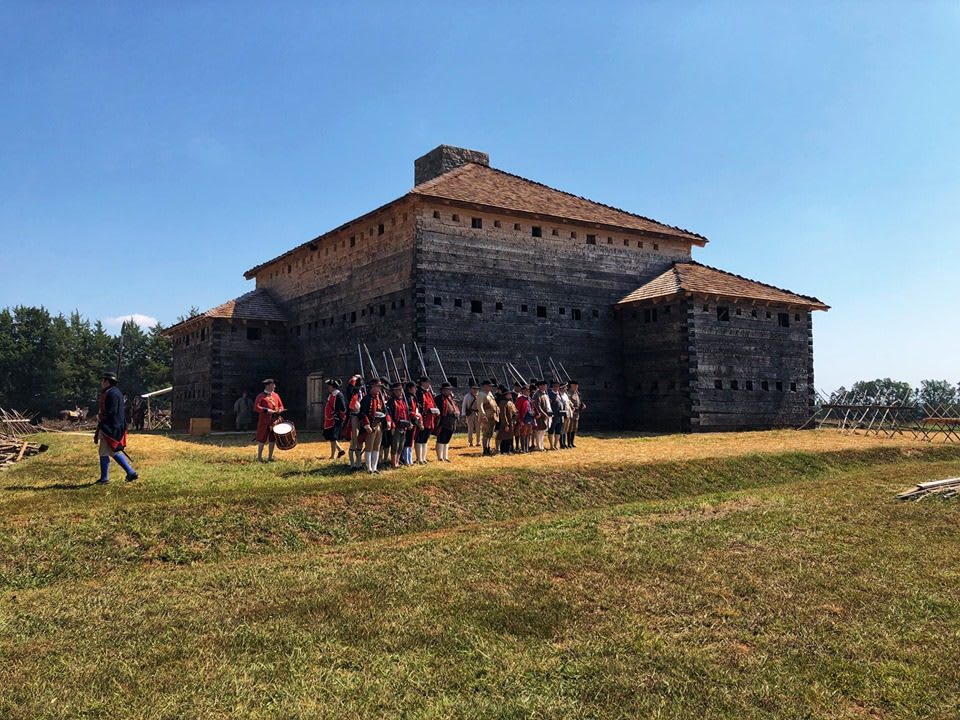
 MeliusJ / CC BY 4.0 via Wikimedia Commons
The Story
The war that brought Cherokee warriors here began with killings of Cherokee people. In 1758 Cherokee men coming home from the British campaign against Fort Duquesne, as Britain's allies, were murdered in Virginia, thirty or forty killed and scalped for bounties, and settlers in both Carolinas killed Cherokee men and women; in the Brushy Mountains two Cherokee hunters were killed with axes as they slept in the camp of a man who had invited them. Cherokee warriors took vengeance on the Yadkin and Catawba settlements in 1759, against the wishes of Attakullakulla and other leaders. Full war came after South Carolina's governor seized Cherokee peace delegations he had promised safe passage.
Fort Dobbs, named for Governor Arthur Dobbs, rose in the fork of Fourth Creek in 1755-56 under Captain Hugh Waddell: an oak-log blockhouse 53 by 40 feet, three floors high, with room for about a hundred muskets to fire at once. It was the colony's only permanent frontier fort, base for about fifty men and a refuge for settlers. On the night of February 27, 1760, a party of more than sixty Cherokee was driven off near the walls; the garrison lost a boy killed and two men wounded, and Waddell reported ten or twelve Cherokee killed or wounded. British armies then burned Cherokee towns until the Cherokee made peace in 1761.
Abandoned by 1764, the fort rotted away. Stanley South's 1967-68 excavation confirmed its post holes, and a full reconstruction was finished in 2019. Guided tours are offered for a small fee; the grounds and visitor center are free.
Visitor Info
On the Map
Nearby
The closest stops worth working into your route
Historical markers nearby
Roadside plaques and monuments within a short detour