 Gerry Dincher / CC BY-SA 2.0 via Flickr
The Story
Lexington-style barbecue, also called Piedmont or western style, is pork shoulder rather than the eastern whole hog, cooked slowly over hardwood coals, pulled or coarsely chopped and served with a thin red dip of vinegar, a little tomato and red pepper, the same dip that turns the cabbage into red slaw. By the 1920s pitmasters in Lexington cooked under tents near the Davidson County courthouse and sold sandwiches to people in town on court days, and Warner Stamey, a pioneer of the style, shaped at least three of the Piedmont's longest-running barbecue houses. When the city converted Alton Beck's old restaurant on West Center Street into a city hall, workers found his brick pits behind the walls, and the city kept them.
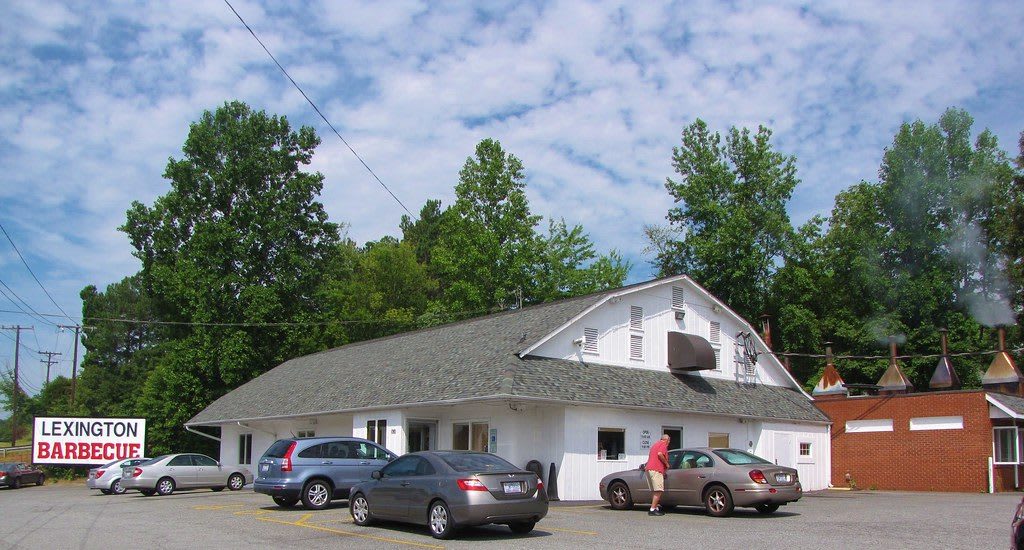
Wayne Monk worked under Stamey for years before he bought this roadside lot on US 29/70 in 1962, at twenty-six, and opened his own place. Locals still call it the Honey Monk, combining the names of its first two owners, Honey Cut and Wayne Monk. Monk's family runs it now. The pits are in back, where workers shovel coals from the fireboxes under the shoulders through a ten-hour cook, a hot, hard job kept up because they hold that it is the right way.
Order a chopped tray with red slaw and hushpuppies, or a coarse-chopped sandwich, and ask for "brown," the crusted outside meat. Lexington counts about twenty barbecue places, and in 2007 the legislature named its barbecue festival the official food festival of the Piedmont Triad.
Visitor Info
On the Map
Nearby
The closest stops worth working into your route
Historical markers nearby
Roadside plaques and monuments within a short detour