 Wesley Fryer / CC BY 2.0 via Flickr
The Story
One Sunday in 1799 Conrad Reed found a heavy yellow rock in Little Meadow Creek on his family's farm. His father, John Reed, born Johannes Reith, was a Hessian soldier who had left the British army and settled among the German farmers of the lower Piedmont. The rock weighed about 17 pounds, and the family kept it as a doorstop for three years. In 1802 a Fayetteville jeweler identified it as gold and paid the $3.50 Reed asked, a tenth of one percent of its worth. It is the first documented gold find in the United States.
In 1803 Reed formed a partnership with three local men: they supplied equipment and enslaved men to dig the creek bed, and he supplied the land. Before the year was out an enslaved boy named Peter had unearthed a 28-pound nugget, the largest documented in the country, and Peter's Nugget is still the largest ever found east of the Mississippi. Farmers across the Piedmont began working their own creeks, Cornish miners came for the hard-rock work, and after gold was found in quartz veins in 1825 mining went underground; Reed's shafts opened in 1831. North Carolina led the nation in gold until 1848, and in the peak years mining employed more North Carolinians than anything but farming.
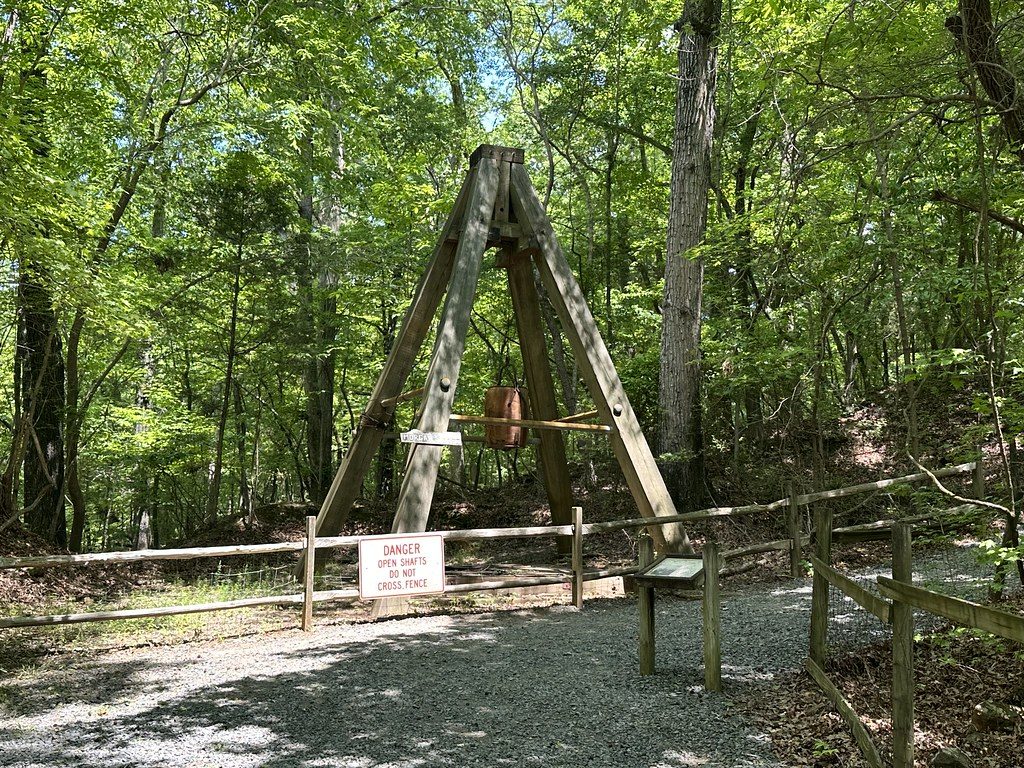
Underground mining at Reed ended in 1912. Today the visitor center shows gold, mining machinery and an orientation film, guided tours lead into restored stretches of the old tunnels, and trails wind through the historic workings. You can pan for gold yourself.
Visitor Info
On the Map
Nearby
The closest stops worth working into your route
Historical markers nearby
Roadside plaques and monuments within a short detour