 Teemu008 / CC BY-SA 2.0 via Flickr
The Story
Moravians from Pennsylvania bought nearly 100,000 acres here in 1752, sent the first settlers in 1753, called the tract Wachovia, and began Salem as its church-run center in 1766. The church owned the land, leased house lots and governed trades, and kept detailed records. Those records also show that the town was built in part by enslaved labor: carpenters, brickmakers and masons hired, rented or bought for the work, among them an enslaved mason named Frank brought in 1771. In Bethabara before that, the church bought a cattle hand named Sam for 120 pounds in 1769 after consulting the lot.
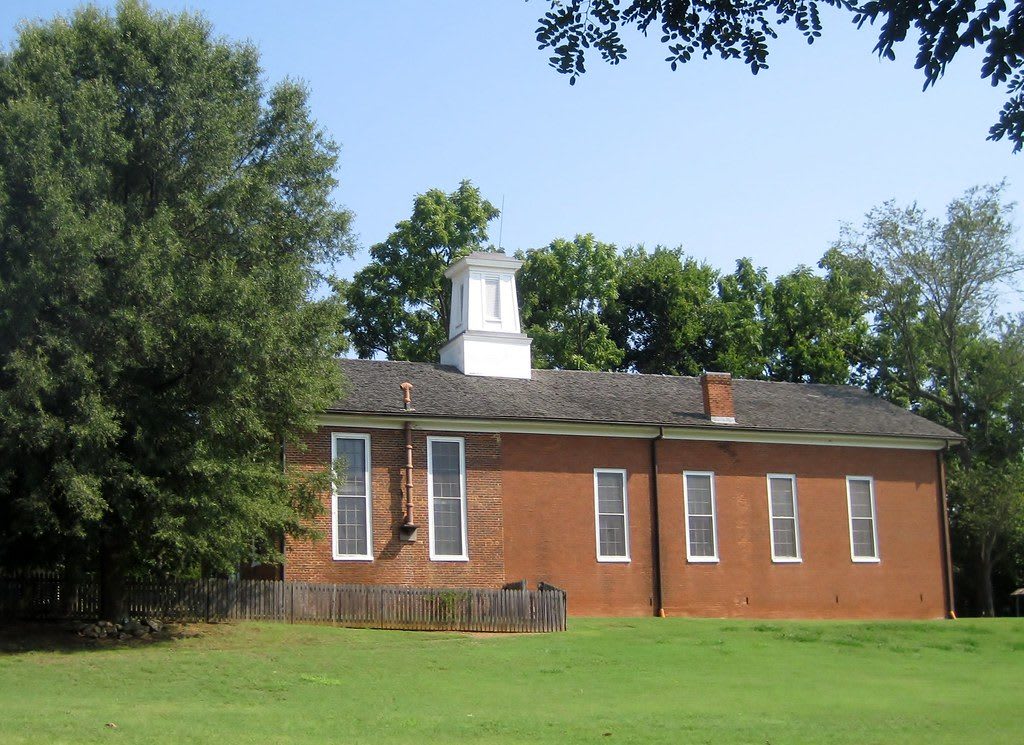
The church tried to limit slavery inside Salem but kept enslaved people on its own farm, where Bodney managed the work and lived with Phoebe. Timothy and Fanny, both born in Africa, were enslaved in Salem at the ends of long lives. Peter Oliver, an Afro-Moravian who worked in the pottery and bought his freedom, was among the last Black members buried in God's Acre before the graveyard was segregated in 1816. In 1847 Salem dropped its rules, and by 1860 about 135 enslaved people lived in town. On May 21, 1865, a Union chaplain read the order of freedom from the pulpit of the brick African church, now St. Philips.
The museum's Hidden Town project has found dozens of dwelling sites of enslaved people and puts their stories in the buildings. Begin at the visitor center, then walk Main Street to the tavern, the Single Brothers' House and up Church Street to St. Philips and the log church.
Visitor Info
On the Map
Nearby
The closest stops worth working into your route
Historical markers nearby
Roadside plaques and monuments within a short detour