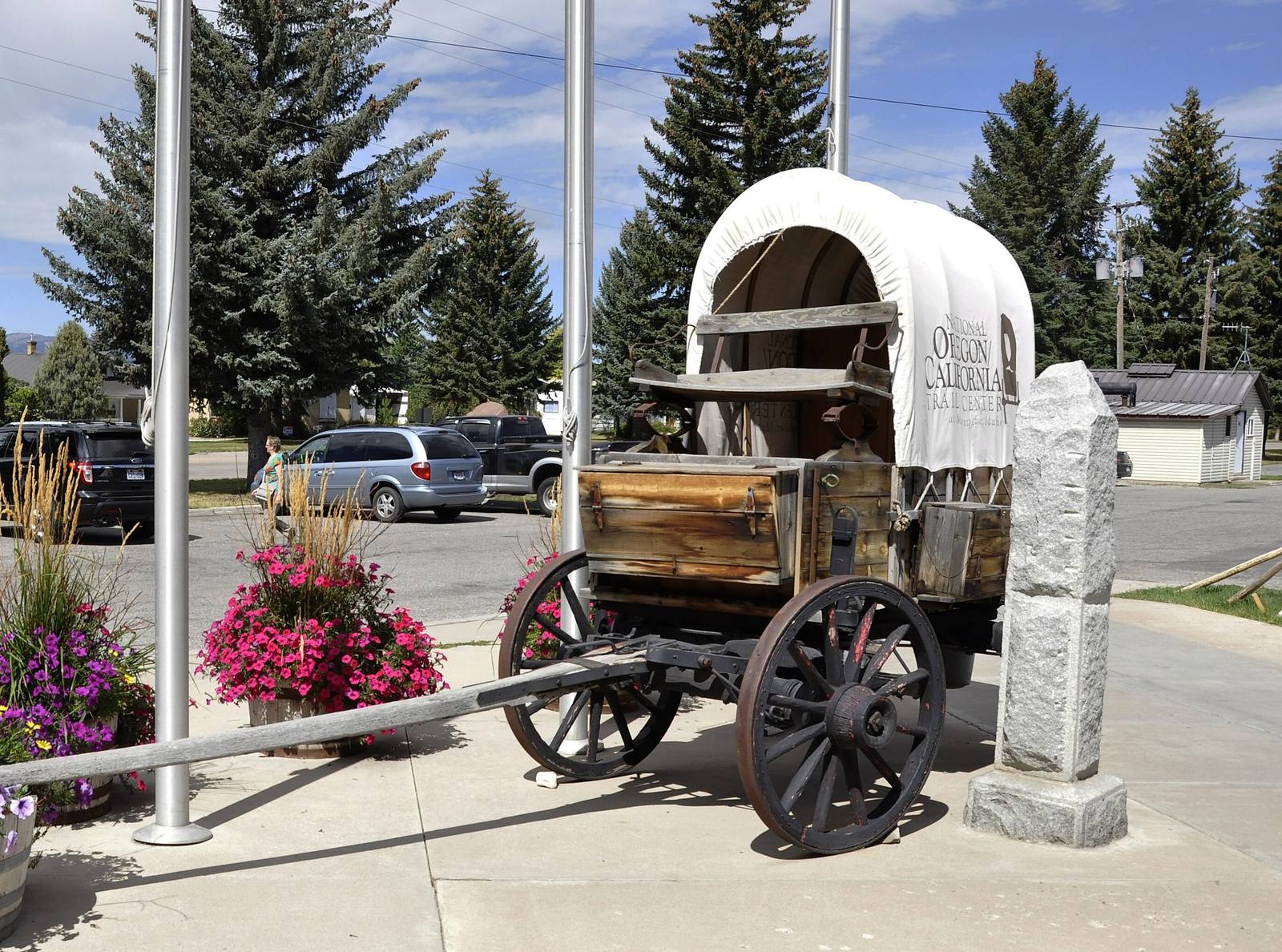
 Paul Hermans / CC BY-SA 3.0 via Wikimedia Commons
The Story
Wagons on the Oregon and California trails came down off Big Hill into a valley that looked nothing like Wyoming. A creek ran out of the canyon east of today's town through meadows thick with clover, and the diaries of the people who camped beside it note flowers, berries and mosquitoes in about equal measure. They called the place Clover Creek. This was Newe — Shoshone — country, with Ute and Bannock hunters using the valley too, and a camp the emigrants remembered for its grass had been grazing and hunting ground long before the first wagon.
When a handful of Mormon families came over from Paris in the spring of 1864 to farm the creek, they kept the emigrants' name, then tried Belmont, and then took the one Brigham Young gave it: Montpelier, for the capital of Vermont, the state he was born in. The railroad arrived in 1892 and brought the valley its first sizeable gentile population, and for years the town ran as two — a Mormon uptown and a railroad downtown.
The trail center stands on ground the town and the byway identify as the old encampment, a block off the junction where US-89 meets US-30. It is less a museum than a performance. A group of local businessmen planned it in the 1990s as both a history lesson and an economic engine for the town, and since it opened in 1997 guides in character have taken visitors through a simulated wagon train, from outfitting in Missouri to a reconstructed camp at Clover Creek, with the trail told in the first person. Downstairs, a smaller collection of artifacts, diaries and memorabilia carries the Bear Lake Valley's own story past the wagons.
The living-history tours run in summer, roughly May through September, and the center closes for the winter. Big Hill and Peg-Leg Smith's trading post, the two trail sites just east on US-30, each have their own roadside signs.
Visitor Info
On the Map
Nearby
The closest stops worth working into your route
Historical markers nearby
Roadside plaques and monuments within a short detour