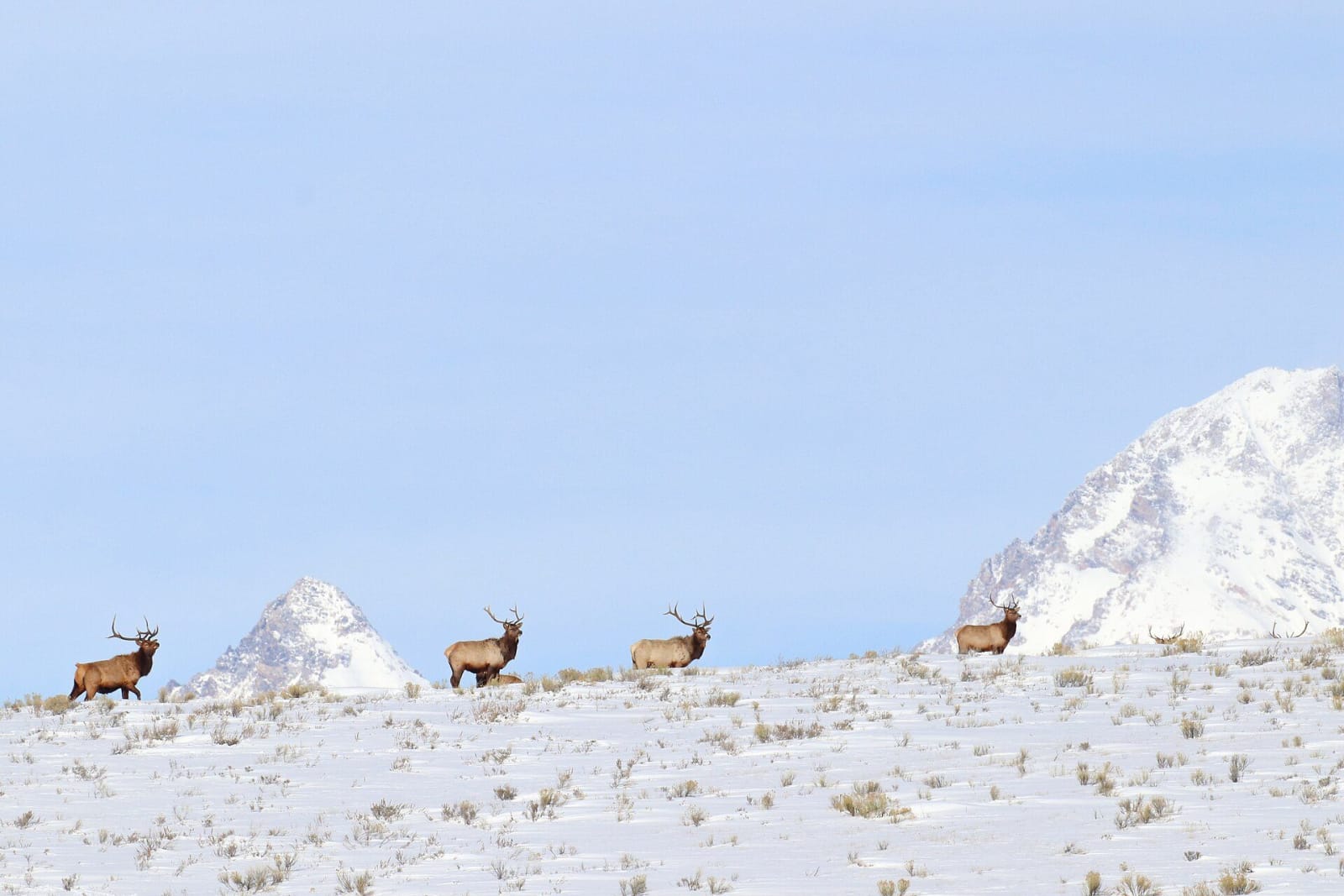
 Kari Cieszkiewicz, U.S. Fish and Wildlife Service / public domain via Wikimedia Commons
The Story
The elk of Jackson Hole had always come down out of the mountains to winter on the valley floor. By the turn of the century ranches, fences and haystacks stood on that ground, and in a run of hard winters from 1909 to 1911 thousands of elk starved on the flats around town, raiding the settlers' hay as they went. Homesteaders began raising money to buy feed in 1909. Stephen Leek, a rancher and hunting guide who had come into the valley in 1888, took a glass-plate camera out among the dead and dying animals and sent the pictures to the governor, to Congress and to magazines across the country.
The pictures worked. In 1910 the state paid for hay fed on Leek's own land, Congress appropriated $20,000 for the herd in March 1911, and on August 10, 1912, it put up $45,000 to establish a winter refuge for elk. Renamed the National Elk Refuge in 1940, it now covers some 24,700 acres between the town of Jackson and the national forest, and it shelters bison, wolves, trumpeter swans and bighorn sheep as well.
The feeding that began in those starving winters went on for more than a century, and it has become the refuge's hardest question, since thousands of elk crowded onto feed lines are the conditions in which scientists fear chronic wasting disease could spread through the herd. In winter, horse-drawn sleighs carry visitors out among the elk; the visitor center on North Cache Street in Jackson is the place to start.
Visitor Info
On the Map
Nearby
The closest stops worth working into your route
Historical markers nearby
Roadside plaques and monuments within a short detour