 Chris Light / CC BY-SA 4.0 via Wikimedia Commons
The Story
The Museum at Warm Springs began with a problem. By the 1960s private collectors and off-reservation institutions were buying up the material culture of the Warm Springs, Wasco and Paiute families of the reservation piece by piece. In 1968 the tribal leadership answered by setting aside money every year, $50,000 to begin with, to buy heirlooms from tribal members and families themselves so that they would stay home. The Smithsonian later called it perhaps the most aggressive acquisition program any American Indian group had undertaken. The collection grew into thousands of objects, beadwork, baskets, family keepsakes, gifts and trade goods from other tribes, along with an archive of some five thousand photographs reaching back to the 1850s.
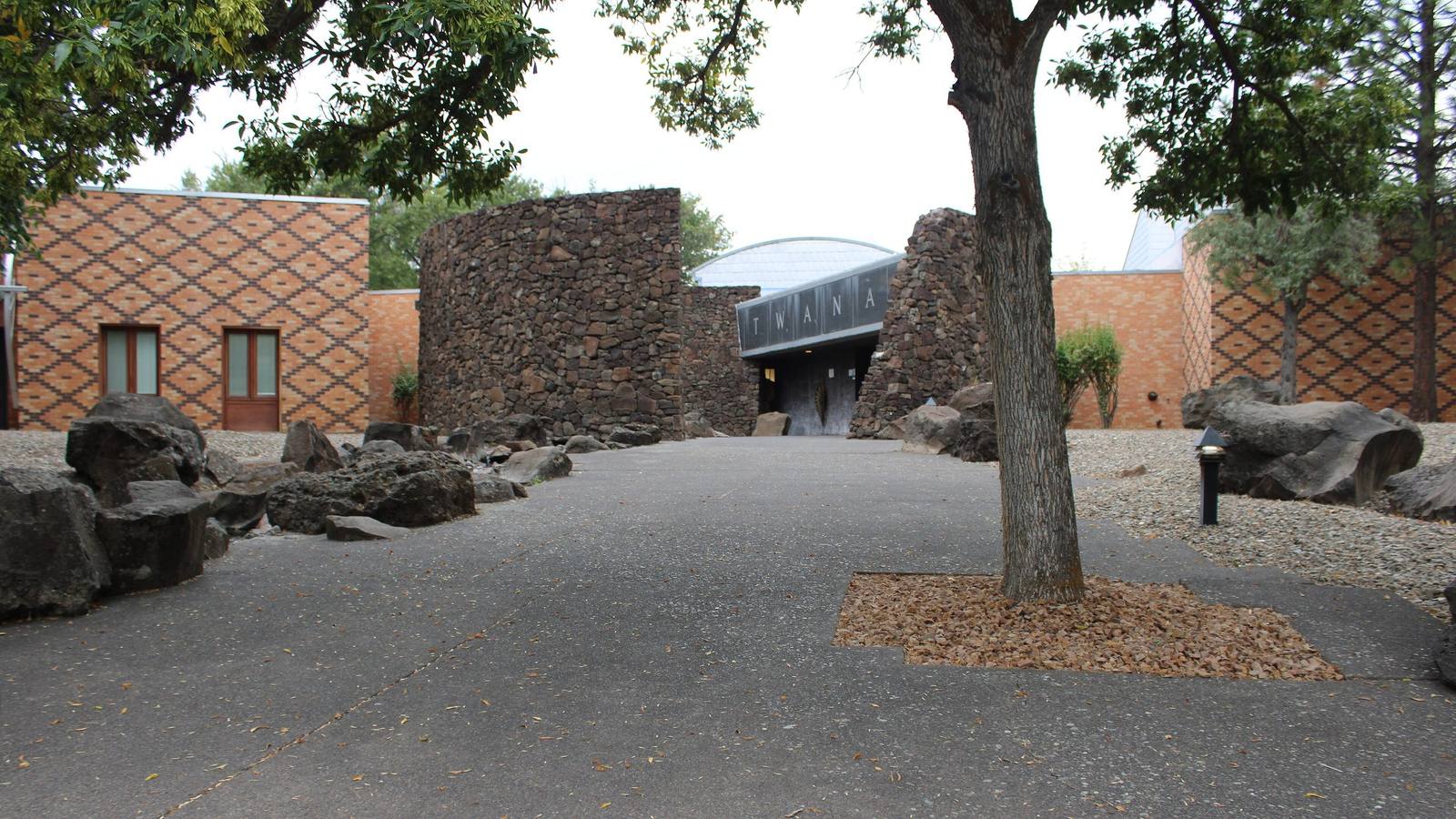
To house it the tribes built a museum of their own. A historical society chartered in 1974 led the planning, and tribal members met with the Portland architects to work their traditions into the building: native stone, brick and timber shaped to echo a drum, dance bustles and the patterns of Klickitat baskets, a stream leading to the entrance, and the Warm Springs word twanat carved above the door. It opened in March 1993, the first tribal museum in Oregon, built to Smithsonian standards and a model for the tribal museums and cultural centers that followed across the country.
The permanent exhibit tells the three peoples' story in their own terms, with their songs and languages and a Wasco wedding scene, and the changing galleries draw on the collection and on contemporary tribal art. The museum stands beside US-26 in the town of Warm Springs.
Visitor Info
On the Map
Nearby
The closest stops worth working into your route
Historical markers nearby
Roadside plaques and monuments within a short detour