 Naawada2016 / CC BY-SA 4.0 via Wikimedia Commons
The Story
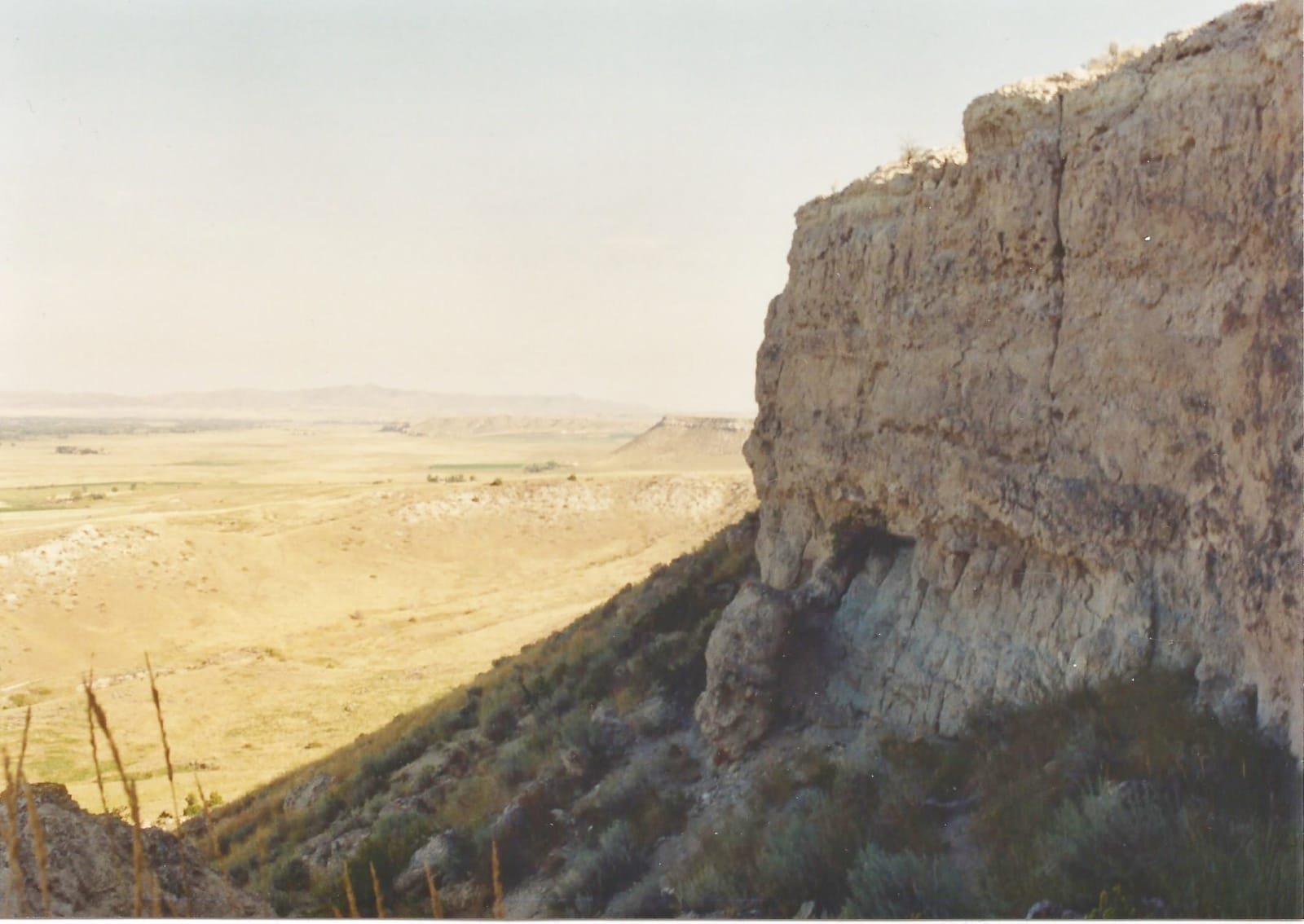
For about two thousand years, people of several nations drove bison off this semicircular limestone cliff above the Madison River. It took a whole community and a great deal of nerve. The runners, young men chosen for speed and endurance, went out wearing bison, wolf or antelope hides to draw a herd toward the rim; others waited along the way to turn it, and once the animals were running they could not stop. The drives seem to have come in fall, when the hides were thickest and the meat could be dried for winter, and at the foot of the cliff the butchering went on for days.
The evidence is still in the ground. Bone lies buried in thick beds below the rim, and the park manager has told of noticing the grass there stay green into winter. On the plateau above, archaeologists have mapped the stone circles that held down the lodge covers of the village where the hunters lived. Scholars have known the site since the 1930s, and the state acquired it as a park in 1966. The method went out of use after about 1700, once horses reached these plains and a mounted hunter could ride a herd down in the open.
There is not much here but the cliff, which is the point. A short path leads to a shelter with interpretive panels, and a longer, steeper one climbs to the rim and the view across the valley. The park is day-use only, seven miles south of the Logan exit on I-90 by a dirt road.
Visitor Info
On the Map
Nearby
The closest stops worth working into your route