 Carol M. Highsmith / public domain via the Library of Congress
The Story
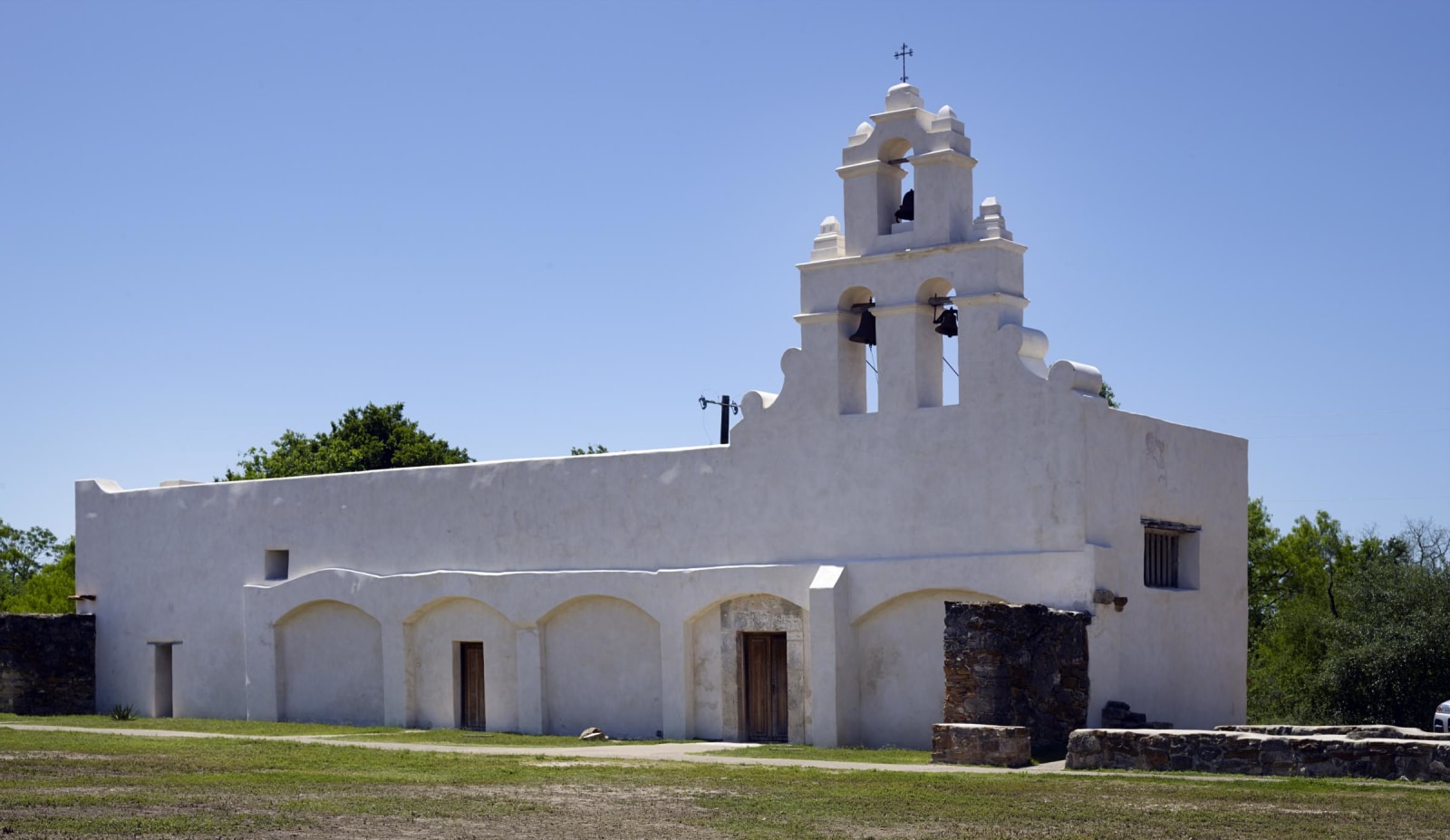
The San Antonio River was named near here. On June 13, 1691, the feast of San Antonio de Padua, the expedition of Governor Domingo Terán de los Ríos and Father Damián Massanet stopped in this area on the way to East Texas, met the Payaya people and named the river for the saint. Mission San Juan itself began in East Texas in 1716 as San José de los Nazonis, among the Nazoni people near present Cushing. French pressure pushed it west, and in 1731 it was moved here and renamed San Juan Capistrano, since the river already had a San José.
In 1756, 265 Indigenous people lived at the mission, and the first stone church, sacristy, granary and convento were done. The present church was finished in 1772. A larger third church, begun about 1775 for a growing population, stopped as the numbers fell, and its foundations were uncovered in a public-works dig in 1934. In 1762 the mission owned 1,000 cattle, 3,500 sheep and goats and 100 horses. It was partly secularized in 1794 and fully in 1824.
San Juan is the park's farm. South of the mission, behind the tree line, fields are still worked, watered by an acequia that carries San Antonio River water to them as it did in the 1700s. The paved Yanaguana Trail loops a quarter mile to an original stretch of the river; Yanaguana is the name the area's Indigenous people gave it. The church is an active parish, and the grounds and park museum are free.
Visitor Info
On the Map
Nearby
The closest stops worth working into your route
Historical markers nearby
Roadside plaques and monuments within a short detour