 Carol M. Highsmith / public domain via the Library of Congress
The Story
The King William Historic District sits just south of downtown on land that was the labor de abajo, the lower farmland of Mission San Antonio de Valero. After the mission was secularized in 1793, its lower fields were split into equal tracts for fourteen Indigenous families. Between 1853 and 1859 streets were laid out, among them King William Street, which Ernst Hermann Altgelt is said to have named for Wilhelm I of Prussia.
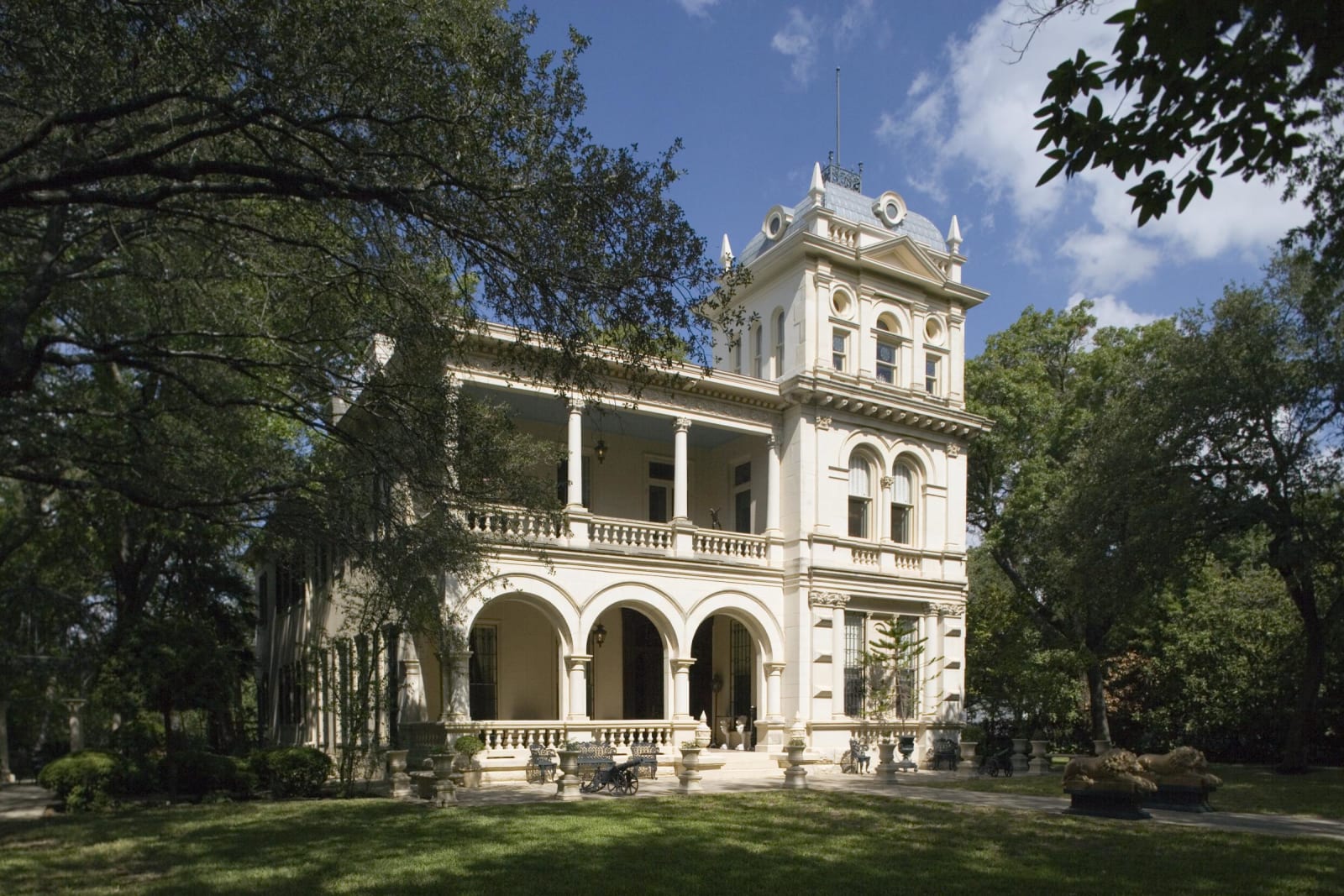
After the Civil War the area became the residential heart of San Antonio's German business class: the Groos, Joske, Kalteyer and Steves families built here, beside neighbors named Chabot, Oge and Norton. The oldest houses are one story with thick masonry walls and porches; later ones run to Second Empire, Romanesque Revival and Italianate, several by Alfred Giles and James Riely Gordon. During World War I, with anti-German feeling high, King William Street became Pershing Avenue, and the old name came back after the war.
The families moved out from the 1920s, and after World War II many houses were cut into apartments. In 1967 the preservationist Walter Nold Mathis bought Villa Finale, an Italianate house built in 1876 for a hardware merchant, restored it and went on to restore up to fourteen houses on the street. The city made King William a historic district in 1968, the first residential one in Texas, and it went on the National Register in 1972. Villa Finale, now a National Trust site, is open for tours, and the King William Association publishes free walking tours.
Visitor Info
On the Map
Nearby
The closest stops worth working into your route
Historical markers nearby
Roadside plaques and monuments within a short detour