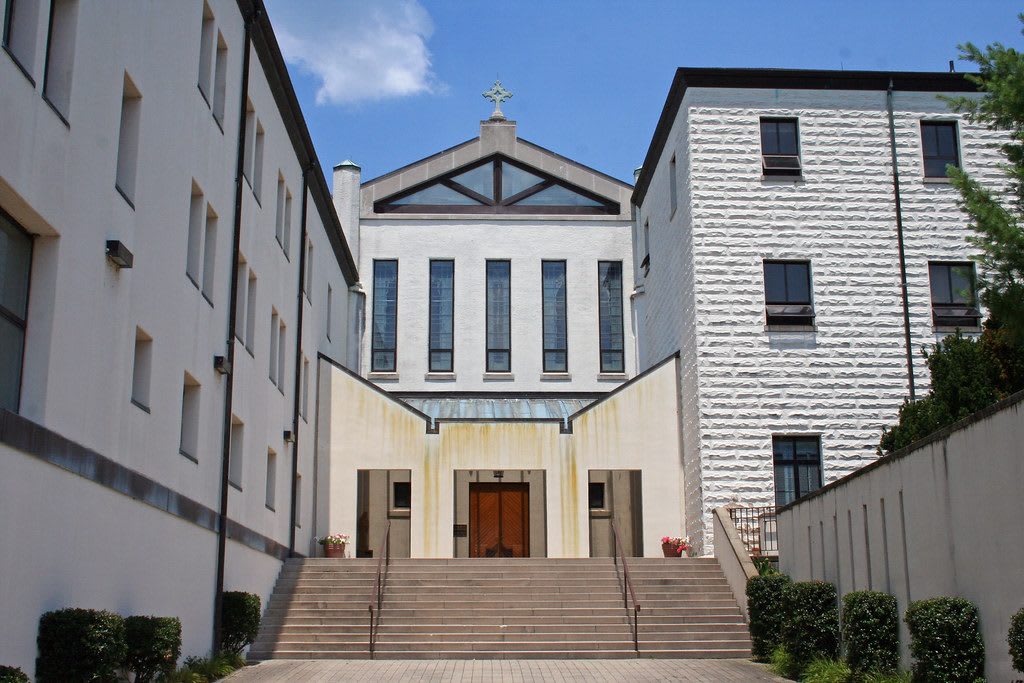
 Erik Eckel / CC BY 2.0 via Flickr
The Story
Forty-four monks left the Abbey of Melleray in France in October 1848; one died at sea, and the other 43 landed at New Orleans, steamed up the Mississippi and reached this valley on December 21. They had bought the land from the Sisters of Loretto, and it already had a name, Gethsemani. Raised to an abbey in 1851, it is the oldest Trappist monastery in the country still at work, the motherhouse of the order's American houses. The monks keep the Rule of St. Benedict, prayer and silence and work, on about 2,000 acres, and pay their way with fruitcake and bourbon fudge from their farm kitchen.
Thomas Merton came through the gate on December 10, 1941, and was named Father Louis. His autobiography, The Seven Storey Mountain, became a best-seller in 1948, and over the next 20 years he wrote from this enclosure about contemplative prayer and then about race, war, nuclear weapons and the religions of Asia. He died in Bangkok on December 10, 1968, 27 years to the day after he entered, and was buried in the monks' cemetery under the same plain cross as his brothers. In 1996 the abbey hosted a week of dialogue between Catholic and Buddhist monastics, the Dalai Lama among them.
Visitors may attend the services in the abbey church, see the film in the welcome center and walk the nearly 1,500 acres of knobs, lakes and forest west of Monks Road. The enclosure is marked by walls and signs, and Merton's hermitage is still in use and closed to the public.
Visitor Info
On the Map
Nearby
The closest stops worth working into your route
Historical markers nearby
Roadside plaques and monuments within a short detour