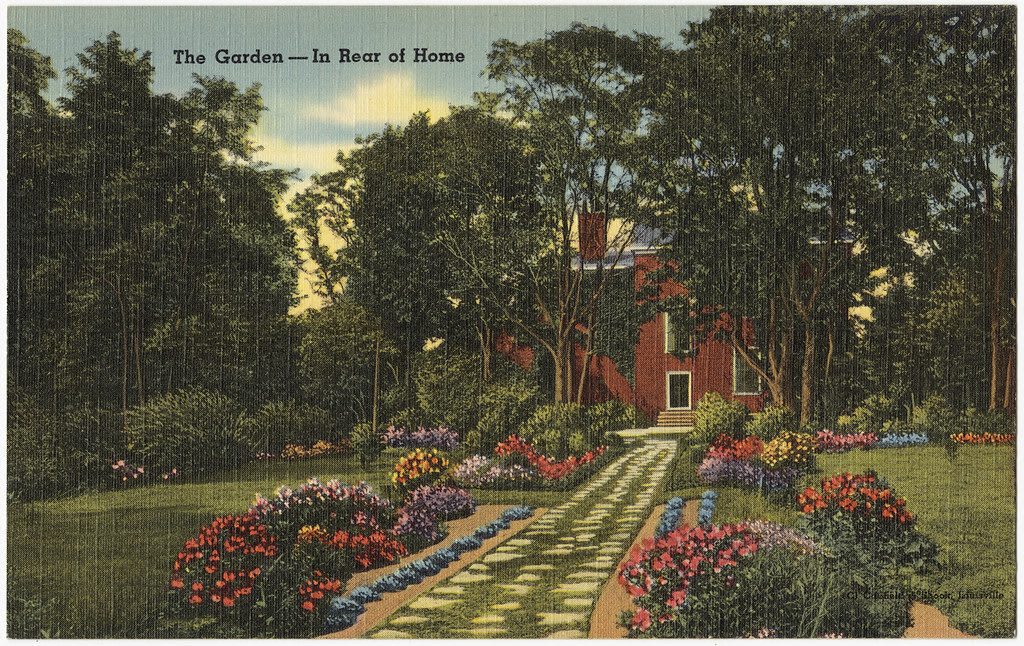
 Tichnor Brothers Collection, Boston Public Library / CC BY 2.0 via Flickr
The Story
John Rowan and his wife, Ann Lytle, began farming here about 1795 in a log house and named the place Federal Hill. The brick mansion took six years, from 1812 to 1818, and the enslaved people of the farm made most of its materials while hired tradesmen and journeymen raised the walls. The farm grew past 1,300 acres, and Rowan, a judge and later a United States senator, held at least 54 people in slavery over his life, 39 of them in 1830, in nine family groups at Federal Hill and at the family's Louisville townhouse.
The park names them. Andrew and Jenny raised nine children: Louisa, Julia, Mary, Jane, Rachel, David, Edward, Andrew Jr. and Mary Ellen. Jesse and Harriet had Sam, Susanna and Rosetta; Bobbet's family included James, Lewis, Ned and Charles; Ignatius and Ellen, Charlotte, Aggie and Catherine headed others. Cholera in 1833 killed eight of the enslaved and eight of the Rowans. John Rowan Jr., who inherited in 1843, belonged to the anti-slavery faction in Kentucky politics.
Stephen Foster, a Rowan cousin, published "My Old Kentucky Home, Good-Night" in 1853. His first draft was titled "Poor Uncle Tom, Good Night," written as Harriet Beecher Stowe's antislavery novel swept the country. Kentucky made the house its first historic shrine on July 4, 1923, adopted the song in 1928 and changed its offensive lyrics in 1986. The mansion tour now covers the enslaved community along with the Rowans and Foster.
Visitor Info
On the Map
Nearby
The closest stops worth working into your route
Historical markers nearby
Roadside plaques and monuments within a short detour