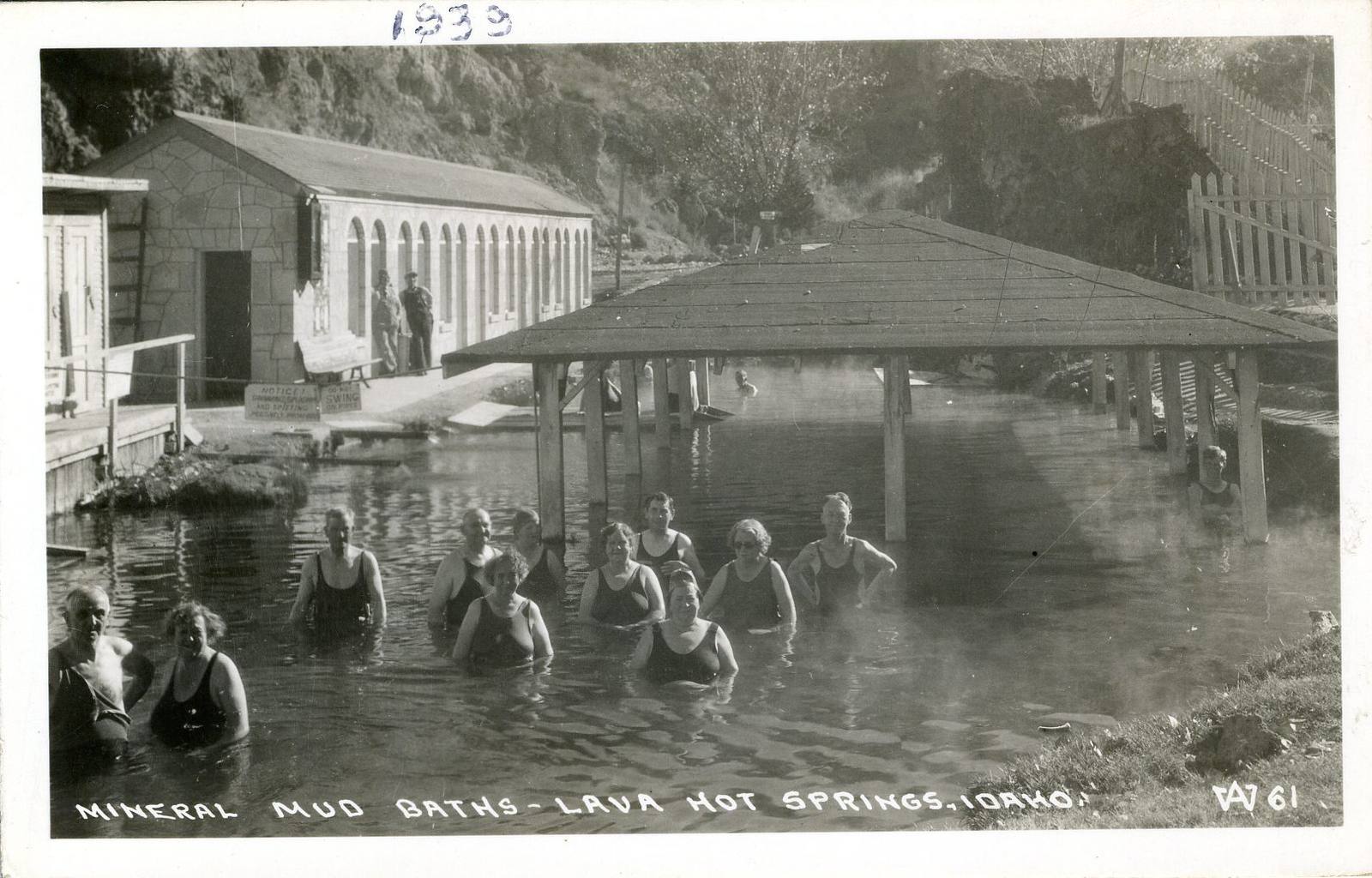
 WaterArchives.org / CC BY-SA 2.0 via Wikimedia Commons
The Story
Lava Hot Springs belongs to the people of Idaho. The water comes out along the Portneuf at 102 to 112 degrees, about 2.5 million gallons a day, and runs through gravel-bottomed pools managed by the Lava Hot Springs Foundation, an agency of the state parks department. It needs neither heating nor cooling, and it moves through fast enough to keep the pools clean.
How it became public is the part the plaque in town tells lightly. The springs were Shoshone and Bannock ground and lay inside the Fort Hall Reservation set aside in 1868. The tribes ceded the site to the United States, and in 1902 Congress granted about 178 acres around the springs to the state, to be held for public use. The 1979 Daughters of Utah Pioneers marker on Main Street says the Indians granted the springs to the government; the record calls it a cession. The marker also repeats the tradition that the tribes had kept the springs as neutral ground for all.
The settlers' town, called Dempsey, took the name Lava Hot Springs in 1915, and the state built a natatorium in 1918. Today the town fills in summer with people floating the Portneuf on inner tubes and, through the winter, with soakers who come for the steam over the pools on the coldest nights.
The hot pools are open every day of the year except Thanksgiving and Christmas. The foundation also runs a large swimming complex with slides, and both are on Main Street.
Visitor Info
On the Map
Nearby
The closest stops worth working into your route
Historical markers nearby
Roadside plaques and monuments within a short detour