 Carol M. Highsmith / public domain via the Library of Congress
The Story
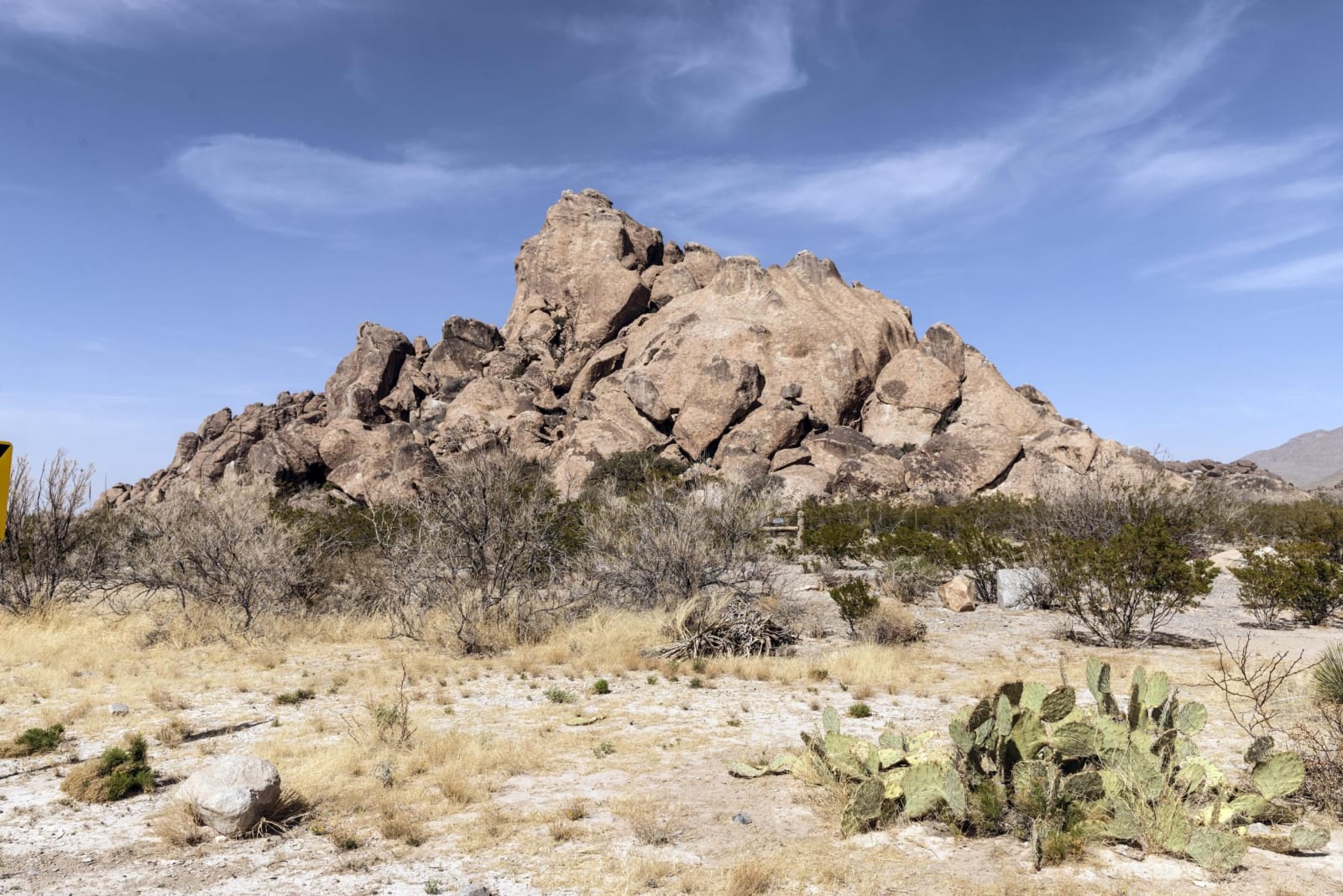
The three hills of Hueco Tanks rise about 450 feet above the desert floor thirty miles east of El Paso. They may have formed some thirty-four million years ago, when molten rock pushed into a layer of sedimentary stone and cooled underground. Erosion left masses of syenite porphyry, a low-grade granite, dented with countless huecos, the hollows that catch rain. Around 1860 the tanks could hold a year's supply of water, and until about 1910 they were nearly the only water between the Pecos and El Paso.
That water keeps a remnant oak-juniper woodland alive among the rocks, long gone from most of the country around, and after a rain several kinds of desert shrimp hatch in the pools. In 1972 and 1973 the archaeologist George Kegley excavated a pit-house village of about A.D. 1100 to 1200 just outside the natural opening into the bowl the hills enclose. The boundary commissioner John R. Bartlett stopped here in 1852 and copied rock paintings into his journal.
Silverio Escontrias bought the hills for a ranch in 1898, and his family ran it until 1956. Developers later drew up plans for houses, lakes, movie sets and golf courses before El Paso County acquired the land in the 1960s, and it opened as a state park in 1970. The Escontrias ranch house is now the interpretive center. People come to climb, hike, watch birds and camp. Access is limited to protect the rock art, so reserve ahead with the park and never touch the paintings. Fires are banned because ash damages them.
Visitor Info
On the Map
Nearby
The closest stops worth working into your route
Historical markers nearby
Roadside plaques and monuments within a short detour