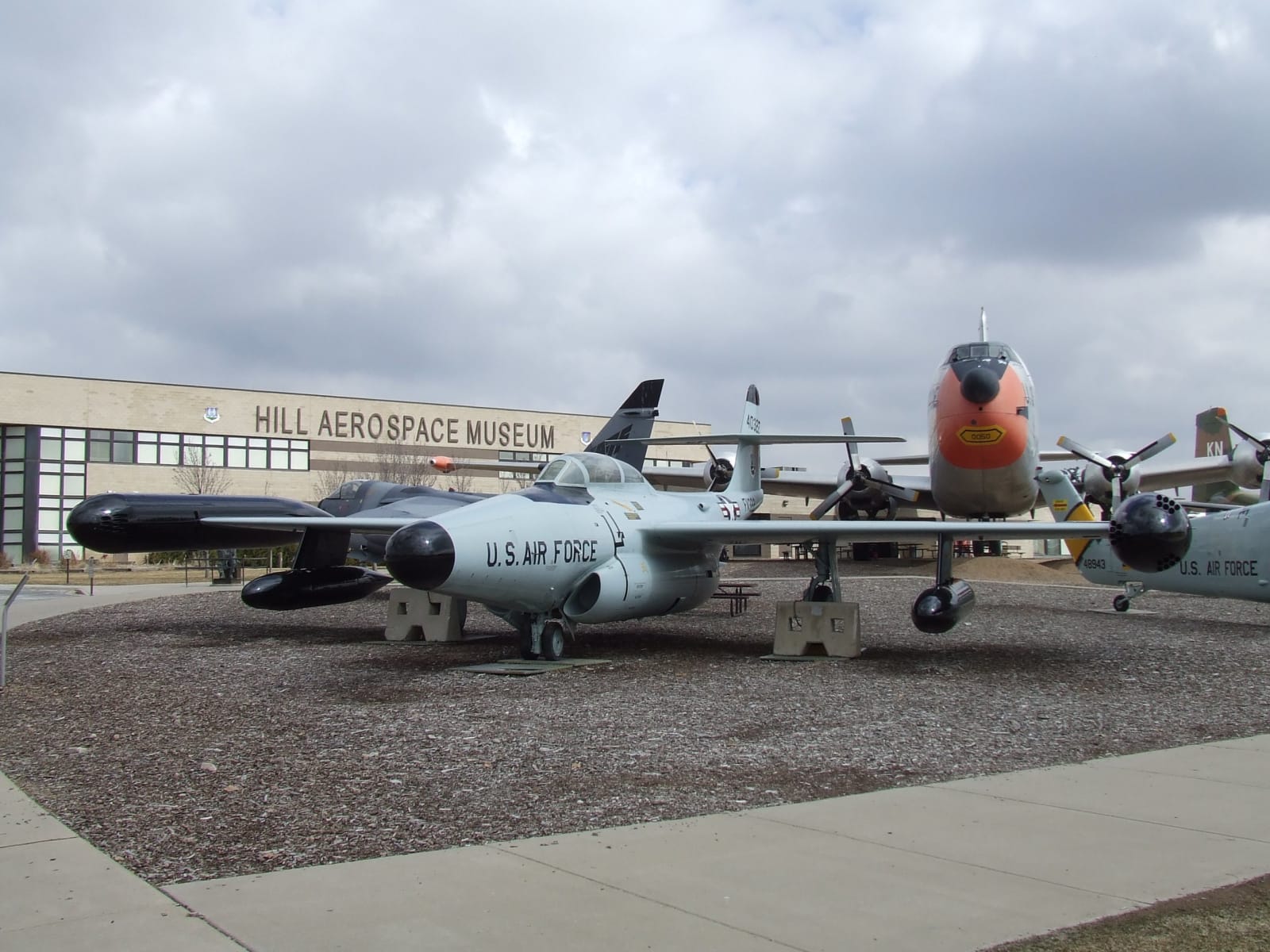
 Jaydec / CC BY-SA 3.0
The Story
Hill Aerospace Museum is free, which seems like an error in pricing for a collection that includes over 90 military aircraft spanning a century of aviation history, displayed both inside a massive hangar and across several acres of outdoor tarmac at Hill Air Force Base north of Ogden. You walk in, pay nothing, and stand next to an SR-71 Blackbird — the fastest air-breathing aircraft ever built, capable of flying at three times the speed of sound at 85,000 feet — and the transaction feels so unbalanced in your favor that you want to leave a tip.
The collection ranges from a World War I-era biplane to modern fighter jets, and the progression through the galleries is essentially a walk through the history of American airpower. The World War II section includes a B-17 Flying Fortress, a B-24 Liberator, and a P-51 Mustang, each accompanied by interpretive panels that explain not just the aircraft's specifications but the missions they flew, the crews who flew them, and the strategic context that made them necessary. The Vietnam era is represented by an F-105 Thunderchief, an F-4 Phantom, and several helicopters, including the UH-1 Huey that became the visual icon of that conflict. The Cold War collection includes the SR-71, a B-52 Stratofortress, and several intercontinental ballistic missile displays that quietly remind visitors of the stakes that defined that era.
The outdoor display area is where the largest aircraft are parked, and walking among them provides a sense of scale that indoor galleries cannot replicate. The B-52 is enormous — its wingspan stretches 185 feet, and standing beneath the fuselage you can see the bomb bay doors and the wing pylons where nuclear weapons were once mounted. The C-130 Hercules, a workhorse transport aircraft that has been in service since the 1950s, sits nearby with its cargo ramp lowered, allowing visitors to peer into the cavernous cargo bay. The outdoor aircraft are exposed to the elements and show the weathering that comes with years of outdoor display, but the patina adds a quality of authenticity that climate-controlled museums sometimes lack.
Hill Air Force Base, which hosts the museum, has been a major Air Force installation since 1940 and is the largest employer in Utah. The base specializes in aircraft maintenance, repair, and overhaul, and at any given time hundreds of aircraft from across the Air Force fleet are on base being serviced. The museum's collection reflects this institutional mission — many of the displayed aircraft were maintained at Hill during their active service lives, and the museum serves as both a public attraction and an institutional memory for the base and its workforce.
The missile and space exhibits add a dimension that pure aviation museums often lack. Displays include an LGM-30 Minuteman intercontinental ballistic missile, various air-to-air and surface-to-air missiles, and components from space launch vehicles. The interpretive materials explain the technology, the strategy, and the human decisions that shaped the development and deployment of these systems, and the tone is informational rather than promotional — the exhibits acknowledge both the technological achievement and the moral complexity of weapons designed to end civilization.
The museum is well-suited for families. Children are drawn to the aircraft with the magnetic fascination that large machines exert on small humans, and the interactive exhibits in the indoor galleries provide hands-on engagement with flight principles, navigation, and aviation history. The gift shop stocks a predictable but satisfying collection of model aircraft, flight jackets, patches, and aviation-themed merchandise.
The museum is located at the south gate of Hill Air Force Base, off Interstate 15 at Exit 341 near Roy. No base access is required — the museum has its own entrance and parking lot, accessible without military identification. The museum is open six days a week, closed on major holidays, and as mentioned, charges no admission. Donations are accepted and appreciated, and given the quality and scale of the collection, leaving one feels less like charity and more like paying a debt.
Hill Aerospace Museum is the kind of institution that thrives in the shadow of more famous attractions. It does not have the national profile of the Smithsonian's Air and Space Museum or the Dayton aviation heritage complex. But its collection is deep, its presentation is professional, and the price — free — removes every barrier to entry. For aviation enthusiasts, military history buffs, or anyone who has ever looked up at an aircraft and wondered what it would be like to stand next to one, Hill Aerospace Museum delivers an experience that is worth considerably more than what it costs.
Visitor Info
On the Map
Nearby
The closest stops worth working into your route
Historical markers nearby
Roadside plaques and monuments within a short detour