 Tricia Simpson / CC BY-SA 3.0
The Story
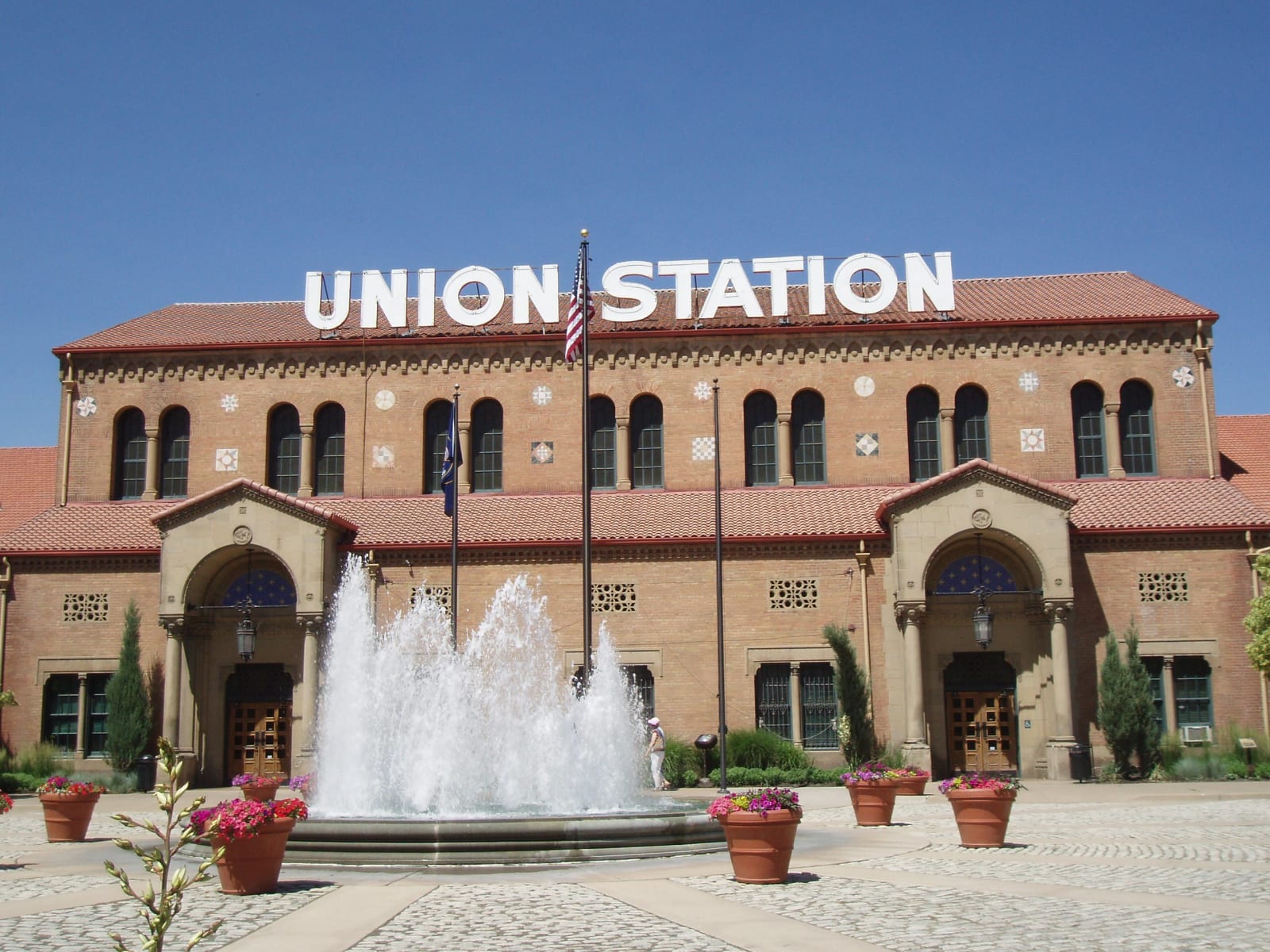
Ogden Union Station is the building that reminds you Ogden was once one of the most important cities in the American West — a major railroad junction where transcontinental passengers transferred between lines, where freight from across the country was sorted and rerouted, and where the economic energy of an entire region flowed through a single elegant depot. The current building, completed in 1924 after a fire destroyed the original station, is a grand Beaux-Arts structure of brick and terra cotta that anchors the western end of Historic 25th Street with the quiet authority of a building that knows exactly how important it used to be. A few miles south, the region's other great monument to transportation history sits at Hill Air Force Base: the Hill Aerospace Museum, where dozens of military aircraft trace the century of flight that followed the railroad age.
The station served as a critical transfer point in the national railroad network for decades. Passengers traveling between the East Coast and the West Coast on different rail lines — the Southern Pacific, the Union Pacific, the Denver and Rio Grande Western — changed trains at Ogden, making the station one of the busiest passenger rail junctions west of Chicago. The waiting rooms filled with travelers from across the country, and the surrounding blocks of 25th Street developed the hotels, restaurants, saloons, and less reputable establishments that railroad junction towns invariably attracted. Ogden's 25th Street earned a reputation as one of the rougher streets in the West — a place where railroad workers, traveling salesmen, and people of uncertain occupation mixed in an atmosphere that was lively, occasionally dangerous, and thoroughly American.
The decline of passenger rail in the mid-twentieth century stripped the station of its original purpose, and like many grand depots across the country, Ogden Union Station faced the prospect of demolition or neglect. Instead, the city converted the building into a museum complex that now houses several collections under one roof, preserving both the architecture and the cultural history of the railroad era.
The Utah State Railroad Museum occupies the station's main hall and tells the story of railroading in Utah from the driving of the Golden Spike at Promontory Summit in 1869 through the diesel era and beyond. The collection includes model train layouts of impressive scale and detail, vintage equipment, photographs, and documents that trace the evolution of rail transportation and its impact on Utah's economy, demographics, and geography. The connection between the railroad and the settlement of Utah is direct and well-documented — towns sprang up along the rail lines, industries developed where the tracks provided access to markets, and the state's population centers still largely follow the corridors established by nineteenth-century railroad engineers.
The Browning-Kimball Classic Car Museum, also housed in the station, displays a collection of vintage automobiles that spans the early twentieth century through the muscle car era. The cars are beautifully maintained and displayed in a gallery setting that emphasizes their design and craftsmanship. The collection is modest in size compared to major auto museums but curated with enough care and personality to be genuinely engaging, even for visitors who do not consider themselves car enthusiasts.
The John M. Browning Firearms Museum rounds out the station's offerings with a collection dedicated to one of Ogden's most famous native sons. John Moses Browning, born in Ogden in 1855, was one of the most prolific firearms designers in history, holding 128 patents and creating designs that are still in production over a century later. The museum displays many of his original designs alongside the production models they inspired, and the exhibit traces his career from a workshop on Ogden's Main Street to international recognition. The Browning legacy is deeply embedded in Ogden's identity, and the museum provides context for understanding how a single inventor working in a small Western city shaped an entire industry.
Historic 25th Street, extending east from the station, has been revitalized into one of northern Utah's most appealing commercial districts. The former saloons and flophouses have been converted into restaurants, breweries, galleries, and shops, and the street has a walkable energy that reflects careful preservation and adaptive reuse. The architecture is a mix of Victorian commercial, early twentieth-century industrial, and the occasional modern infill, and the overall effect is a streetscape that feels authentic rather than manufactured.
The station building itself is worth visiting for its architecture alone. The main hall features high ceilings, ornate light fixtures, and the spacious proportions of a building designed to handle crowds of travelers with their luggage, their anxieties, and their expectations. The terra cotta detailing on the exterior is well-preserved, and the overall impression is of a building that was built to last and to impress — qualities that have served it well through a century of changing uses.
Ogden Union Station is free to enter, with modest admission fees for the individual museums. The station is open year-round and sits at the heart of Ogden's downtown, easily accessible from Interstate 15. The combination of railroad history, classic cars, firearms design, and the revitalized streetscape of 25th Street makes the station a half-day destination that offers more variety and more genuine historical substance than most visitors expect from a city that lives in Salt Lake's shadow.
Visitor Info
On the Map
Nearby
The closest stops worth working into your route
Historical markers nearby
Roadside plaques and monuments within a short detour