 gwmath 2015 / CC BY 2.0 via Flickr
The Story
Carrollton began as Port William, laid out where the Kentucky River runs into the Ohio. Percival Butler, one of five sons of an Irish gunsmith named Thomas Butler who all served as officers in the Continental Army, came to Kentucky alone in 1784, was the state's adjutant general from 1792 to 1817, and settled on this land in 1797. His second son, William Orlando Butler, fought in the War of 1812 at the River Raisin and at New Orleans, was honored by Congress for his part at Monterrey in the war with Mexico, and ran for vice president as a Democrat in 1848. He lost.
The Butlers' farms ran on enslaved labor. The park's own history says the Butler women managed the household and "the slave work force," and it records neither the names nor the number of the people held here; that gap is worth keeping in mind on the tour. Thomas Langford Butler moved into the Greek Revival house in 1859, near the log house where he grew up. His daughter, Mary Ellen, married Philip Turpin and died of tuberculosis in 1860. The house is shown by guided tour, with original furniture and family papers, and the family cemetery is on the grounds.
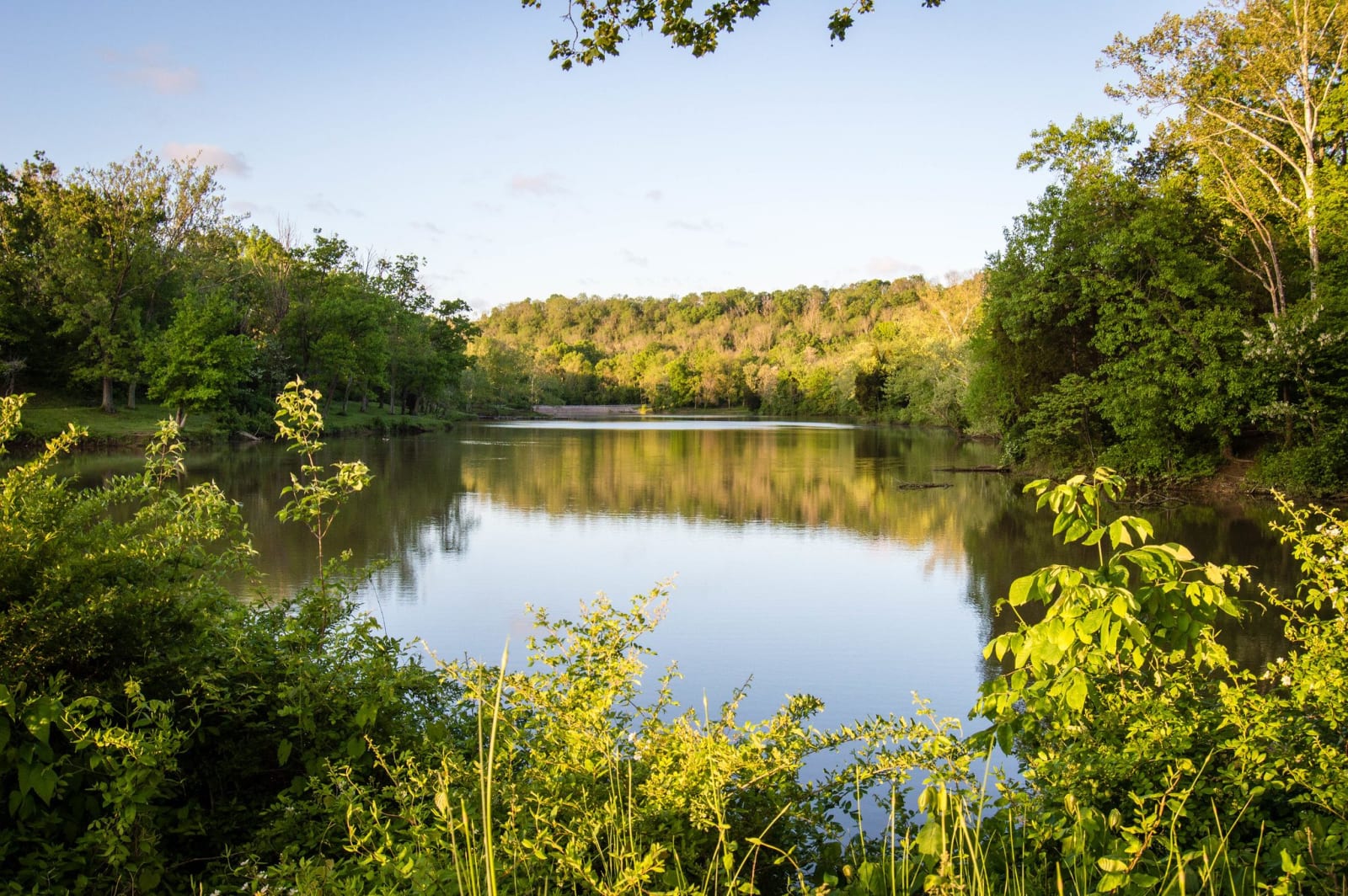
The rest of the park's 791 acres are for staying put: a 53-room lodge, cottages, a 111-site campground, the 30-acre Butler Lake for fishing and paddleboats, and more than five miles of trails. A ski slope ran here from 1981 until the winter of 1997-98. The park sits just off I-71 at the Carrollton exit.
Visitor Info
On the Map
Nearby
The closest stops worth working into your route
Historical markers nearby
Roadside plaques and monuments within a short detour