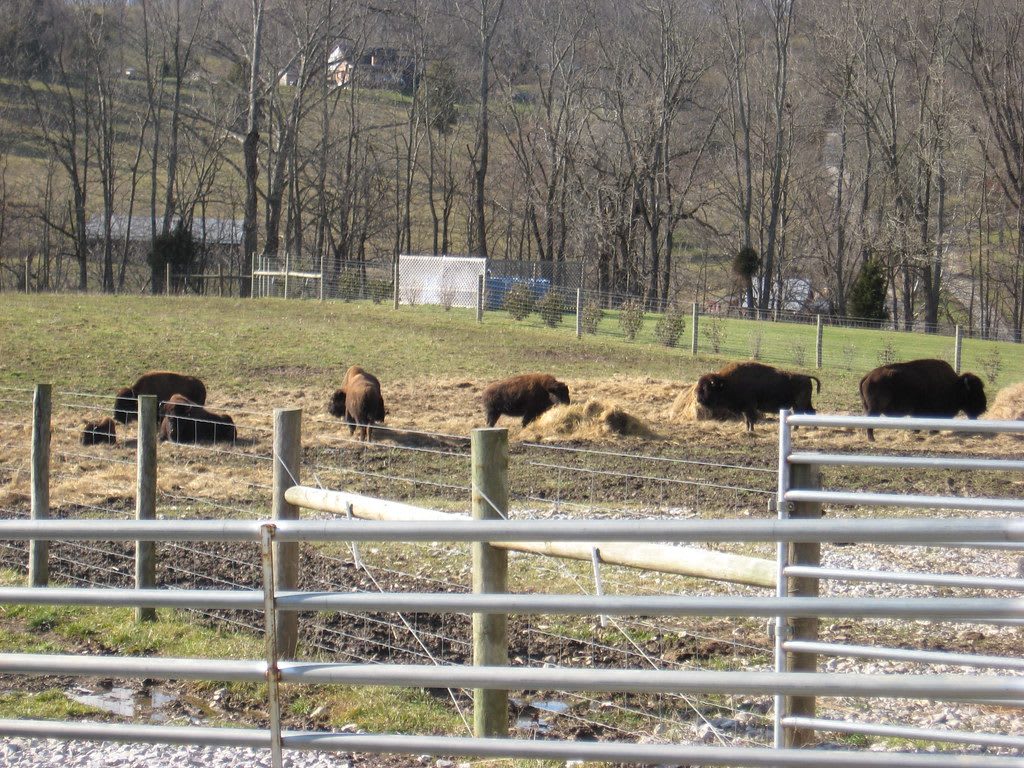
 pmuellr / CC BY 2.0 via Flickr
The Story
Mineral springs bring salt to the surface in this creek bottom, and for thousands of years animals came to lick it. Mammoths, mastodons, giant ground sloths, bison, horses and musk oxen came too, and many sank into the soft bog around the springs and stayed. People came for the same salt. Clovis spear points have been found here, along with remains of Late Archaic, Woodland and Fort Ancient life, and Native people boiled the brine into salt for their own use and for trade. In 1755 Mary Draper Ingles, taken captive by the Shawnee in Virginia, was set to boiling brine at these springs.
The bones made the place famous. Charles le Moyne de Longueuil, a French officer, is said to have collected some in 1739 and carried them to Paris. In 1803 Meriwether Lewis stopped on his way down the Ohio and gathered specimens for Jefferson, but the shipment sank near Natchez. Jefferson sent William Clark back in 1807, and a three-week dig produced nearly 300 bones, which went to the President's House and on to scientists in Philadelphia and Paris. That is why the site calls itself the birthplace of American vertebrate paleontology. For a few decades after 1815 hotels stood here and visitors came to take the waters.
Boone County residents pushed for a park in the 1950s, and the state accepted the land in 1960. The visitor center has a mastodon skull, a boardwalk trail circles a bog with life-size Ice Age figures, and a small bison herd grazes a pasture. It was named a National Historic Landmark in 2024.
Visitor Info
On the Map
Nearby
The closest stops worth working into your route
Historical markers nearby
Roadside plaques and monuments within a short detour