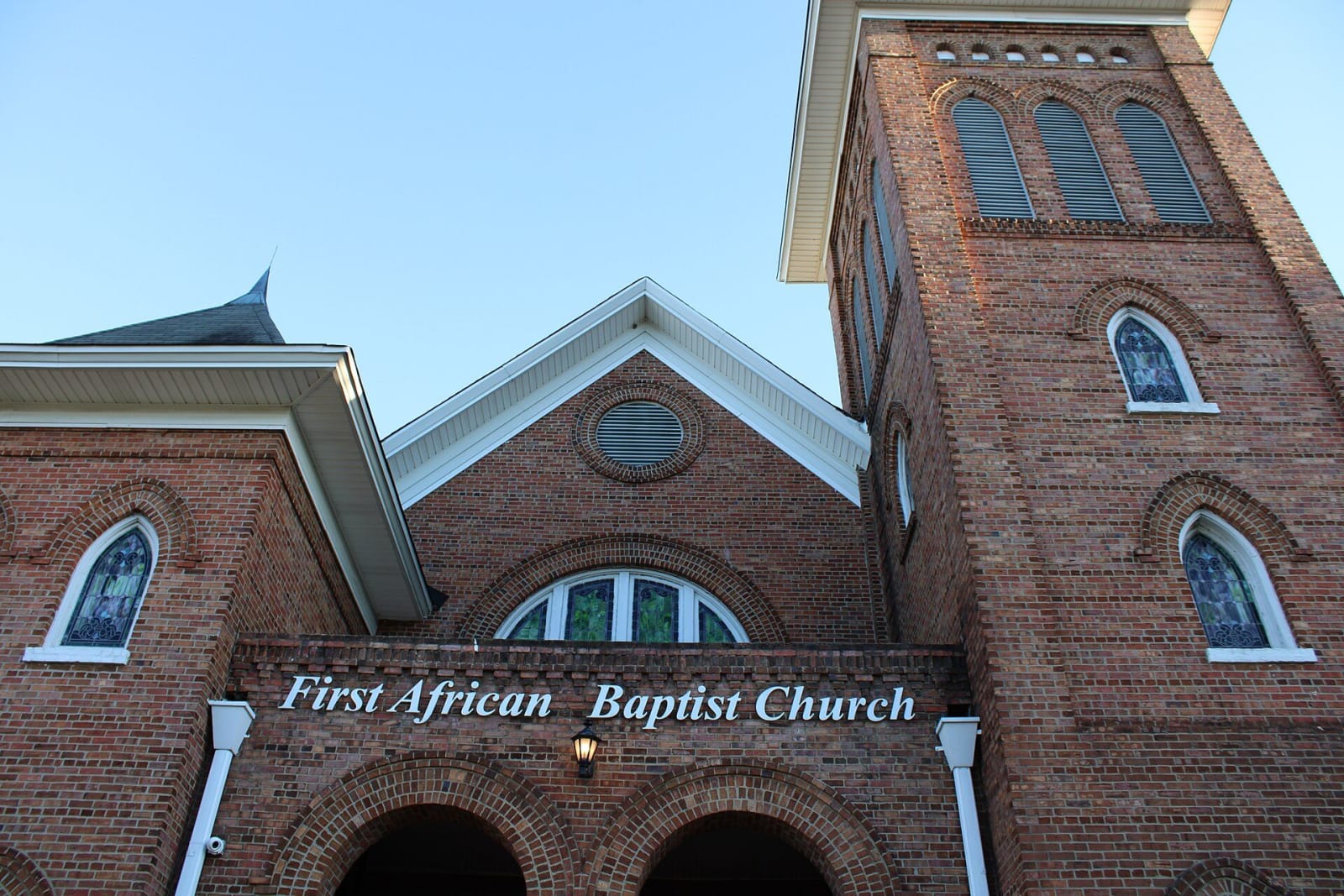
 M2burnett / CC BY-SA 4.0 via Wikimedia Commons
The Story
Freedpeople organized this congregation in November 1866 with 144 members under the Reverend Prince Murrell, and the present church on Stillman Boulevard went up in 1907. A resolution passed here in 1873 led to the founding of Selma University. By 1900 it was the city's largest Black church, and Booker T. Washington spoke from its pulpit in 1910.
In March 1964 Martin Luther King Jr. came to install his former assistant pastor at Dexter Avenue, T. Y. Rogers of Coatopa in Sumter County, and from that pulpit announced a campaign to integrate Tuscaloosa, then the national headquarters of the Ku Klux Klan and home to its Imperial Wizard, Robert Shelton. Rogers made the church the nerve center of the Tuscaloosa Citizens for Action Committee. The new county courthouse, opened in 1963 with federal money and promises of equal use, had segregated water fountains and a basement restroom for Black people, and on June 9, 1964, about 600 marchers gathered here to walk to it.
They never reached the courthouse. About 70 officers and nearly 200 deputized white men, Klansmen among them, forced them back inside, broke the stained-glass windows, turned a fire hose into the sanctuary and threw in tear gas, then beat and arrested people as they stumbled out. Nearly 100 were jailed and 33 were hospitalized. Bloody Tuesday drew little national notice. Rogers sued and won the courthouse's integration, and most public places in the city were desegregated by year's end. The church is an active congregation; its story stands on the Tuscaloosa Civil Rights Trail.
Visitor Info
On the Map
Nearby
The closest stops worth working into your route
Historical markers nearby
Roadside plaques and monuments within a short detour