 Carol M. Highsmith / public domain via Library of Congress
The Story
Edward Young, a New Yorker, came to Eufaula from Georgia in 1837 with his wife, Ann Fendall Beall Young, and became one of the river town's leading businessmen. One of his companies built Eufaula's first bridge across the Chattahoochee, raised under the direction of Horace King, the bridge builder who was then enslaved. Young gathered materials for years and began this house on College Hill around 1856.
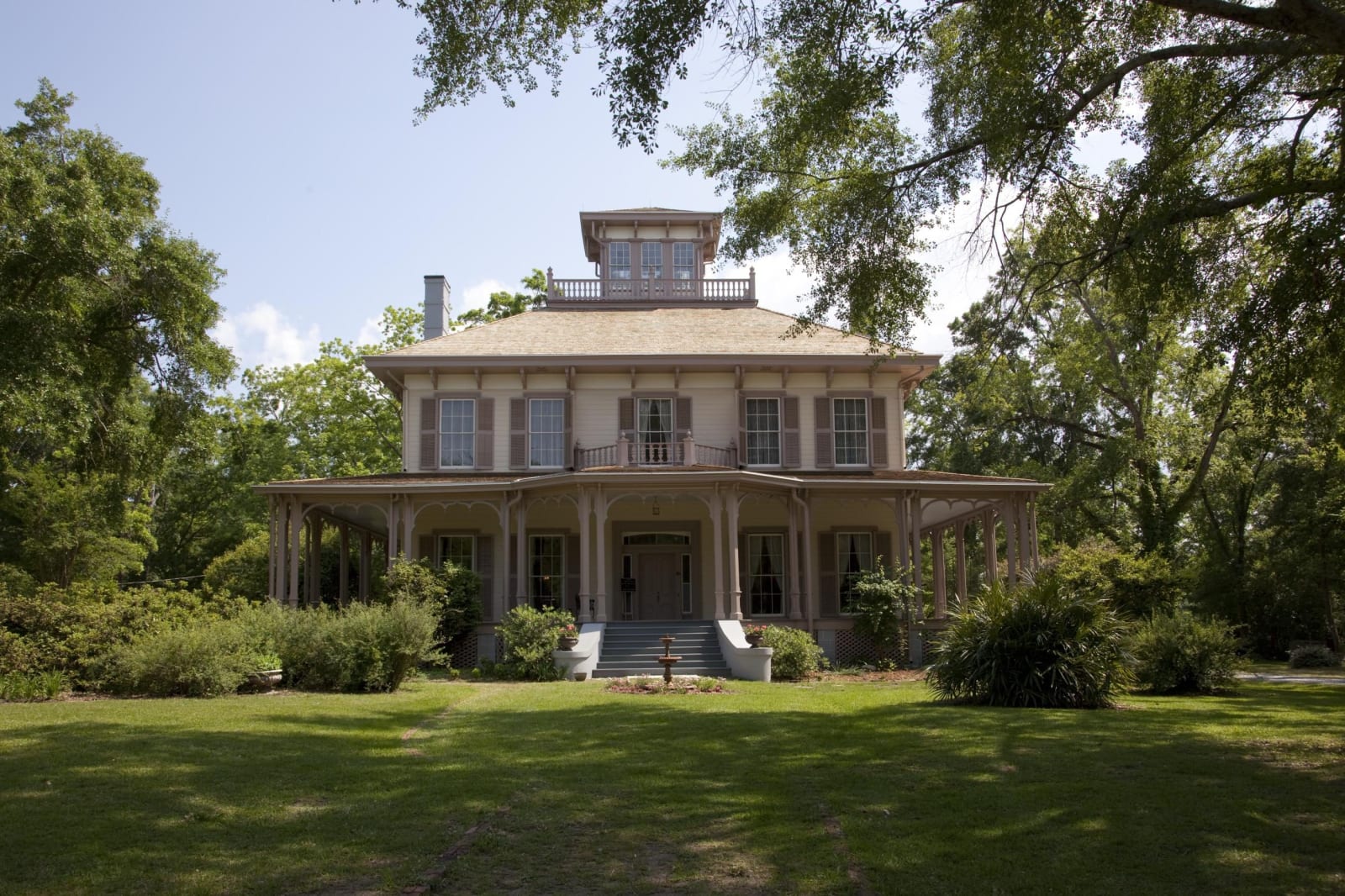
Much of the finest detail was done by skilled enslaved craftsmen, hired from the men who owned them, and the house was finished in 1860, probably to plans by the local architect George Whipple. It is Italianate throughout: wide bracketed eaves, a deep porch on paired posts, a cupola ringed by a balustrade, black and white marble in the entrance hall, and painted murals on the walls and ceilings of the hall, parlor and dining room. An indoor plumbing system, among the first in Alabama, was later fed from an attic cistern filled by a windmill well. The detached kitchen, storeroom and other buildings where the household's daily labor was done are gone. During the war the house took in soldiers wounded in the fighting around Atlanta.
After Young died in 1879 his daughter Anna and her husband, Stouten Hubert Dent, took over the house, and the family lived here until 1973, when the Alabama Historical Commission bought it. The name Fendall Hall seems to date only from the 1940s. A restoration finished in 1999 set the rooms at their 1880-1916 appearance, with many of the family's own furnishings. Walk down the hill afterward to Broad Street.
Visitor Info
On the Map
Nearby
The closest stops worth working into your route
Historical markers nearby
Roadside plaques and monuments within a short detour