 Carol M. Highsmith / public domain via the Library of Congress
The Story
Ellinwood was platted in 1872 as a single square mile with a two-block business district, a layout the town still keeps. Many of its settlers came from southern Germany, recruited by land agents whose brochures promised mild winters, summers that never passed 85 degrees and, in one agent's telling, air that smelled of champagne. The business blocks went up with basements, and the stairways ran down from the sidewalk rather than from inside the stores, so a second row of shops opened onto passageways under Main Street. The foundation that keeps them traces the plan to the towns its builders left.
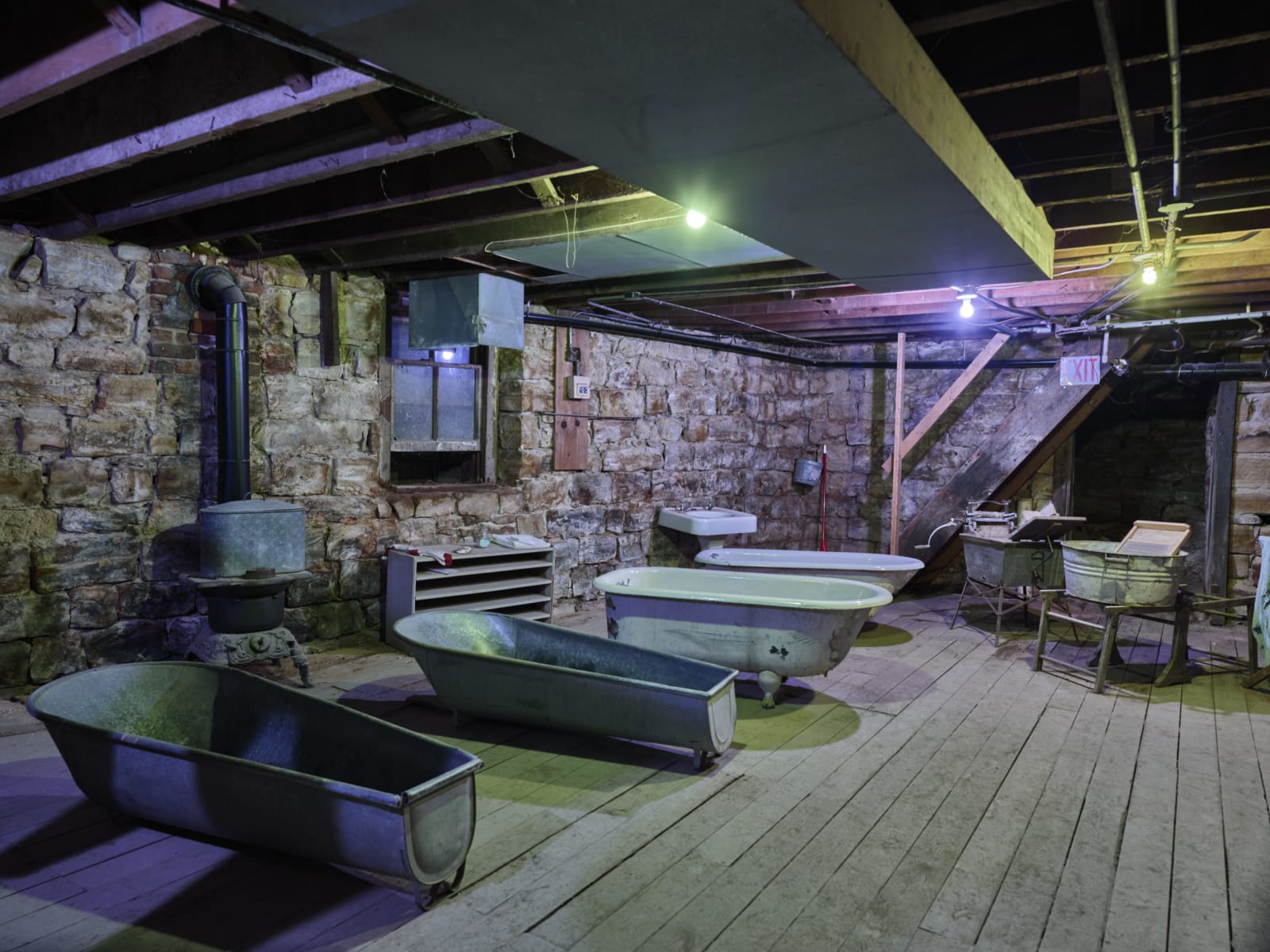
Below street level were the trades a railroad town's transient men wanted: William Jung's barbershop of 1887, where the barber also pulled teeth and let blood, his bathhouse and steam laundry, sample rooms where traveling salesmen laid out their goods, and saloon space that served Kansas's long years of constitutional prohibition. Tom Drake opened his harness shop in 1887. When he retired in 1920 he sold what stock he could, locked the door and walked away, and the room was never rented again.
In the late 1970s the city rebuilt its sagging sidewalks, bricked up the underground doors and filled most of the passages with rubble and sand. Adrianna Dierhof, granddaughter of an original owner of the 1887 Dick Building, put the building on the state register and saved the tunnels in front of it; those outside the 1884 Wolf Hotel survived too. Tours start in the Ellinwood Emporium by reservation.
Visitor Info
On the Map
Nearby
The closest stops worth working into your route
Historical markers nearby
Roadside plaques and monuments within a short detour