 MikeVdP / CC BY-SA 4.0 via Wikimedia Commons
The Story
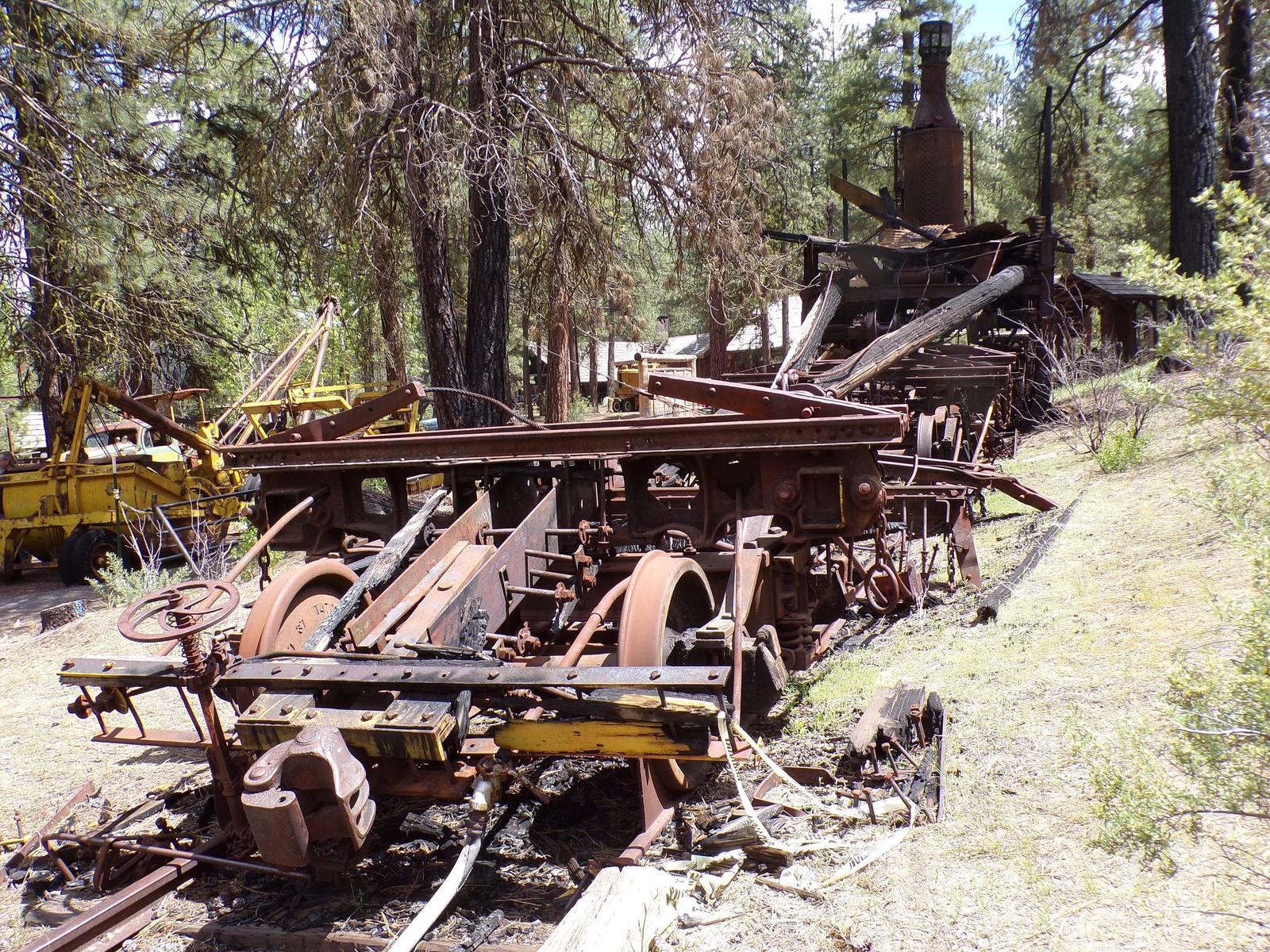
US-97 runs straight through Collier Memorial State Park, thirty miles north of Klamath Falls, where Spring Creek, rising from a spring about a mile upstream, runs clear and cold into the Williamson River. In 1945 Alfred Collier, a Klamath County lumberman, and his brother Andrew, a banker, gave the first 146 acres to the state as a memorial to their parents. In 1947 they began giving it machinery, the logging equipment of the pine woods, much of it from their own Swan Lake Moulding Company, and Alfred kept adding to the collection until he died in 1988.
The result is one of the largest collections of historic logging equipment in the country, most of it out in the open under the ponderosas. It runs the arc of the industry in this basin, from the days of animal power through steam boilers, steam tractors and logging railroads to the diesel machinery of the mid-twentieth century, with a pioneer village of old cabins and a blacksmith shop beside it.
The pine is why the museum is here, and it is worth reading the machines with that in mind. The forests around Chiloquin were Klamath Reservation land, and their timber made the Klamath Tribes one of the most self-sufficient tribes in the country until Congress terminated them in 1954. The museum tells the story of the cutting; the tribes, who govern from Chiloquin a few miles south, tell the rest. The campground lies along the Williamson, a river known for its trout.
Visitor Info
On the Map
Nearby
The closest stops worth working into your route
Historical markers nearby
Roadside plaques and monuments within a short detour