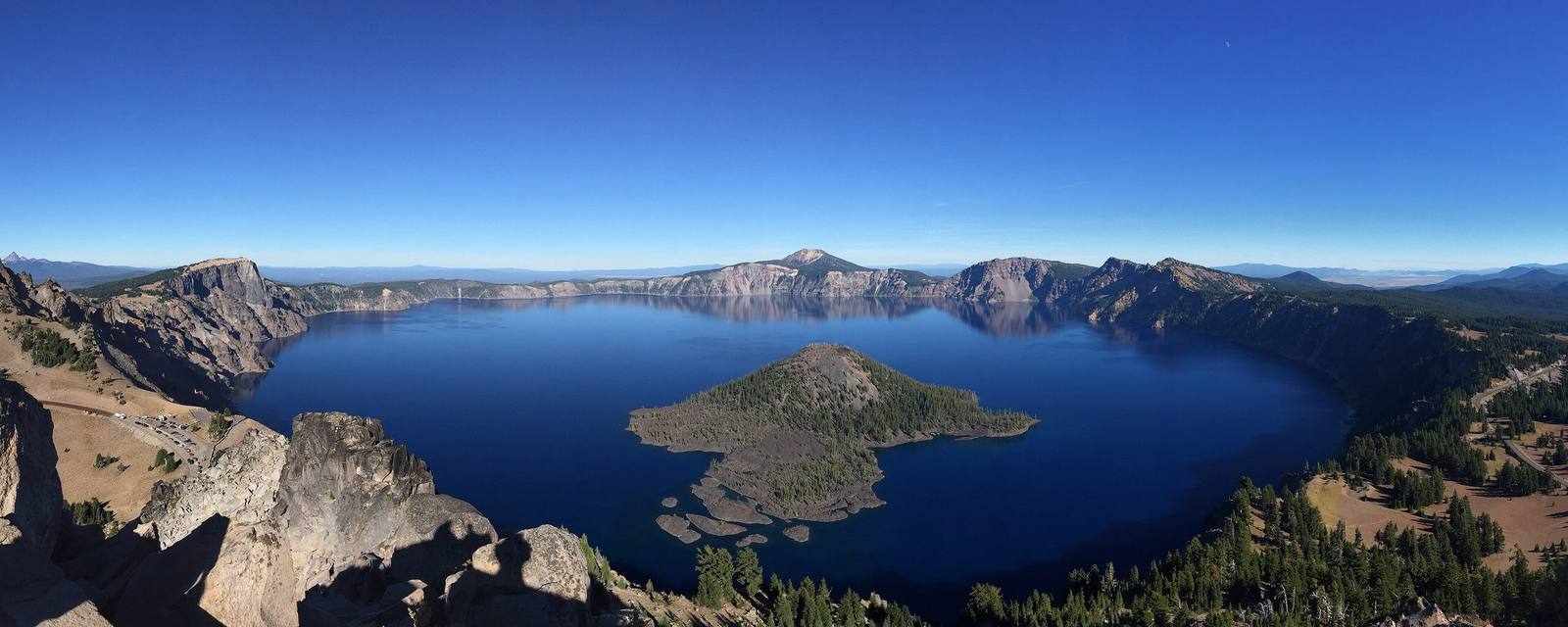
Crater Lake & the Klamath Basin
Klamath, Modoc and Yahooskin country — Crater Lake, the deepest lake in the country, Upper Klamath Lake and the c'waam, the Klamath Tribes at Chiloquin, and the Modoc graves at Fort Klamath.
About 7,700 years ago Mount Mazama blew itself apart, scattering ash across much of the Northwest, and its summit collapsed into a caldera that rain and snow filled over the centuries that followed. The people who saw it happen were the ancestors of the Klamath, whose accounts tell of a battle between Llao, chief of the world below, and Skell, chief of the world above. Crater Lake is 1,943 feet deep, the deepest lake in the country, filled by nothing but rain and snow and drained by nothing but evaporation and seepage. It became Oregon's only national park in 1902. The Rim Drive circles it, and snow closes most of it for much of the year.
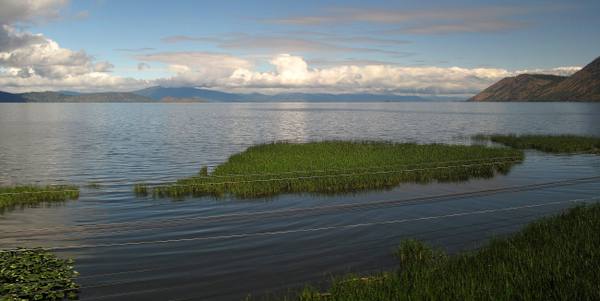
Below the mountain the basin is lake, marsh and sagebrush. Under an 1864 treaty the Klamath, the Modoc and the Yahooskin band gave up most of it and kept a reservation of ponderosa pine forest whose timber made them one of the most self-sufficient tribes in the country. Congress terminated them in 1954, and the forest was sold, much of it to become the Winema National Forest. Federal recognition came back in 1986. The land did not. The Klamath Tribes govern from Chiloquin, and each spring they hold a ceremony on the Sprague River for the c'waam and koptu, the suckers that once ran up its tributaries by the million and have been listed as endangered since 1988.
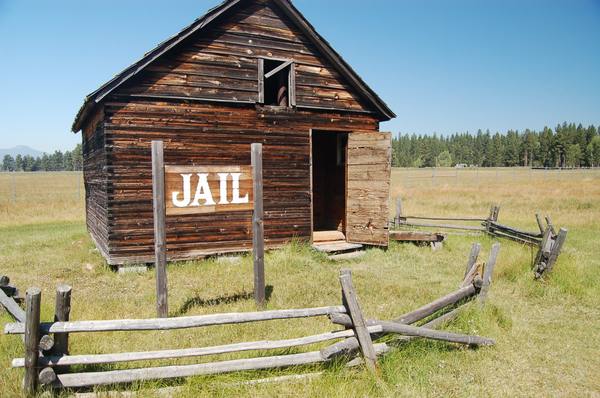
At Fort Klamath, below the park's south entrance road, the army hanged four Modoc leaders in October 1873, Kintpuash among them, and sent their severed heads to the Army Medical Museum in Washington; the Smithsonian gave the remains back in 1984. Their four graves are still marked in the meadow beside a replica of the fort's guardhouse.
What to See in Crater Lake & the Klamath Basin
5 places across the region, grouped by what they are.
Natural Areas
Historic Sites
Architecture
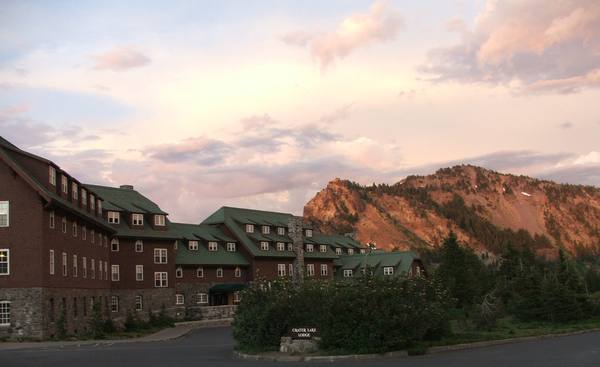
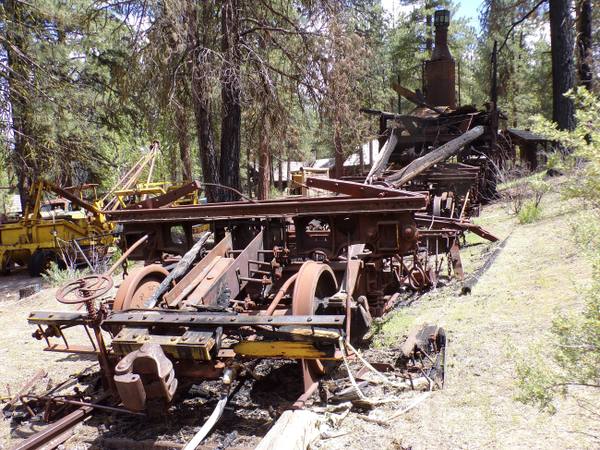
Industry & Mining
Scenic Drives through Crater Lake & the Klamath Basin
Stories from Crater Lake & the Klamath Basin
Crater Lake & the Klamath Basin rewards the unhurried. Pick a base, fan out, and let the country between the headline stops surprise you.
← Explore more of Open Road Guide